A Guide to Walking the Kumano Kodo Nakahechi Route—A Life-Changing Journey Thru-Hiking the Kumano Sanzan: the Sacred Sites of Rebirth
- Spring
- Summer
- Autumn
- Winter
- Time
- 7 days and 6 nights
- Transportation
- walk
The Kumano Kodo Nakahechi is the main route to the Kumano Sanzan (the three Grand Shrines in the Kii Mountain Range) and was once the most frequently traveled path for pilgrims. Its origins stretch back more than a thousand years, to the pilgrimages made by retired and coistered emperors. It was believed that by traversing this difficult terrain, one could find peace across the past, present, and future. A spiritual rebirth. The pilgrimage spread from the nobles to the samurai and then to the common people, reaching such unprecedented popularity that by the Edo period people spoke of the “Ants' Pilgrimage to Kumano”. Even today the journey to Kumano remains a profound pilgrimage that continues to draw people seeking prayer, reflection, and renewal.
Immerse yourself in the harmony of nature, village traditions, and over a millennium of sacred history. This grand thru-hike is more than a trail; it is a journey of self-reflection and a true experience of spiritual rebirth. Embark on a life-changing seven-day pilgrimage and return as a new you.
*This model itinerary covers the full approx. 140 km over six nights and seven days.
*You can find information on accommodation for the Nakahechi Route here.
*You can find the Nakahechi Route Walking Map here.
Day 1: Kii-Tanabe Station → Takijiri-oji(Total walking distance: 24.6 km)
The Journey Begins: A Gentle Transition from Town to Mountains
The Nakahechi Route is the best‑known section of the Kumano Kodo. Today, most walkers begin at Takijiri‑oji, about 25 kilometers from Kii‑Tanabe Station, but the original starting point lies much closer: the Michiwake‑ishi waymarker near the station.
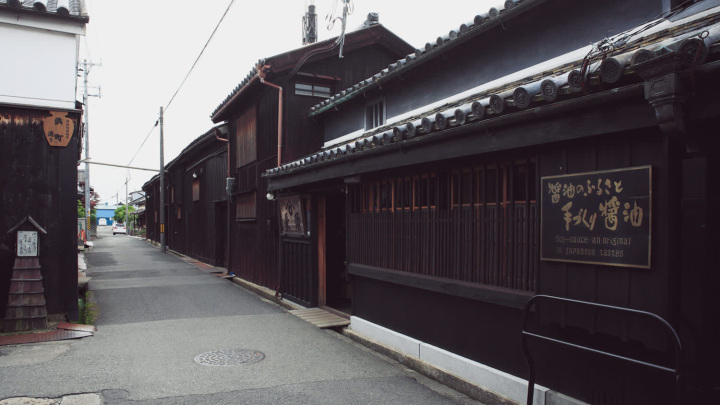
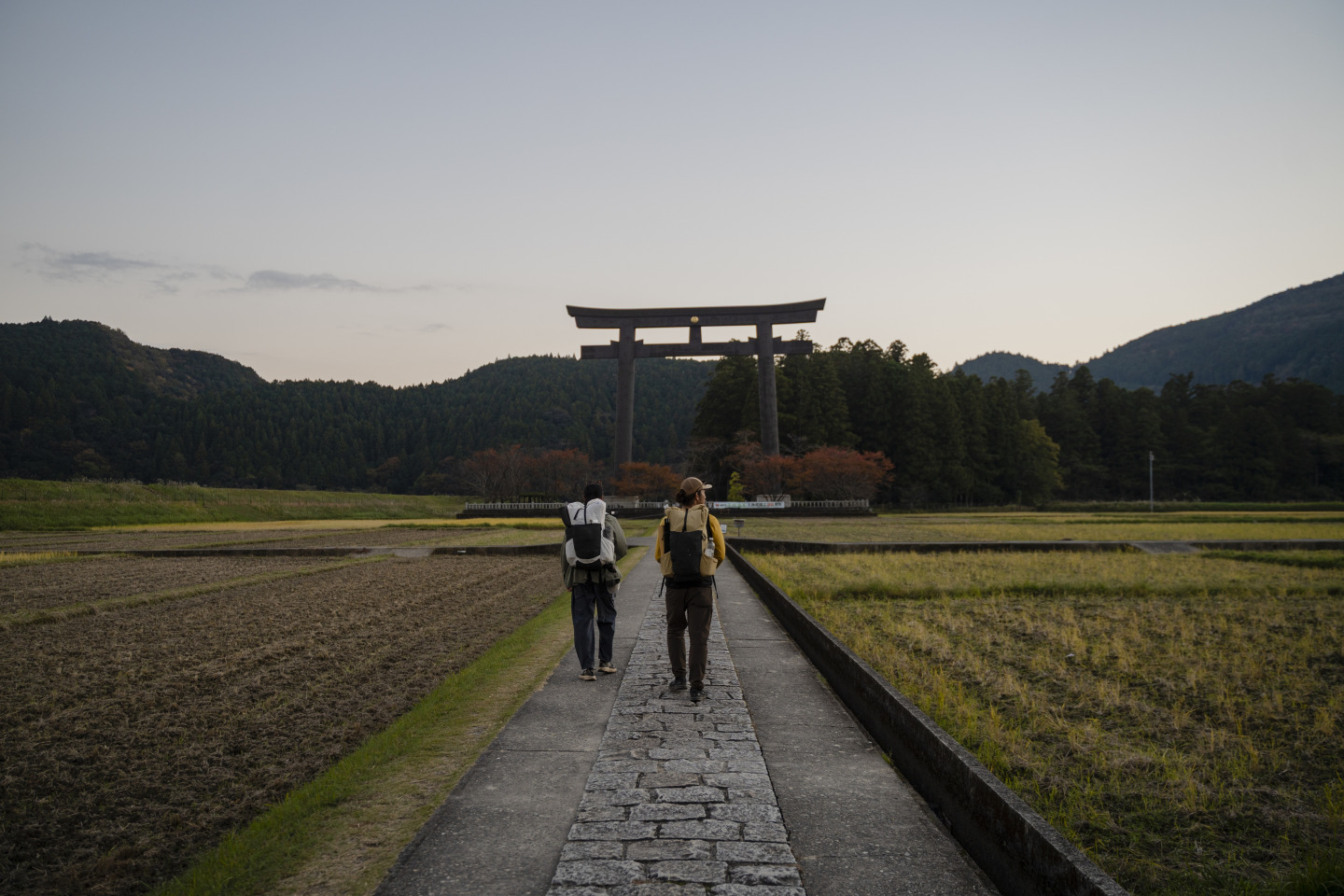
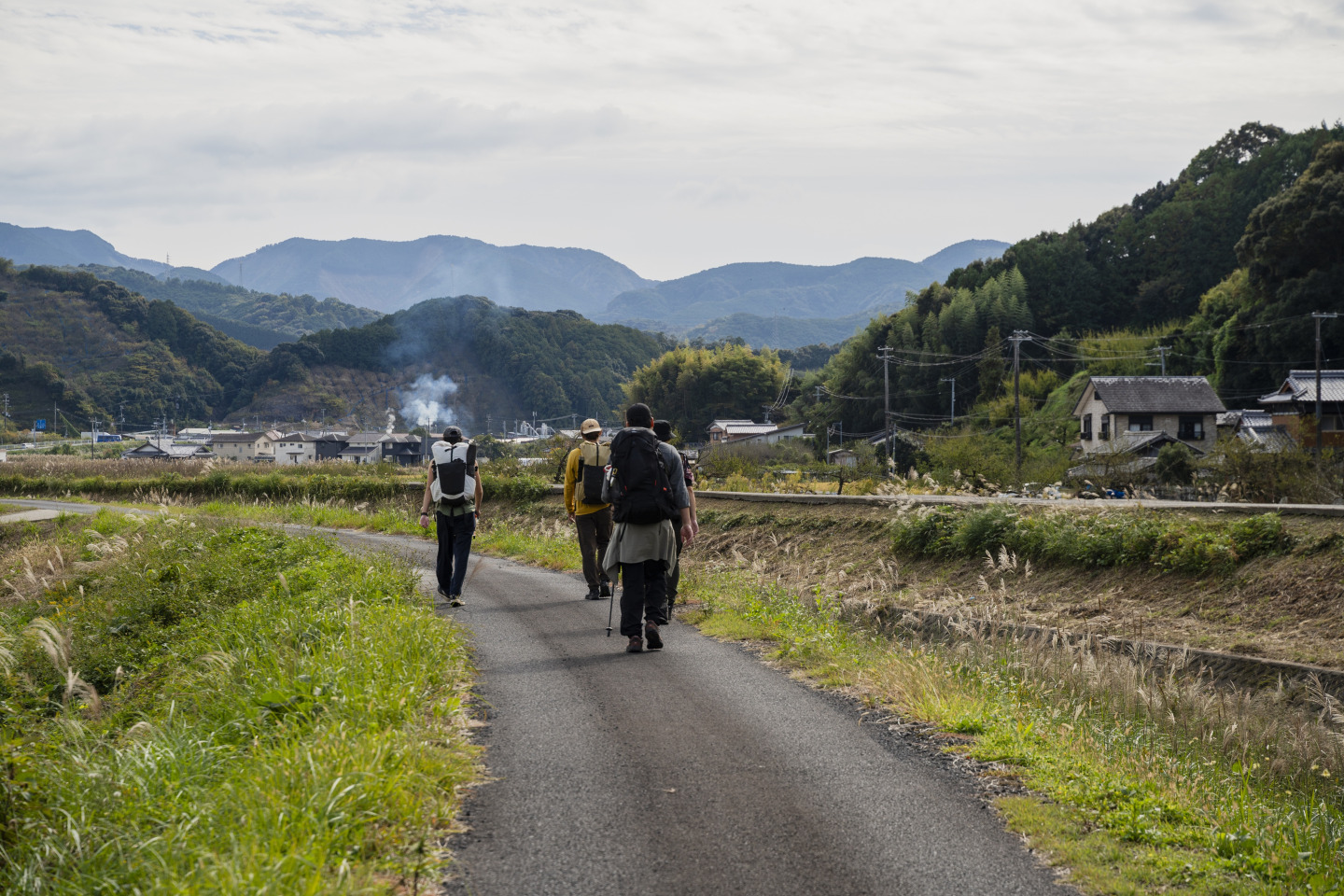
Before setting out, stop at the World Heritage Toukei Shrine to pray for a safe journey. Then, just as ancient pilgrims did, take your first steps from the Michiwake‑ishi and begin this grand long‑distance trail. Leaving behind the bustle of the city, the path traces the remains of ancient oji (subsidiary shrines) as the scenery gradually softens into rural landscapes. After walking a little over ten kilometers, mostly along paved roads, you will arrive at Inabane‑oji. In centuries past, pilgrims performed the cold‑water purification ritual of mizugori here, using the clear waters of the Tonda River. From Inabane‑oji, the route follows the river’s sparkling flow all the way to Takijiri‑oji.
The great appeal of this first day lies in the gentle gradation of landscapes: from lively town streets to quiet farming villages, from pure rivers to the deep, sacred mountains that mark the threshold of the Kumano pilgrimage.
Day 2: Takijiri‑oji → Chikatsuyu(Total walking distance: 13 km)
Entering the Sacred Realm of the Kumano Sanzan A day that takes you into the heart of the ancient trail
The route from Takijiri‑oji toward Kumano Hongu Taisha is one of the most popular sections of the Nakahechi, where the real mountain walking begins. Before setting out, stop by the Kumano Kodo Center on the other side of Takajiri-oji to learn about the history and culture of the path you’re about to follow.
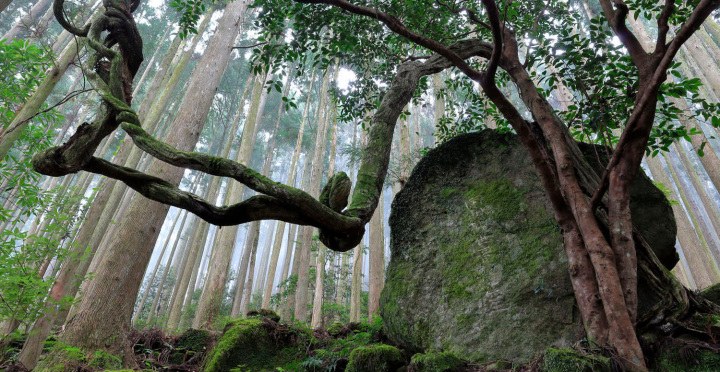
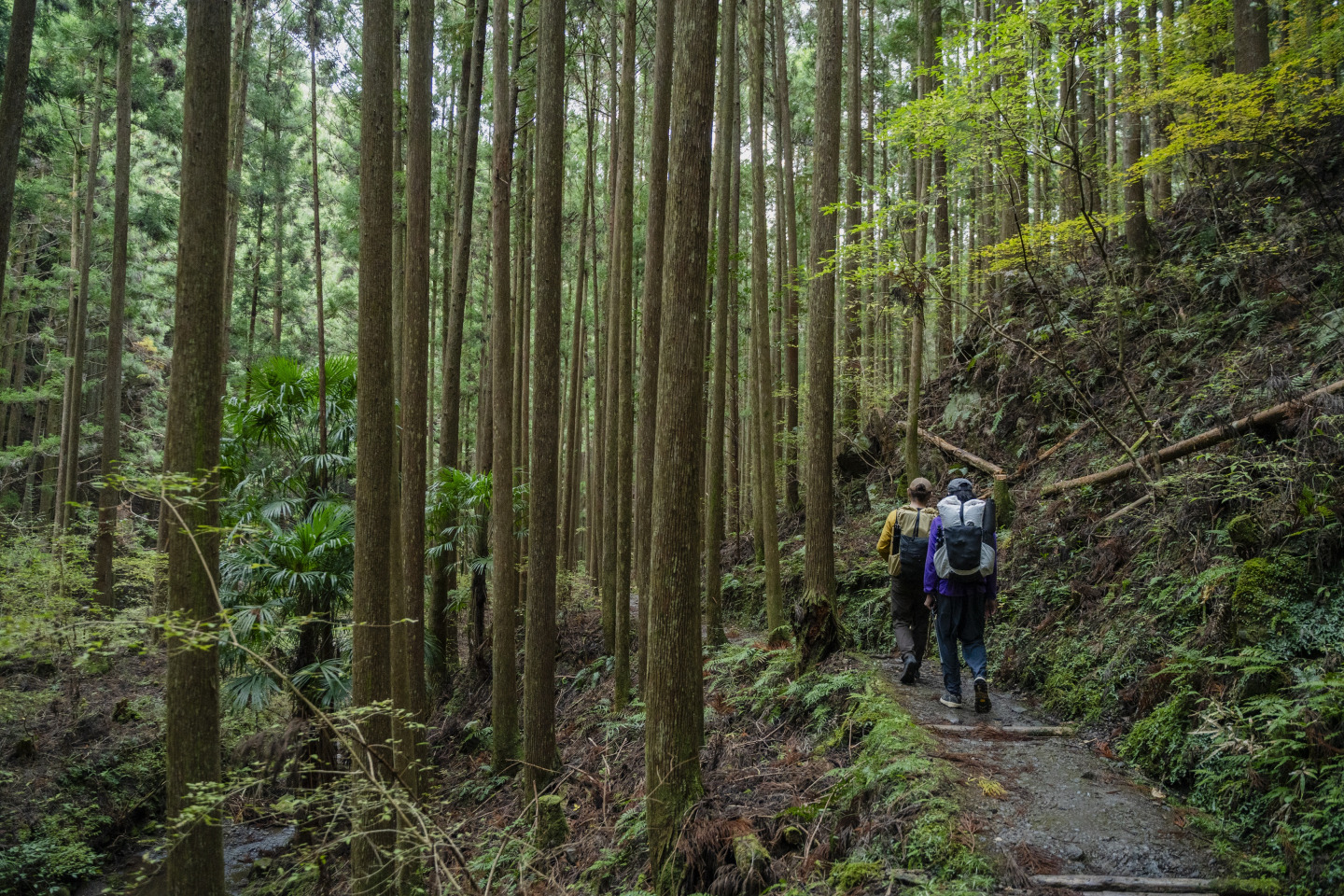
After paying your respects at Takijiri‑oji, which is one of the five most prestigious oji shrines, the trail immediately climbs steeply. As you gain elevation along rugged mountain paths, you eventually emerge onto the highland of Takahara, known as the “Village of Mist.” Here the view opens dramatically, revealing sweeping panoramas of the Hatenashi Mountain Range that wash away the fatigue of the climb.
Re‑entering the forest, the trail rises and falls as you visit three more oji: Daimon‑oji, Jujo‑oji, and Osakamoto‑oji. Before long you’ll arrive at a roadside station, an ideal place for a short rest. Not far beyond it stands the Gyuba Doji Statue, an iconic symbol of the Nakahechi Route. From the statue, it’s only a short walk to Chikatsuyu, a traditional post town and your destination for the day.
The Chikatsuyu area offers a range of accommodations, from guesthouses to campgrounds, but please note that it becomes extremely busy during peak seasons.
*Lodging is also available around Tsugizakura‑oji, about four kilometers beyond Chikatsuyu, though options there are more limited.
*For campers, the Iris Park Auto Campground in Chikatsuyu allows tent stays.
Day 3: Chikatsuyu → Kumano Hongu Taisha and Oyunohara(Total walking distance: 25.7 km)
Reaching the First Sacred Destination of the Kumano Pilgrimage Pray for blessings in your future and unwind in healing hot springs
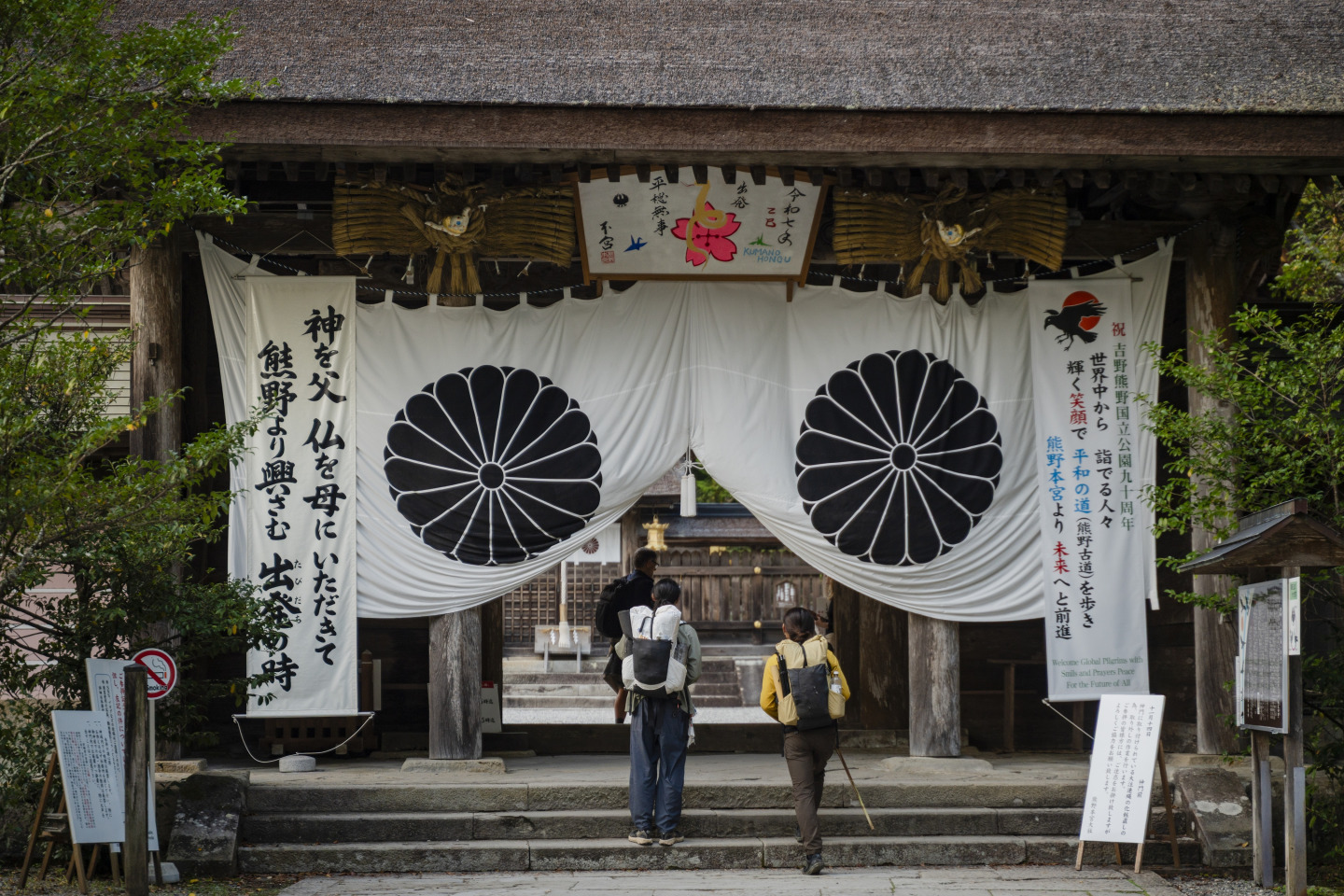
Leaving the post town of Chikatsuyu, you set out toward Kumano Hongu Taisha, the first major destination of the Kumano pilgrimage. The Kumano Sanzan are said to grant peace across past, present, and future, and Hongu Taisha is the shrine associated with the blessings of the future. Visiting it is believed to bring protection and good fortune for the days ahead. This is one of the longest and most demanding days on the Nakahechi Route, with several mountain passes to cross. But the effort only heightens the sense of accomplishment when you finally arrive at Hongu Taisha.
The first seven kilometers to Kobiro‑oji follow paved roads, but from there the trail plunges into deep mountain terrain. Along the way you’ll cross Iwagami Pass, which reopened in 2025 after being closed for fourteen years. As you walk, you can feel the tranquil atmosphere of this restored section of the ancient trail. Take a well‑earned break at Mikoshi Pass before continuing on. A gentle descent of about four kilometers brings you to Hosshinmon‑oji, one of the five most prestigious oji shrines. Hosshinmon marks the entrance to the sacred precinct of Kumano Hongu Taisha, and the route from here to the shrine is so beloved that it is often called the “Golden Course of the Nakahechi.”
After passing many scenic highlights, you will finally arrive at Kumano Hongu Taisha. Don’t forget to also visit Oyunohara, the former site of the shrine.
Once your pilgrimage for the day is complete, head to one of the nearby hot spring villages. This area, known collectively as the Kumano Hongu Onsenkyo, is home to three historic hot springs: Kawayu Onsen, Yunomine Onsen, and Watarase Onsen. These springs have long been places of purification for pilgrims and are perfect for easing the fatigue of a long day’s walk.
*For campers, tent sites are available at the Tanabe Kawayu Campground in Kawayu Onsen.
Day 4: Kumano Hongu Taisha → Kumano Hayatama Taisha and Kamikura Shrine(Total walking distance: approx. 20 km, excluding the river pilgrimage route)
The Kumano Kodo Is More Than a Walking Trail Tracing an ancient journey along the river

After waking refreshed from the onsen, the pilgrimage enters a new chapter. Today’s destination is Kumano Hayatama Taisha, approached not by mountain path but by the river route. Long before modern travelers set foot on these trails, retired emperors and court nobles journeyed to Hayatama Taisha by boat. The true main route of the Kumano pilgrimage was, in fact, the majestic Kumano River. From the water, the mountains tower high above you, and the world narrows to the quiet murmur of the current. As the boat rocks gently with the ancient flow, the idea that the Kumano Kodo is only for walking dissolves in the best possible way.
Reaching the Kawabune Center, where the riverboats depart, requires just under 20 kilometers of road walking from the surrounding onsen towns, though buses are also available for those who prefer to save their energy for the river journey. From the Kawabune Center, board the traditional riverboat. After a 90‑minute voyage, you’ll land at Gongengawara, the riverside behind Hayatama Taisha where pilgrims once disembarked centuries ago. From the riverbank, the shrine is only a five‑minute walk. Kumano Hayatama Taisha, with its vivid vermilion halls, is the sacred site associated with the past. It is said that offering prayers here purifies the sins and impurities carried from earlier in one’s life.
The final highlight of the day is Kamikura Shrine, whose sacred object of worship is the colossal Gotobiki Rock—the place where the deities of Kumano are believed to have first descended. Climb the 538 steep stone steps, and you’ll be rewarded with the overwhelming presence of the great boulder and a sweeping view of Shingu City spread out below. Spend the evening in Shingu, enjoying a well‑earned meal and a restful night in town.
Day 5: Kumano Hayatama Taisha → Kumano Nachi Taisha, Seigantoji Temple & Nachi Waterfall (Total walking distance: approx. 22 km)
Experiencing the Blessings of the Sea with All Five Senses Walking toward the final destination of the Kumano Pilgrimage
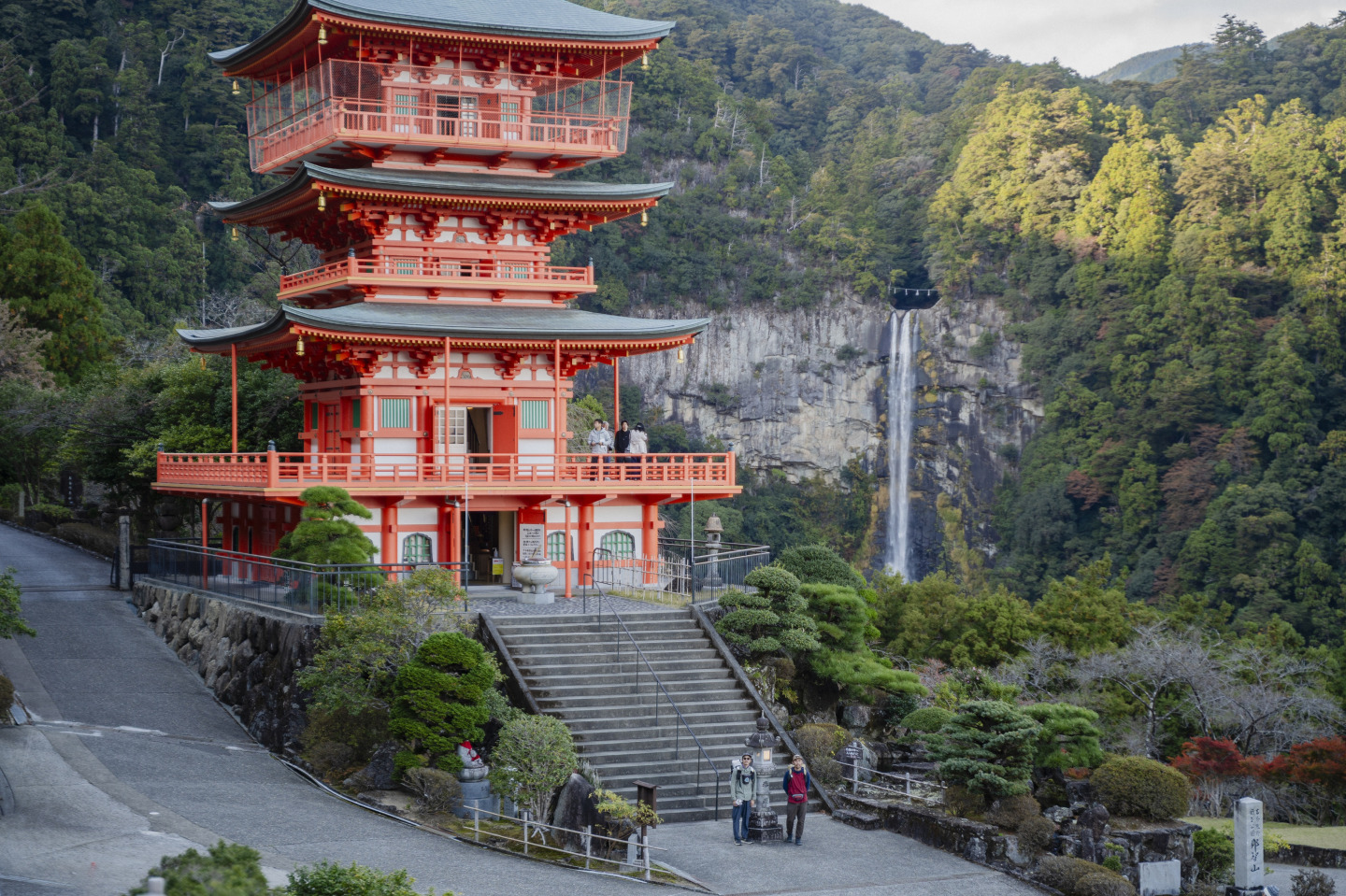
Leaving Shingu, the scenery shifts dramatically. After days defined by mountains and rivers, the landscape opens to the vastness of the sea. The 15-kilometer walk to Nachi Station follows the coastline, accompanied by the salty breeze of the Kumano Sea. Most of the route follows paved roads, but the historic Koyazaka section still preserves the atmosphere of the old trail. Here, the contrast between the ancient path and the open sea is especially striking. Upon reaching Nachi Station, if you still have time and energy, consider making a detour to Katsuura Fishing Port.
Famous for the largest volume of fresh tuna brought to shore in Japan, the port’s surrounding eateries serve raw tuna with an exceptionally rich flavor and a satisfyingly tender, springy texture; an unforgettable taste of the region. After your meal, return to the Kumano Kodo and set off for the final destination of your pilgrimage: Mt. Nachi. Climbing the stone‑paved slope of Daimonzaka, which marks the threshold between the everyday world and the sacred realm, you’ll pass through cedar groves before arriving at Kumano Nachi Taisha, Seigantoji Temple, and finally Nachi Waterfall, the tallest single‑drop waterfall in Japan.
Kumano Nachi Taisha, the final destination of the Kumano pilgrimage, is the sacred site associated with the present. It is said that praying here strengthens the bonds and connections that shape one’s life today. By praying for the future at Hongu Taisha, for the past at Hayatama Taisha, and finally receiving the vitality to live fully in the present at Nachi Taisha, the Kumano Sanzan pilgrimage reaches its completion. To conclude your journey, stand before the waterfall and let its thunderous roar wash over you, stirring your spirit and preparing your mind for the next chapter: the return journey to Hongu that begins tomorrow.
*As of 2026, the only accommodation available on Mt. Nachi is Mitaki Sanso. Please be aware of this when making reservations.
Day 6: Seigantoji Temple (Mt. Nachi) → Koguchi(Total walking distance: approx. 14.5 km)
The First Day of the Return to Hongu Crossing Ogumotori-goe—the toughest pass on the Nakahechi Route
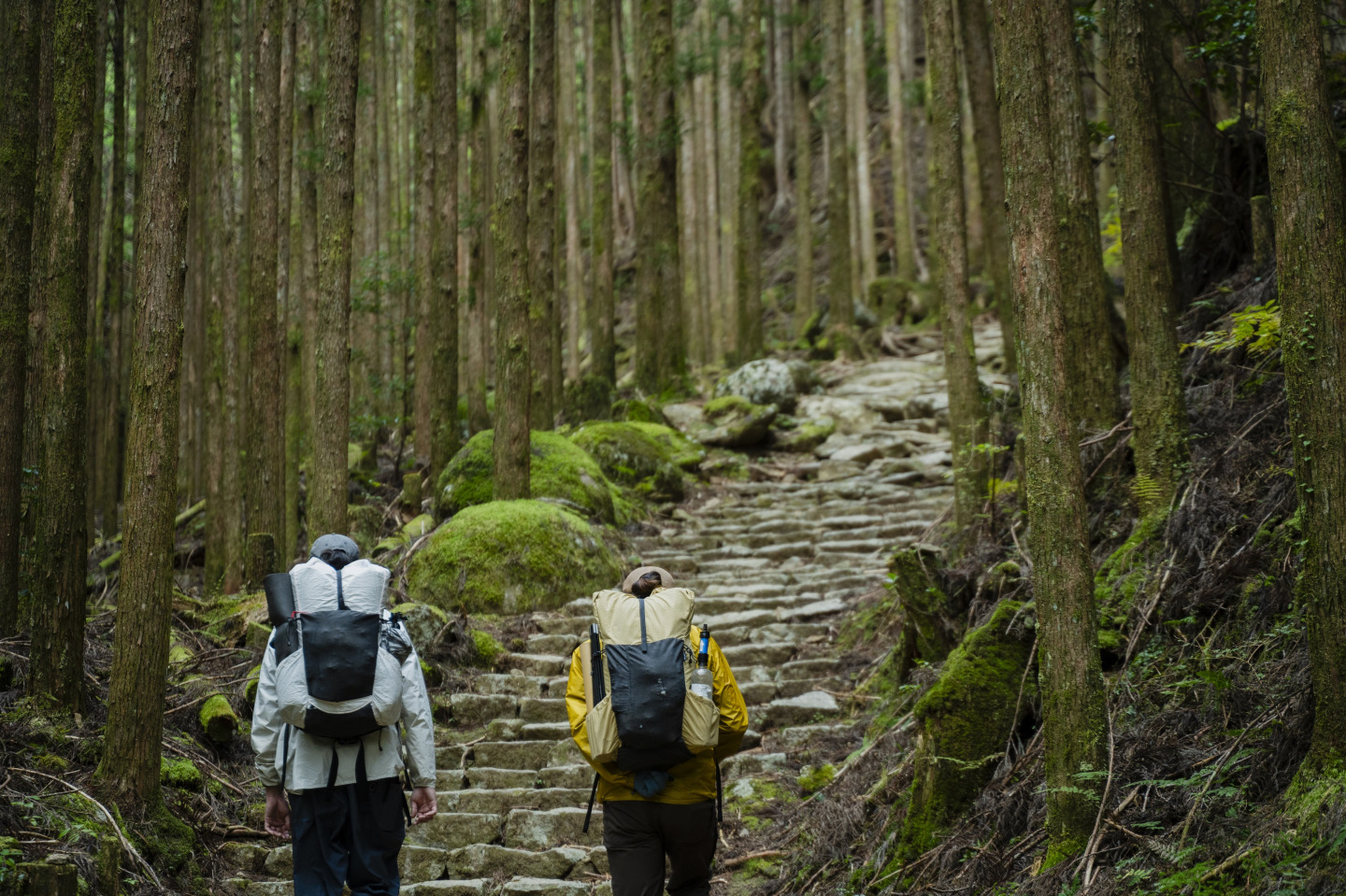
Setting off with the sound of Nachi Waterfall echoing behind you as if offering a blessing for the road ahead, you begin the journey toward Koguchi, a secluded hamlet embraced by deep green forests and clear mountain streams. This section is known as Ogumotori-goe: “the Great Cloud Pass.”
True to its name, the trail climbs into steep, mist‑shrouded mountains, weaving through rugged terrain and demanding ascents. It is widely regarded as the most challenging segment of the Kumano Kodo’s Nakahechi Route. Yet the difficulty brings its own rewards. The atmosphere of the ancient trail remains vivid here, and the views from the high passes rank among the most beautiful on the entire pilgrimage.
From Seigantoji Temple, the first 4.5 kilometers lead steadily uphill to the former Funami Teahouse site. From there, the path rises and falls for another 5.3 kilometers until you reach Echizen Pass. Beyond the pass, the trail plunges sharply downward—an intense descent of more than 800 meters over just 5 kilometers. At the foot of this long, demanding slope lies your destination for the day: Koguchi.
The moment you arrive in this quiet mountain village, you may feel the tension you’ve been carrying simply dissolve. Stopping by a local shop, exchanging a few warm words with the staff, or receiving a simple smile can gently soothe both body and spirit after the long effort.
*There is a campground in Koguchi where tent stays are permitted (Koguchi Campground).
Day 7: Koguchi → Kumano Hongu Taisha(Total walking distance: approx. 16 km)
The Return to Hongu Realizing a sense of 'rebirth' at the end of a long and demanding journey.
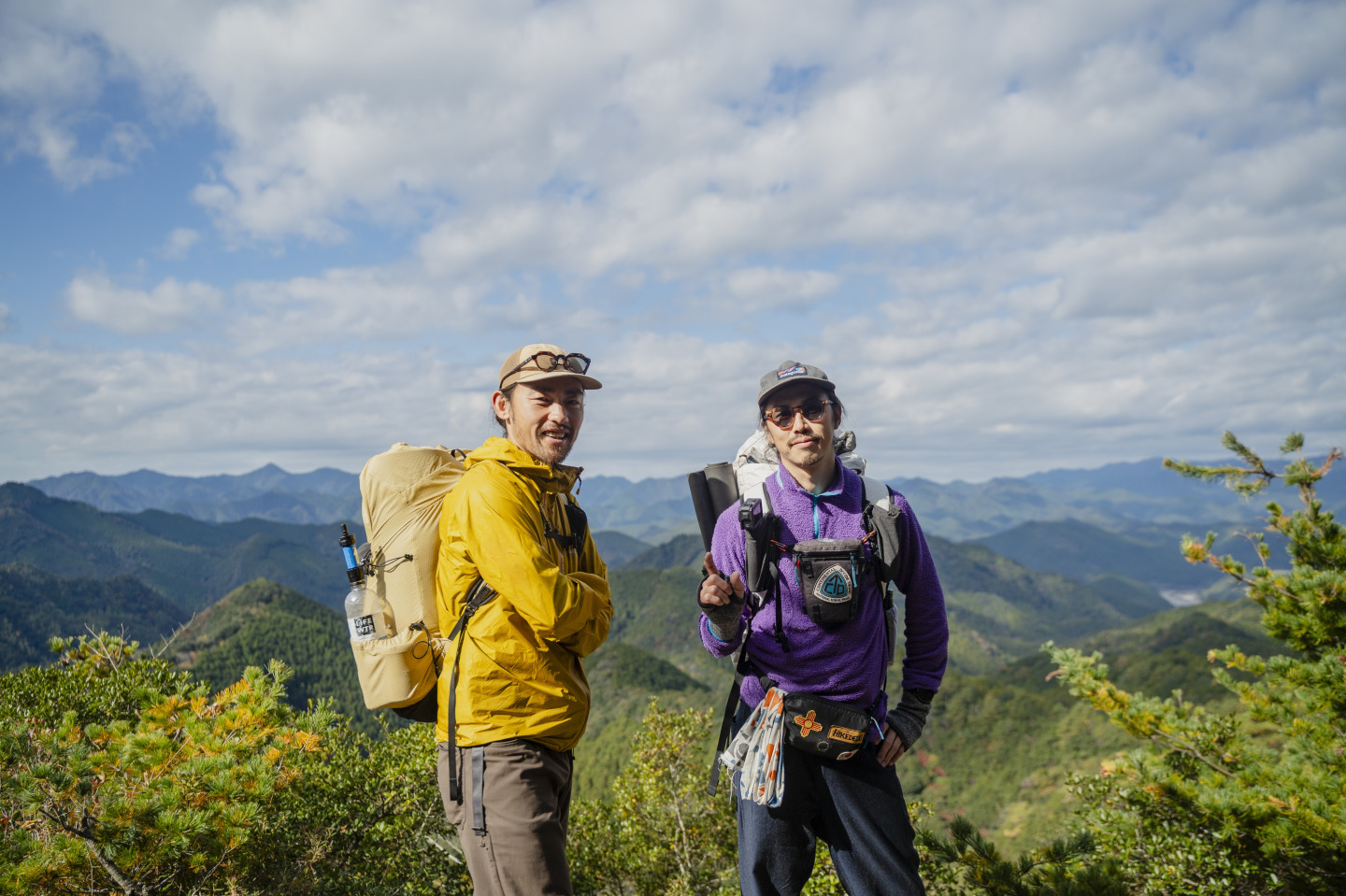
After spending your final night in Koguchi and waking to a peaceful morning, the path leads onward to Kogumotori-goe, the last mountain pass before returning to Hongu. Compared to the previous day’s Ogumotori-goe, this route has gentler slopes and fewer steep climbs, offering a refreshing hike through quiet groves of trees.
The highlight of the day is the sweeping view from Hyakkengura, where the vast Hatenashi Mountain Range stretches endlessly into the distance. This is a place to pause. Let your gaze rest on the panorama before you, and take a moment to reflect on the long road that has brought you here. From Hyakkengura, the trail descends steadily, passing through Uke‑gawa and following the Kumano River until, at last, you arrive once more at Kumano Hongu Taisha.
You have finally reached the end of your journey. If you find yourself speaking with local residents near the shrine, share your story with them. The moment you say, “I walked the Nakahechi Route,” you will be met with warm smiles, genuine surprise, and heartfelt words of praise. For many pilgrims, this simple exchange becomes a treasured badge of honor: the moment when fatigue transforms into quiet joy.
Hongu, Hayatama, Nachi. You have crossed mountains, followed rivers, visited all three sacred sites, and returned to where the journey began. Standing here again, what emotions rise within you? Carrying the irreplaceable experiences of these seven days, you will step forward into a renewed everyday life. One shaped by the strength, clarity, and sense of rebirth earned along the Kumano Kodo.