[A Birding Journey Through Wakayama]
KUMANOKODO KIIJI
Spring settles over the rural hillside, where the birds live close and strong.
![[A Birding Journey Through Wakayama]KUMANOKODO KIIJISpring settles over the rural hillside, where the birds live close and strong.](/lsc/upfile/article/0000/0776/776_1_l.jpg)
The May 29, 2026 issue of the travel and lifestyle magazine PAPERSKY (No. 74) features an article introducing Wakayama Prefecture.
The special feature explores the theme of birding. This article introduces the Kiiji area of the Kumano Kodo, a UNESCO World Heritage Site.
iiji reveals a landscape entirely different from the Kumano Kodo’s Nakahechi route or the areas around Koyasan. Here, the birds have learned how to live alongside people. Join us on a familiar yet fresh journey into the birdlife of the satoyama.
From Satoyama to Seashore, and Back Again
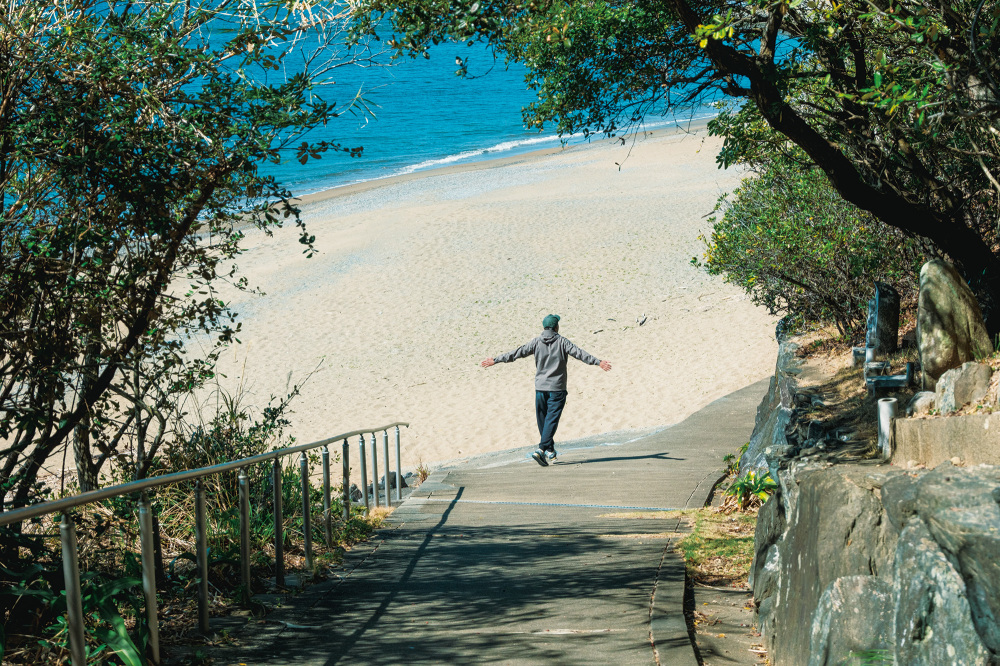
The Kumano Kodo has five major routes, but not many hikers can say they have walked the Kiiji. Passing through the area closest to the sea, the Kumano Kodo Kiiji was once a main route linking Nara, Kyoto, and Osaka with Kumano, and was traveled by nobles, monks, and common folks alike. Compared with the mountainous Kohechi and Nakahechi routes, the Kiiji has fewer ups and downs, connecting small towns along the scenic coastline. This combination of leisure and ease is what may have made it such a popular pilgrimage route.
Even today, much of the Kiiji overlaps with areas of everyday local life, where the former oji shrine sites that once served as pilgrimage stops and traces of older faith can be found among villages, fields, and farms.
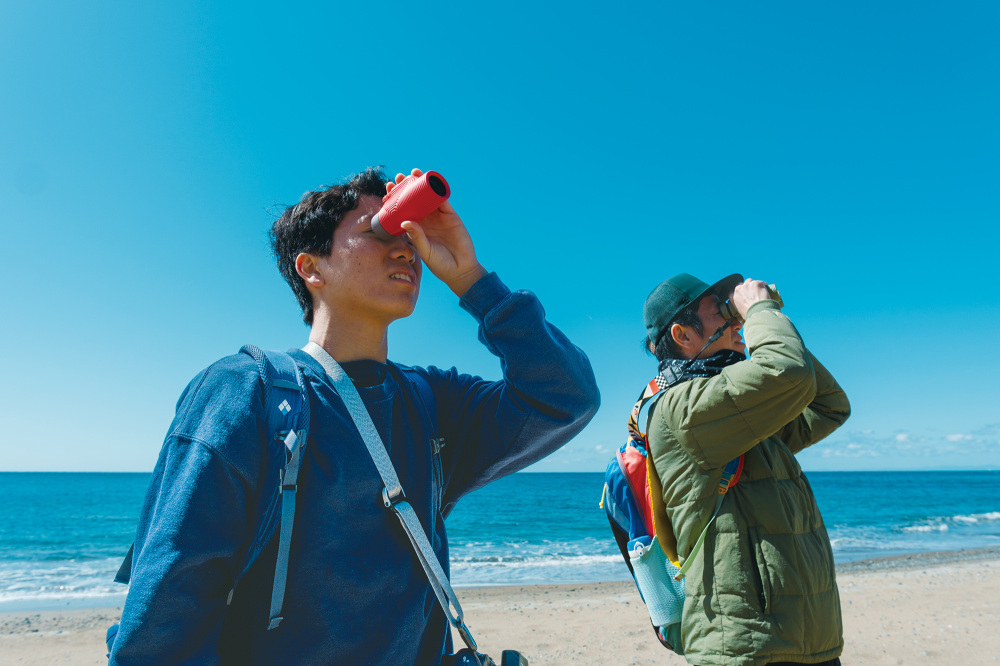

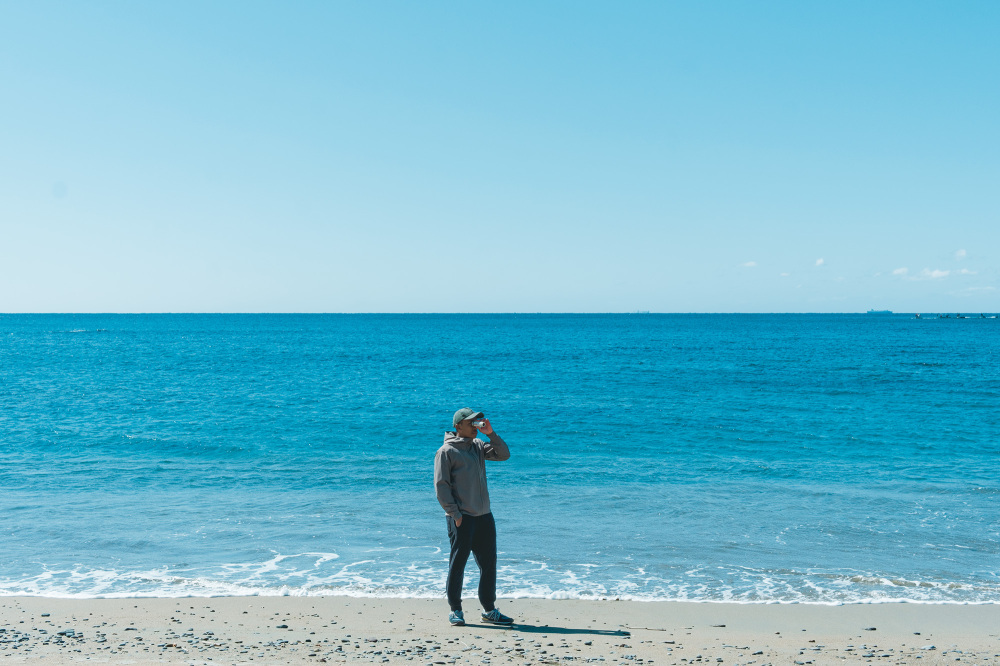
This stretch of our birdwatching journey covers about 12 kilometers from JR Kirime Station in Inami, over Enoki Pass, and on to Minabe Town, known as the village of ume. Along the way, it follows Senri-no-Hama, a beach that has long captivated travelers as one of the most beautiful views on the Kumano Kodo. Across the entire expansive network of Kumano Kodo routes, this is the only section that walks along the beach.
Joining us for this section is Lebo Tladi, a South African artist living in Shirahama. Guiding us are the birdwatchers Sakai Takafumi and his high schooler son, Hajime, from Tanabe. You might assume Hajime started birdwatching because of his father, but in fact, he has the longer birding history. A nature observation event he attended in elementary school sparked his interest, and now he has been watching birds for nearly 10 years.
Soon after leaving Kirime Station, Kirime Nakayama-oji shrine and remains appear. Oji are small shrines placed along the Kumano Kodo and are regarded as enshrining “divided” spirits of the Kumano deities. Pilgrims of the past are said to have stopped at these oji to rest and pray, making them something like sacred checkpoints. On the shrine grounds, a flock of brown-eared bulbuls makes an incredible racket. From the easy-to-recognize “hiyo-hiyo” call to a strange, almost monster-like screech, every sound was coming from bulbuls.
“Brown-eared bulbuls sometimes imitate other birds, so they have all kinds of calls,” says Hajime. With volumes like that, it is easy to understand why serious birders refer to these calls as the “screaming type.”
Walking the Kumano Kodo’s Only Beach Section

Japanese white-eyes dart through fields covered in chrysanthemum-like flowers, while in the ume groves just beyond Enoki Pass, the song of Japanese bush warblers echoes throughout. The owner of the predominant “chit-chit” call is the black-faced bunting. Listening to the calls along the way, you begin to feel how different the birds of the satoyama are from those that live in the natural forests of Nakahechi and Gomadan-zan.
As the path descends gently from Enoki Pass, the sea comes into view. We continue east along a road one level above the JR Kinokuni Line tracks. Ahead is Iwashiro-oji, a shrine with a beautiful atmosphere, surrounded by pines and looking out to the sea. Originally, the Kiiji followed the beach from here to Senri-no-Hama, though that section is now closed to foot traffic. Here, Lebo takes out his pen and sketchbook and begins drawing a bird with easy, fluid strokes. “What are you drawing?” we ask.
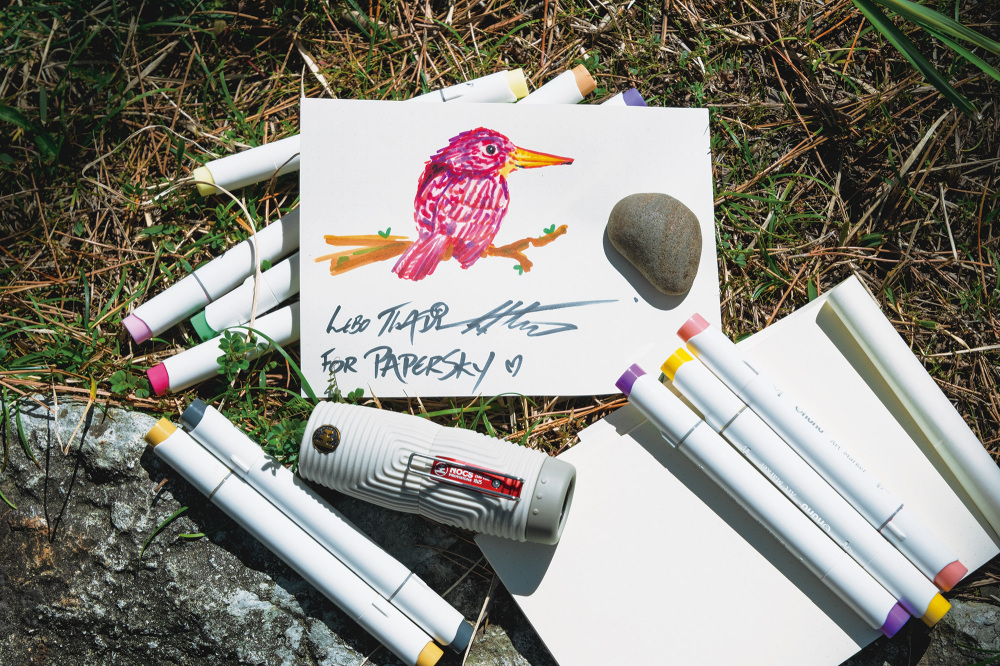
“Though we haven’t seen any today,” he says, showing us a ruddy kingfisher with a strikingly beautiful red bill, “I really like colorful birds.”
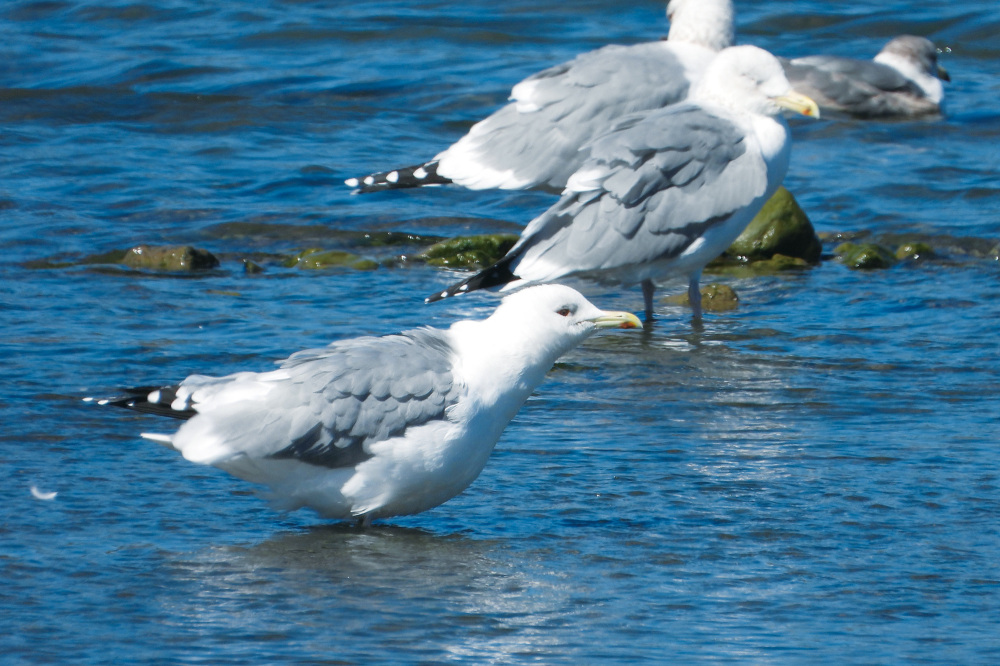
After taking a wide detour inland, we reach the beach famous for sea turtle nesting, Senri-no-Hama. While searching for seabirds, three black kites suddenly target us from above, probably mistaking us for people carrying food. Further on, many seabirds gather around the mouth of the Minabe River. In the shallows are great egrets and ducks, while black-tailed gulls and numerous herring gulls circle overhead. Herring gulls are seabirds, but they often bathe in river mouths where fresh and salt water mix.
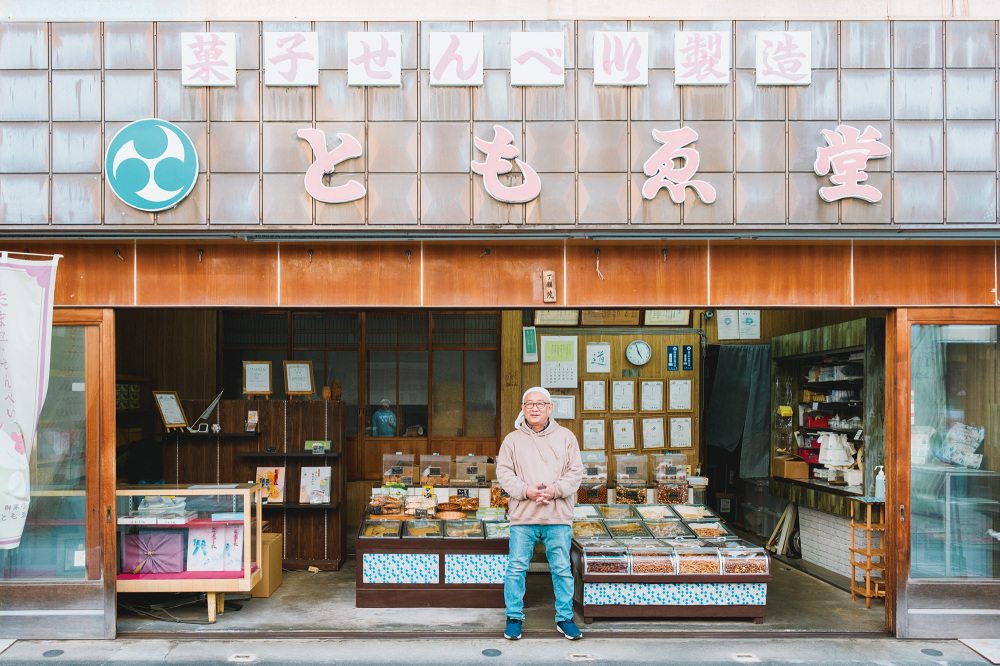
“Tomoedo”
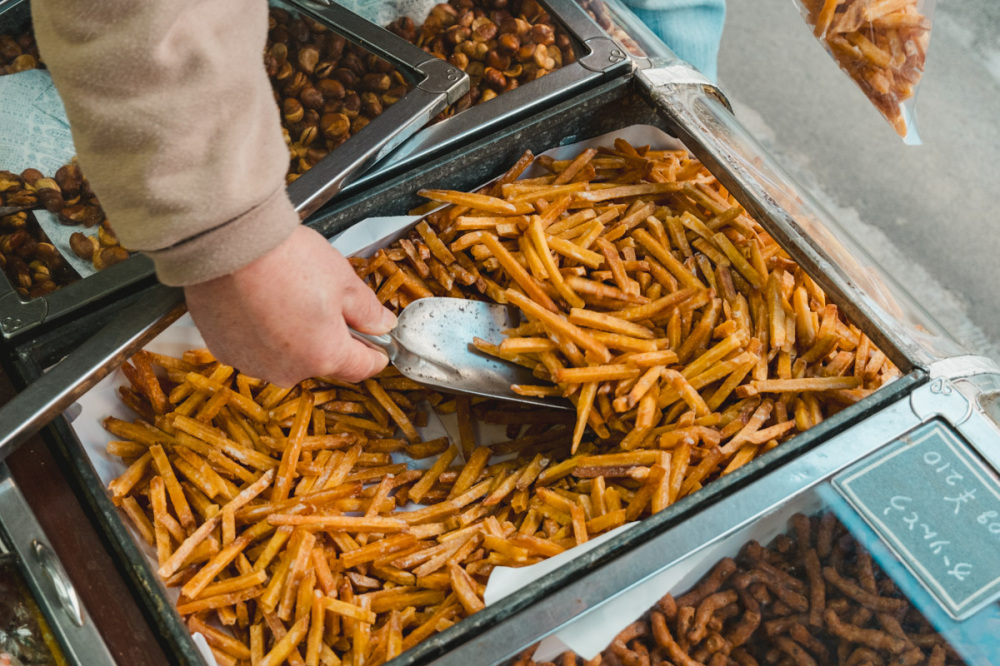
“Tomoedo” sells nostalgic sweets by weight from glass display cases. Their sweet potato chips, with their rich sweet potato flavor and the crisp, crunchy texture of molasses, are addictive and make the perfect snack for a stroll along the Kiiji.

Tomoedo’s original “Tamako Senbei” are baked using eggs and wheat flour and are known for their mild flavor. The “Plum Salt” variety shown in the photo uses homemade plum salt made by reducing plum vinegar, giving it a sweet-salty taste with a hint of tartness. The retro packaging is also cute.
Crows: Guardians of the Pilgrims
From the river mouth, the route enters another settlement. At Minabe-oji, the final oji of today’s route, we encounter a group of crows. It brings to mind the stamped paper (o-fuda) received by pilgrims who reach the Kumano Sanzan after traveling the Kiiji. They are stamped with intricate characters designed from crow silhouettes. Pilgrims would write vows on the back of these o-fuda, and the crows, considered messengers of the Kumano deities, became witnesses to that pledge. Which gets us thinking. Perhaps the crows that appear along the Kumano Kodo carry some kind of message. Perhaps not. But it’s fun to imagine.
Beyond here, the route leads onward to the Nakahechi and Ohechi from Kii-Tanabe, bringing the pilgrimage toward its highlight as the Kumano Sanzan draw near. The pilgrims of the past must have continued on their journey, reassured by the presence of birds along the way.
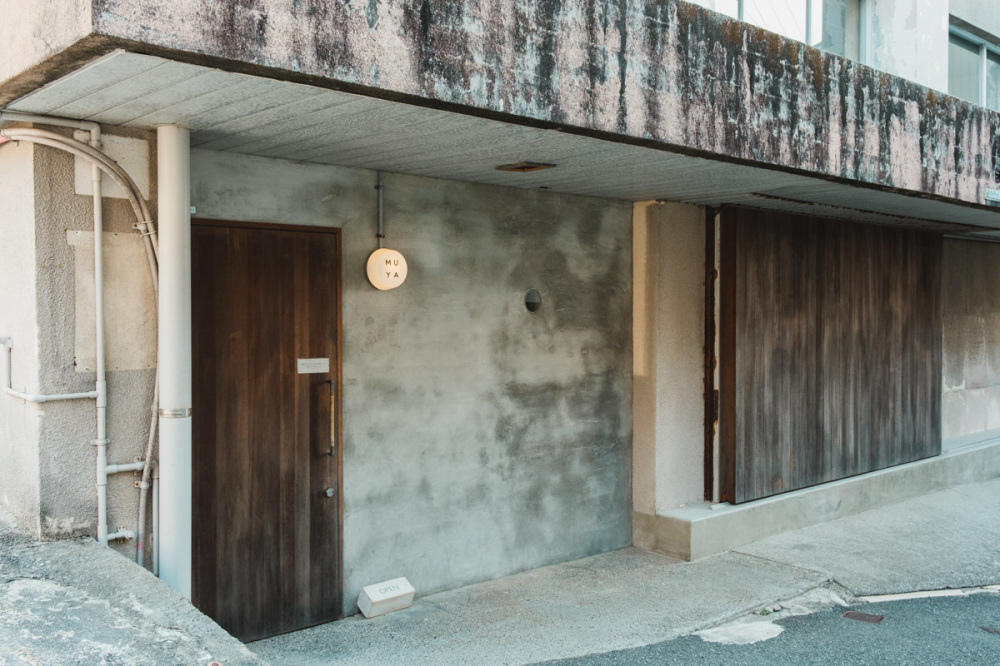
“MUYA”

Carefully brewed coffee, handmade sweets, unisex and seasonless apparel… “MUYA,” with its pleasant atmosphere that embodies the owners’ refined taste, is a complex housed in a renovated four-story historic building that features a café, apparel shop, hotel, and gallery.
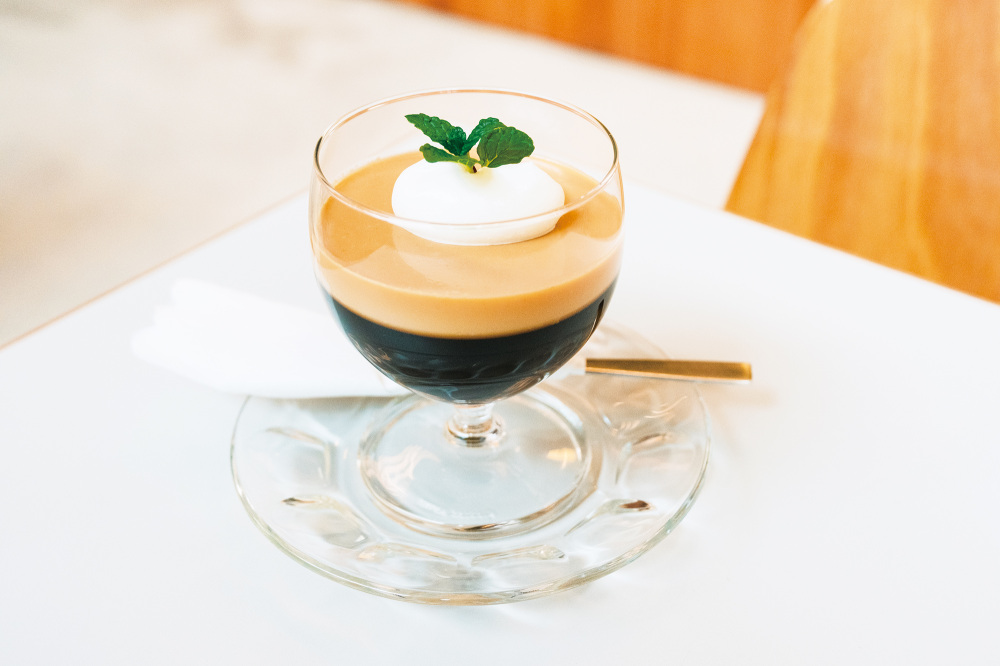
After walking the Kiiji, we continue on to MUYA in Shirahama. The homemade coffee jelly has a springy texture that is hard to beat.
"Restaurant Caravansarai"
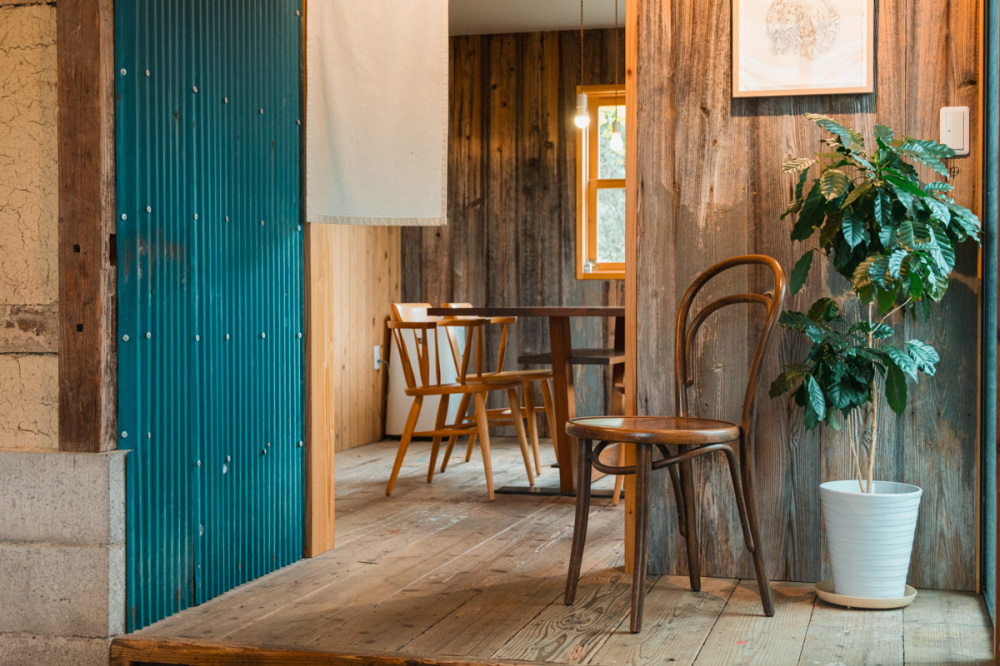
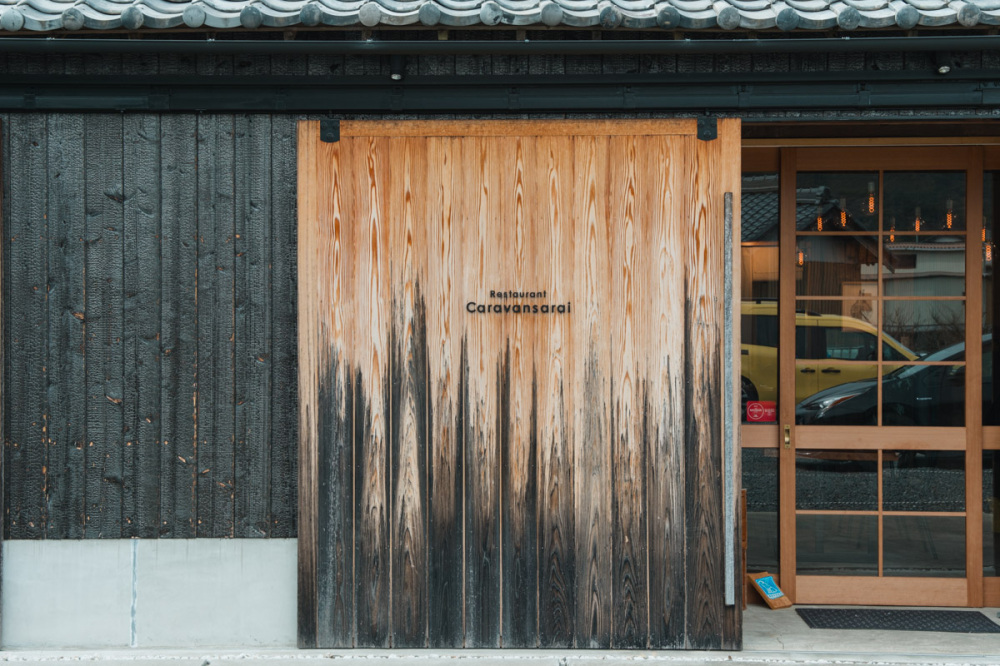
“Restaurant Caravansarai” is an authentic French restaurant located in the Kami-Haya district of Tanabe City, a major production area for Nanko plums. The restaurant operates with a strong commitment to the local community, such as composting food scraps to return nutrients to the soil and closing during the busy season for plum farmers to instead sell and deliver boxed lunches to support them. Shortly after opening, it earned a double honor: a Bib Gourmand in the 2022 Michelin Guide and a Green Star, awarded to establishments that implement sustainable practices!
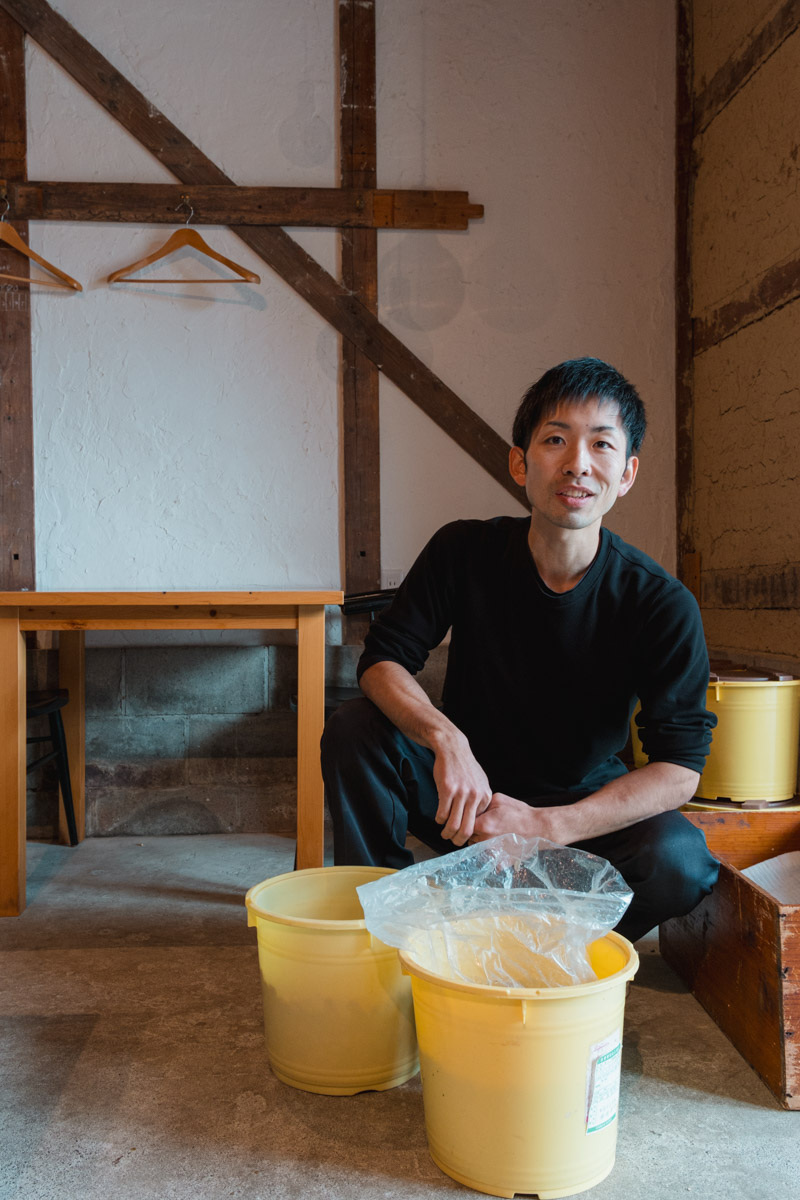
Ryosuke Sarai, owner-chef of “Restaurant Caravansarai.” The space, converted from an old ume-zō (a work shed used by ume farmers) that Sarai’s grandfather once used, retains its original 60-year-old wooden pillars and earthen walls. The homemade umeboshi, made using his grandfather’s recipe, is a treat reserved exclusively for visitors.

Born in South Africa in 1994. Painter and artist. After studying graphic design, Lebo came to Japan through the JET Programme. In 2024, he began creating work rooted in the local community. Having grown up in the dynamic South African nature, he continues to draw wild animals, especially baby animals.
KUMANOKODO KIIJI BIRDS
Finding Familiar Wild Birds
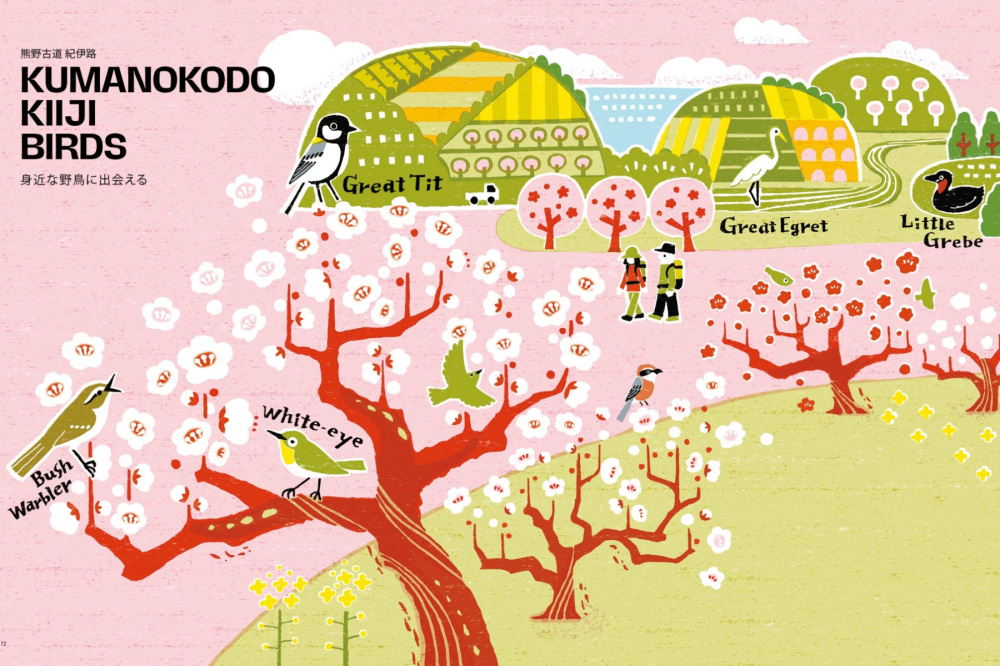
<Listen to the song of the birds>
Great Tit
Japanese White-eye
Bush Warbler
Aim for spring and autumn, when migratory and resident birds fill the route with life
The Kiiji connects the coastal side of the Kii Peninsula from north to south, passing through a mix of environments: rural hillsides, mixed woodlands, seashores, and river mouths. Each habitat reveals its own birds. Brown-eared bulbuls and Japanese bush warblers call from the hillsides and farmlands, while Japanese tits appear in the woodlands. In the ume groves, Japanese white-eyes zip between blossoms in search of nectar. At the river mouth, ducks and herons gather, while black kites glide overhead. Spring and autumn are especially lively, when winter birds, summer birds, and resident species overlap, and calls and songs rise from every direction.
The little grebe is a small waterbird found in ponds and marshes. It is sometimes mistaken for a duck, but it is something entirely different. From spring to autumn, the area from its chin to its neck turns reddish brown. Herons are among the birds most often seen near water. Common types include the white herons, such as great egrets and little egrets, the monotone grey heron, and the stocky black-crowned night heron. They are often seen in rice fields and waterways, making them some of the most familiar wild birds.
Route Guide
This feature is produced in collaboration with PAPERSKY No. 74, a travel and lifestyle magazine.
Explore More Things to See and Do Around These Areas
- Information on Nearby Attractions
- View more
- Information on Nearby Activities
- View more
- Popular Gourmet Foods, Sweets and Goods in Wakayama
- View more
- Arida, Yuasa, Hidaka Area: Original Japanese Landscape
- View more
- Kumano Kodo Kiiji Itineraries
- View more
View More Related Articles
- [A Birding Journey Through Wakayama] Aoi Yamada Wings It Through Wakayama
![[A Birding Journey Through Wakayama] Aoi Yamada Wings It Through Wakayama](/lsc/upfile/individual/0000/3530/3530_1_m.jpg)
- View more
- [A Birding Journey Through Wakayama Vol. 1] Discover Birds, Nature, and Local Flavors Along the Kinokawa Cycling Road Birding by mini velo, binoculars in pocket
![[A Birding Journey Through Wakayama Vol. 1] Discover Birds, Nature, and Local Flavors Along the Kinokawa Cycling Road Birding by mini velo, binoculars in pocket](/lsc/upfile/individual/0000/3531/3531_1_m.jpg)
- View more
- [A Birding Journey Through Wakayama] Into the BIRDS WAKAYAMA Forest, Sea, Mountain, Plum Orchard. Four Distinctly Wakayama Landscapes, Seen From Within
![[A Birding Journey Through Wakayama] Into the BIRDS WAKAYAMA Forest, Sea, Mountain, Plum Orchard. Four Distinctly Wakayama Landscapes, Seen From Within](/lsc/upfile/individual/0000/3532/3532_1_m.png)
- View more
- [A Birding Journey Through Wakayama] KOYASAN RYUJIN Fights, Courtship, and All the Drama of Bird Life
![[A Birding Journey Through Wakayama] KOYASAN RYUJIN Fights, Courtship, and All the Drama of Bird Life](/lsc/upfile/individual/0000/3533/3533_1_m.jpg)
- View more
- [A Birding Journey Through Wakayama] Wakanoura, the sacred place for waka poetry, is also a paradise for waterbirds.
![[A Birding Journey Through Wakayama] Wakanoura, the sacred place for waka poetry, is also a paradise for waterbirds.](/lsc/upfile/individual/0000/3534/3534_1_m.jpg)
- View more
- [A Birding Journey Through Wakayama] KUMANOKODO, NAKAHECHI In Search of the Forest Heartthrob. Following the Songs of Sugar and Spice
![[A Birding Journey Through Wakayama] KUMANOKODO, NAKAHECHI In Search of the Forest Heartthrob. Following the Songs of Sugar and Spice](/lsc/upfile/individual/0000/3535/3535_1_m.jpg)
- View more