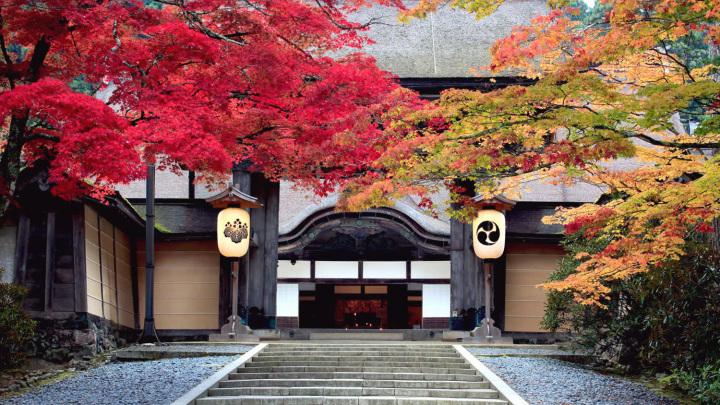
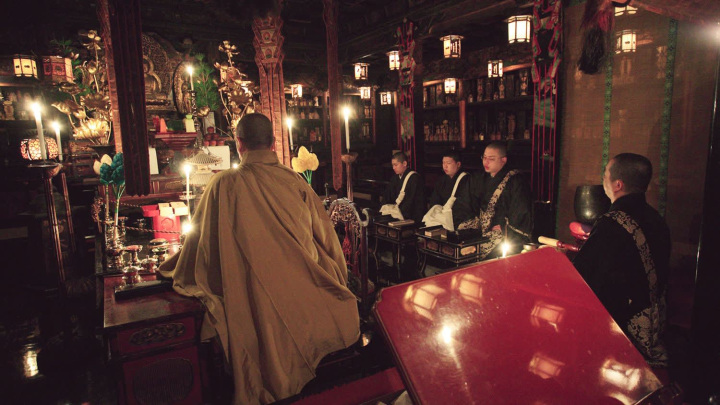
Day 6: Seigantoji Temple (Mt. Nachi) to Koguchi (Total walking distance: approx. 14.5 km)
- Spring
- Summer
- Autumn
- Winter
- Time
- 1 day
- Transportation
- walk
With Nachi Falls behind you, set out for Koguchi, a secluded village surrounded by deep greenery and clear streams.
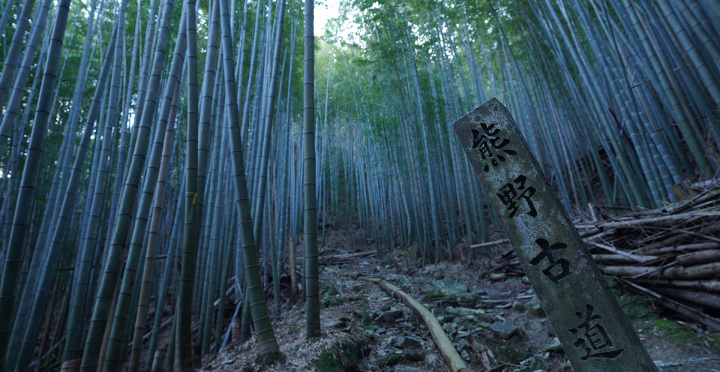
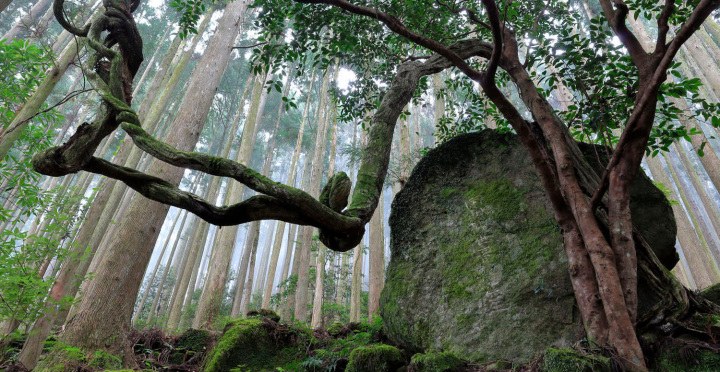
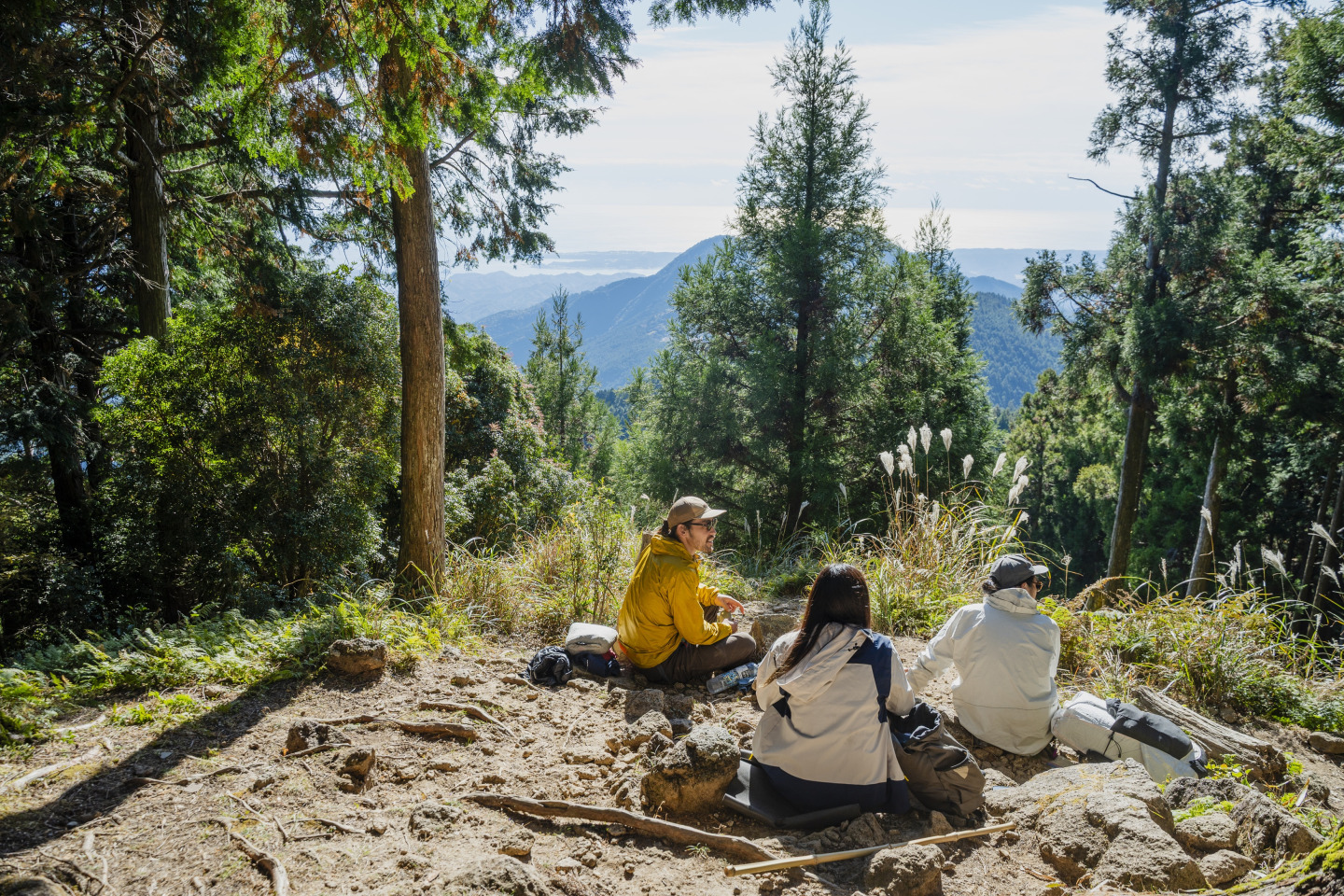
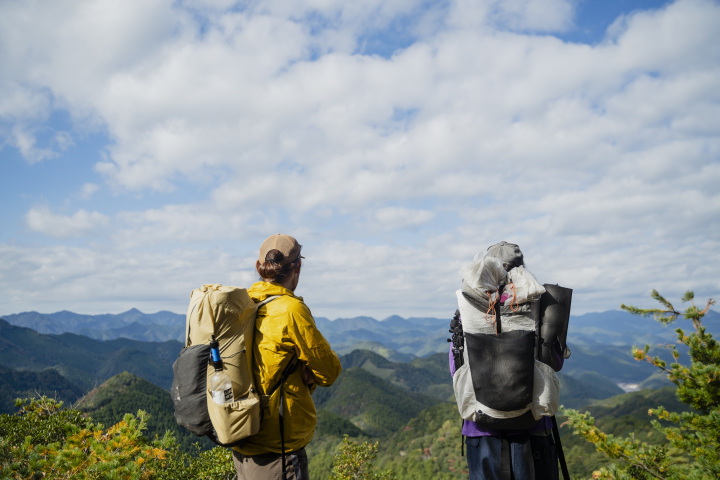
This section is known as Ogumotori-goe. As its name suggests, the trail leads deep into steep mountains that seem to rise into the clouds, crossing a series of demanding slopes. It is considered one of the most challenging sections of the Nakahechi Route of the Kumano Kodo. The effort is well rewarded, however, with a strong sense of the historic pilgrimage trail and some of the most beautiful scenery along the entire Kumano Kodo, including spectacular views from the mountain passes.
From the starting point at Nachisan Seiganto-ji Temple to the Funami-jaya Teahouse remains, approximately 4.5 km away, the trail mainly climbs uphill. From there, it continues with a series of ascents and descents before reaching Echizen-toge Pass, about 5.3 km farther on.
Beyond Echizen-toge Pass, the trail descends steeply. Over the next approximately 5 km, you will descend more than 800 meters in elevation. At the end of this long descent lies today’s destination: Koguchi.
The moment you arrive at this small, quiet village surrounded by mountains, you may feel the tension that has built up during the hike begin to ease. A visit to a local store offers a chance to enjoy a casual conversation and a friendly smile from the shopkeeper—simple gestures that can bring gentle comfort to both body and mind after a demanding day.
※Click here for the top page of the Nakahechi Long Trail.
Nachi Kogen Park
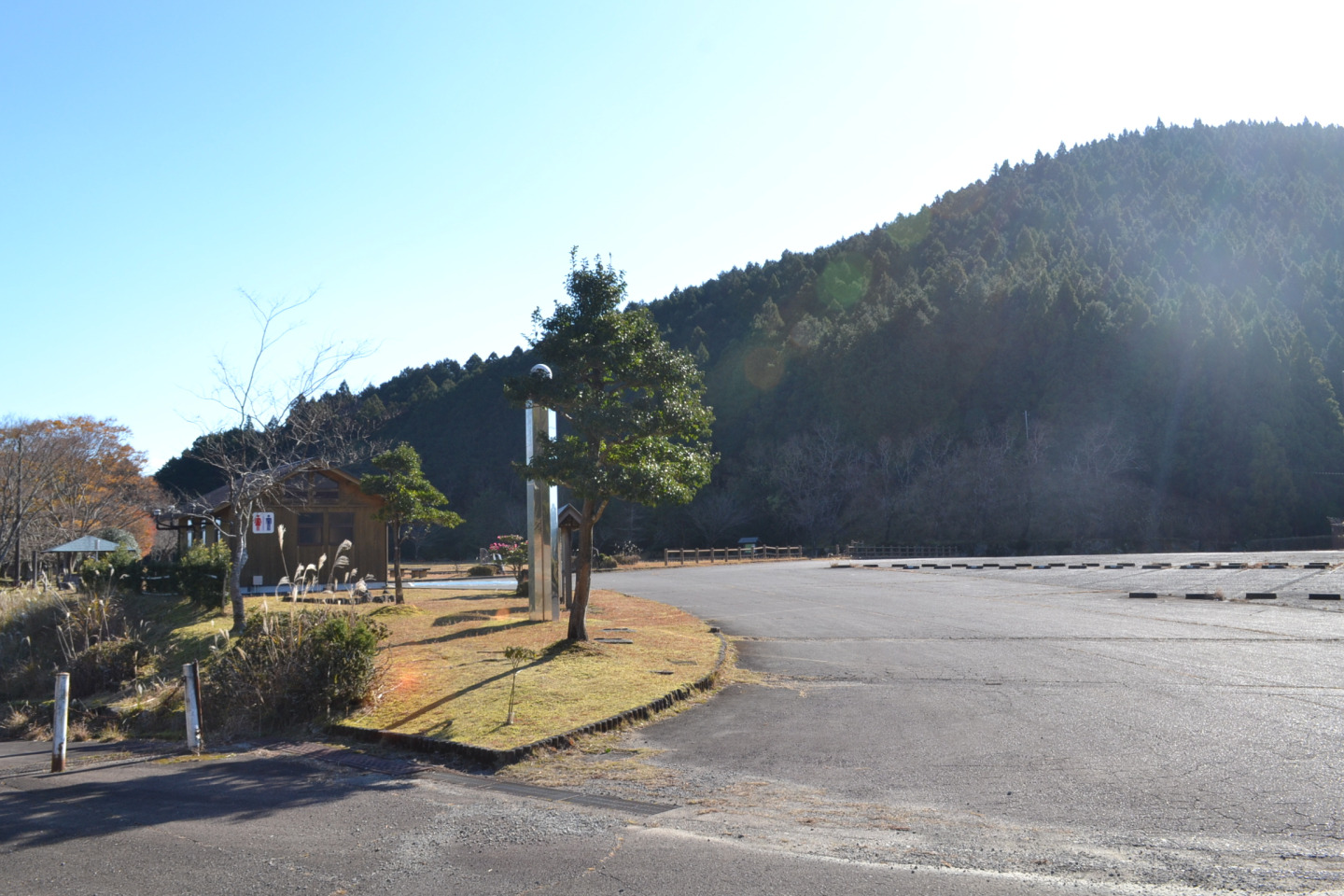
This forest park is located about 200 meters uphill from Nachisan Seiganto-ji Temple. Although it is no longer operated as a park, restrooms are available, making it a convenient place to take a short break.
Noboritate-jaya Teahouse remains
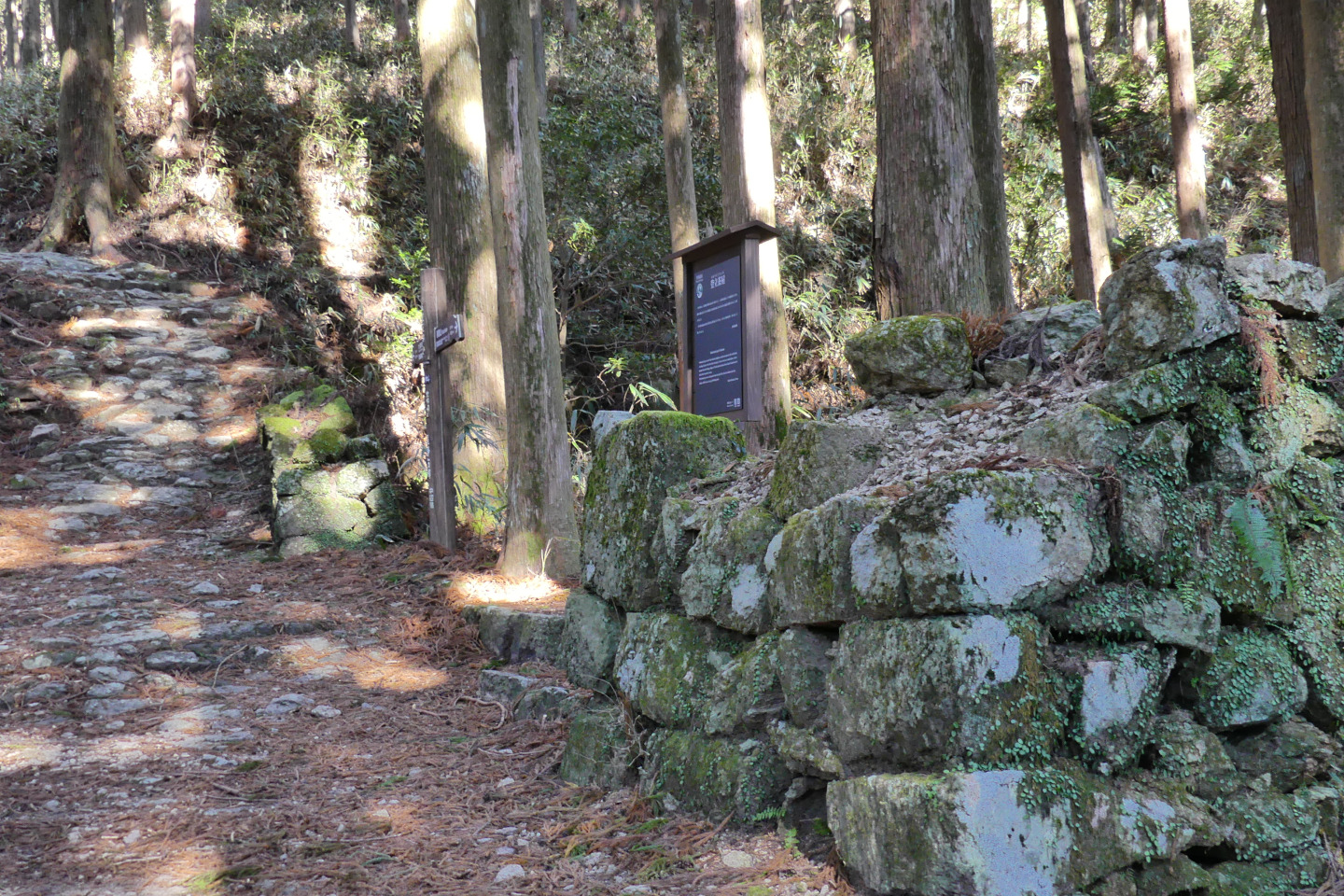
This was the teahouse closest to Nachi along the Ogumotori-goe Route. At the time, the teahouse also served as a market and is said to have been a place where people from the fishing villages of Nachi traded with people from Tanabe in the inland area.
From here, the trail climbs steeply toward Funami-toge pass, which offers one of the finest views on the entire route.
Funami-jaya Teahouse remains
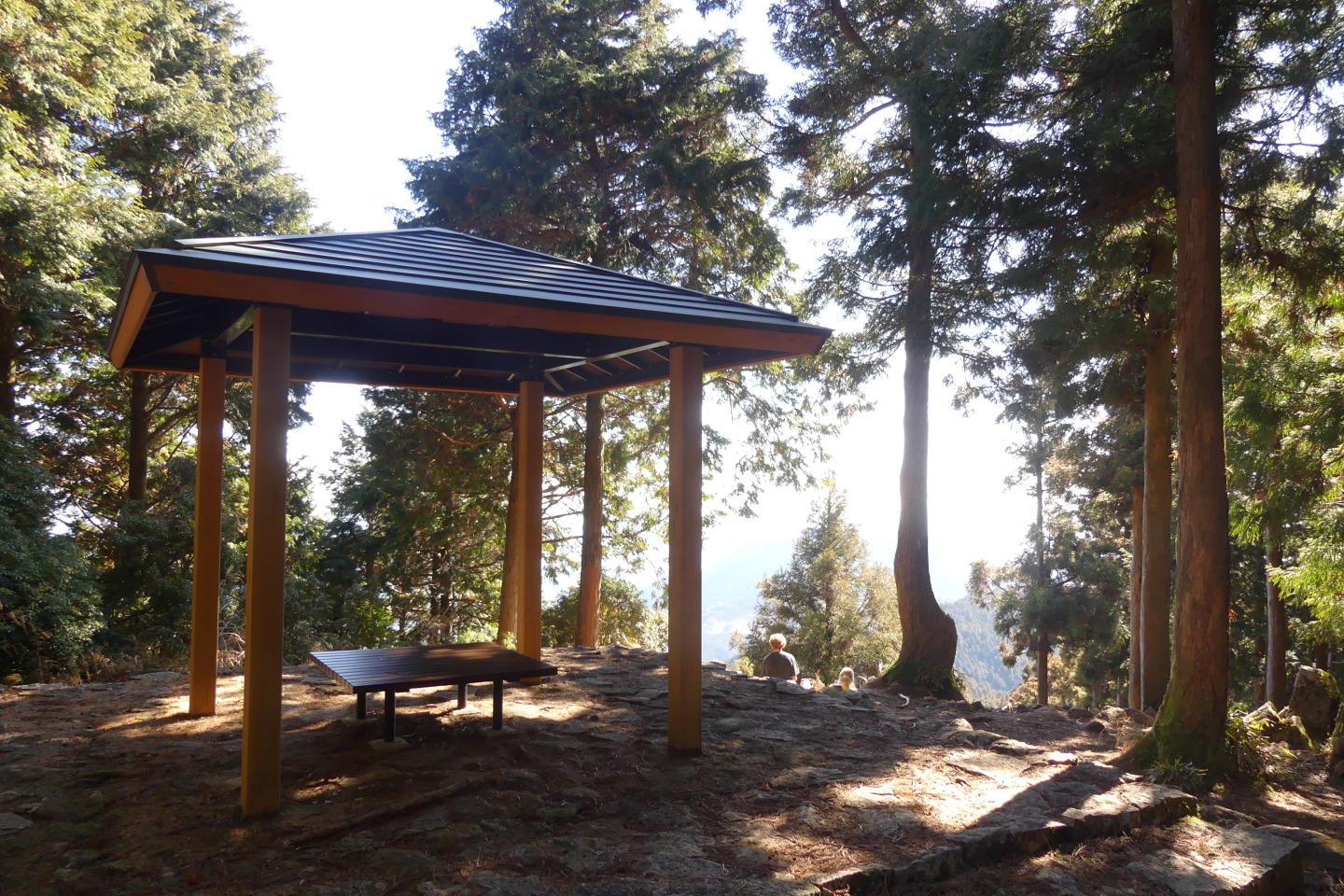
Located where the trail reaches Funami-toge Pass, this former teahouse is featured in the Saigoku Sanjusan-sho Meisho Zue, a guidebook depicting famous sites along the Saigoku Kannon Pilgrimage. Funami-toge is the highest pass along the Ogumotori-goe trail. From the rest area, which features a traditional shelter, you can enjoy sweeping views of the Pacific Ocean to the left, with Myohozan Mountain, the Nachi Highlands, and Nachikatsuura Town to the right.
For pilgrims traveling from the Hongu area to Kumano Nachi Taisha via the Ogumotori-goe trail, this was the first place where they could catch a distant glimpse of their destination, Nachi. For those returning to Hongu, it was the place to look back and bid a final farewell to Nachi. Pilgrims traveling in either direction are said to have stopped at this teahouse to rest and take in the spectacular panoramic views.
Column
Moja-no-Deai Abode of the Dead
Between the Funami-jaya Teahouse remains and Irokawa-tsuji, there is an eerie stretch of trail known as “Mōja no Deai,” or “Meeting the Dead.” According to legend, those walking along this path may encounter a deceased friend or family member approaching from the opposite direction.
Kumano has long been associated with the world of the dead. According to the Nihon Shoki (Chronicles of Japan), Kumano is said to be the place where the deity Izanami-no-Mikoto was buried, and where her husband, Izanagi-no-Mikoto, followed her into Yomi, the underworld where the dead reside.
There is also a story of a pilgrim who encountered someone at this spot, only to discover after returning home that the person they had met had already passed away.
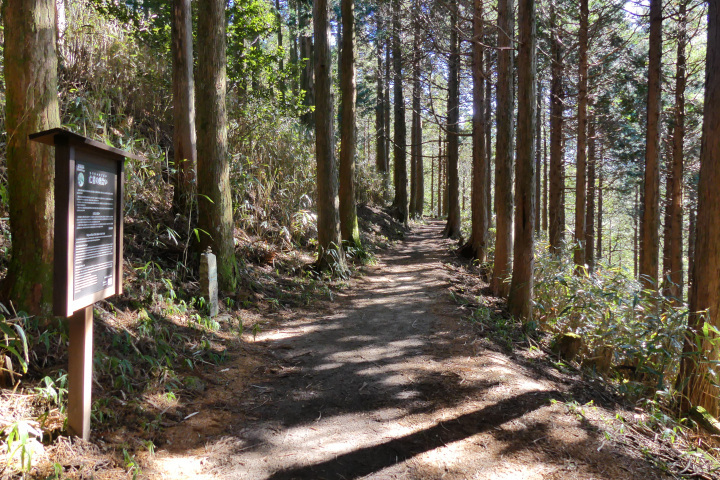
Jizo-jaya Teahouse remains
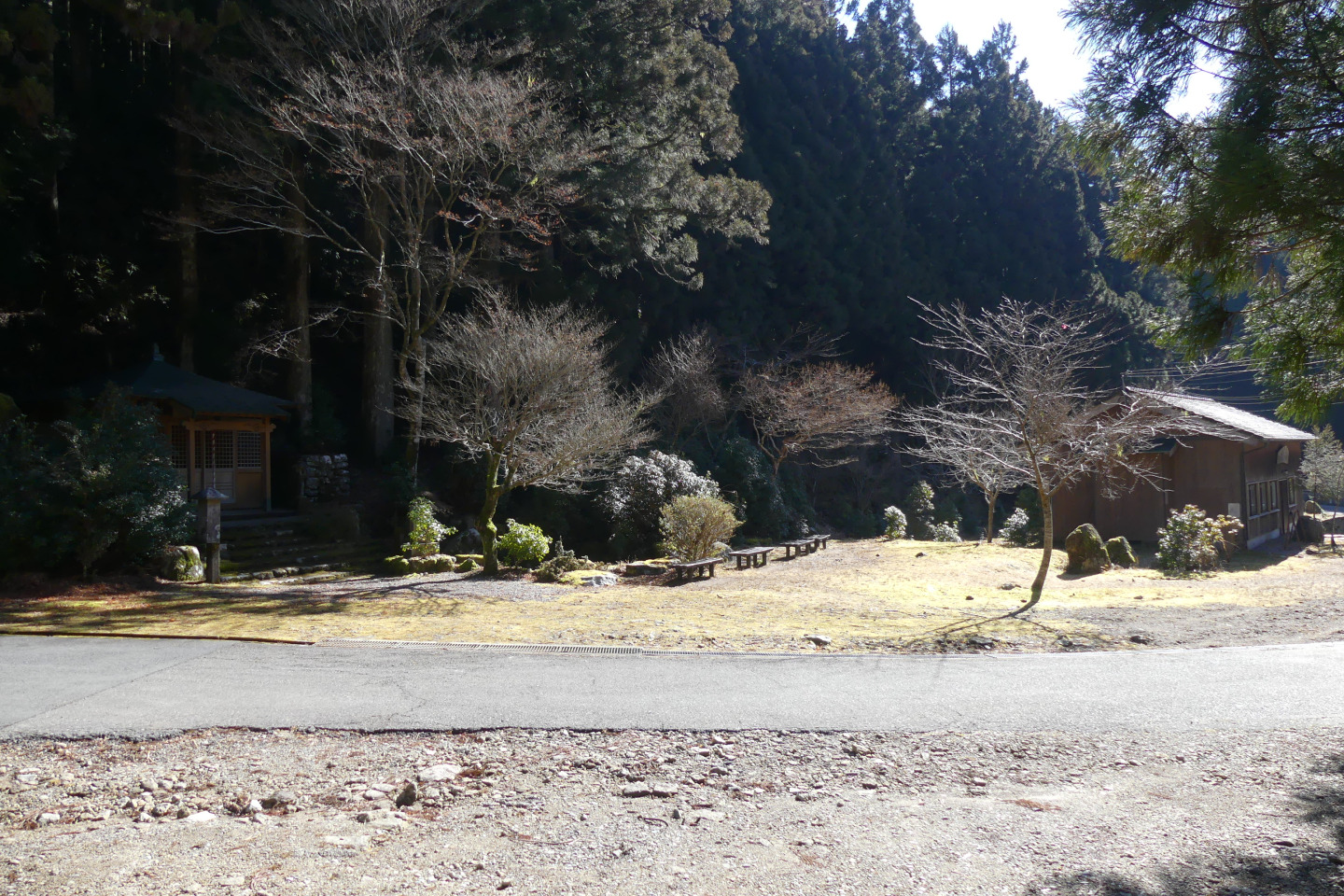
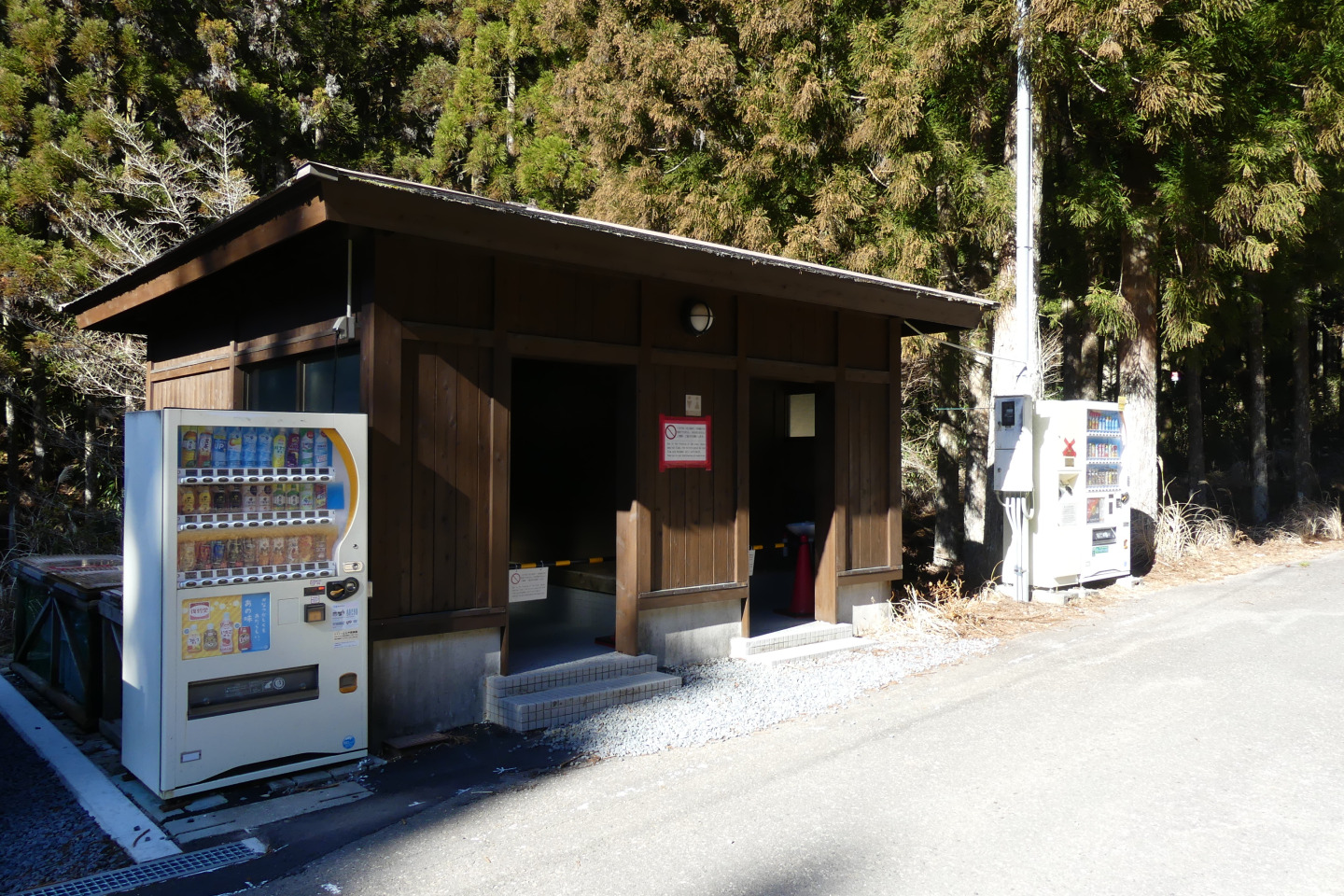
Located almost exactly halfway along the Ogumotori-goe Route, this teahouse is said to have operated until 1921. Jizo-jaya takes its name from the nearby Jizo-do, a small Buddhist hall dedicated to Jizo, a compassionate guardian deity believed to protect travelers and children.
Please note that the restroom is unavailable from the end of December to early March due to the risk of freezing in winter.
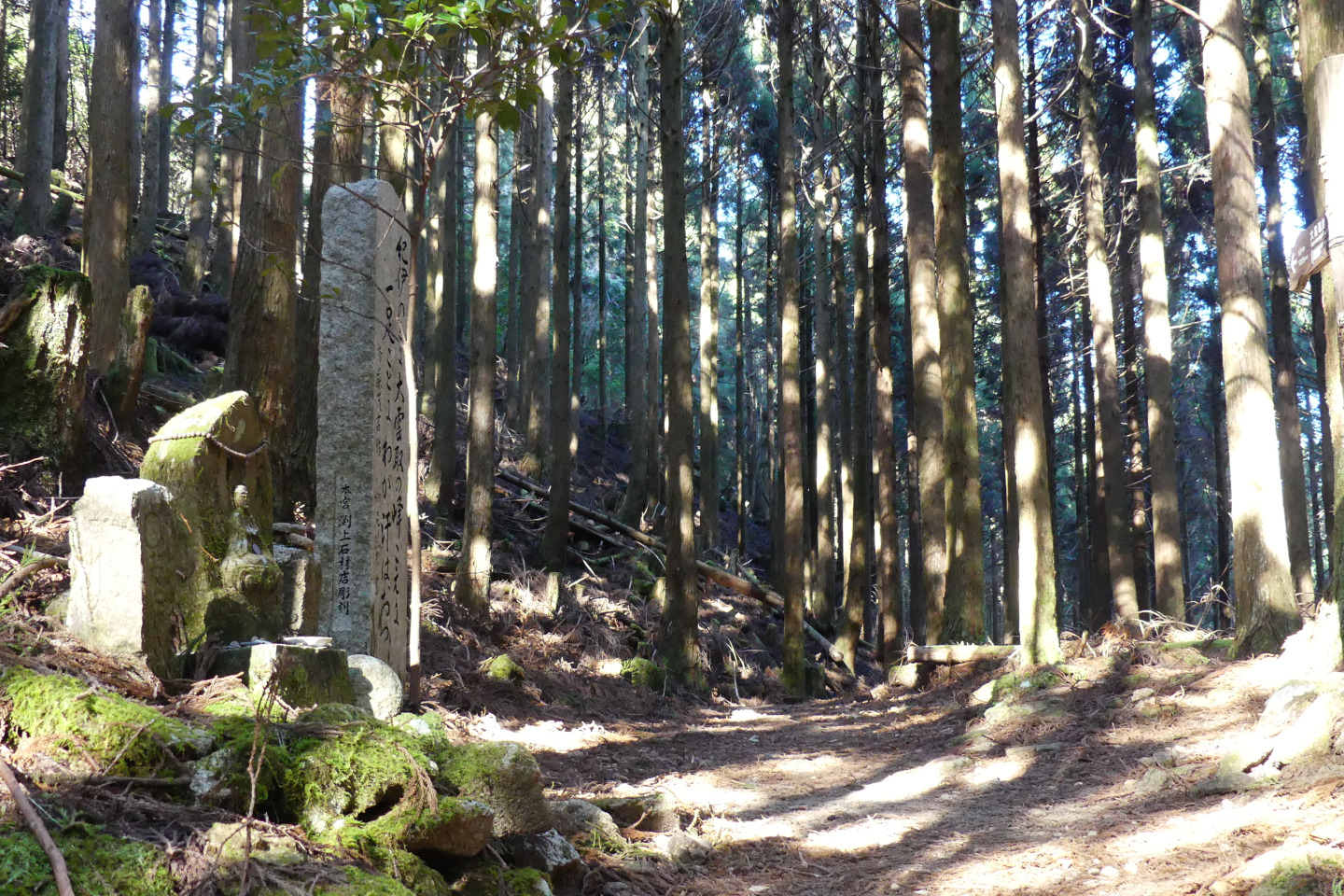
Ishikura-toge pass
Echizen-toge pass
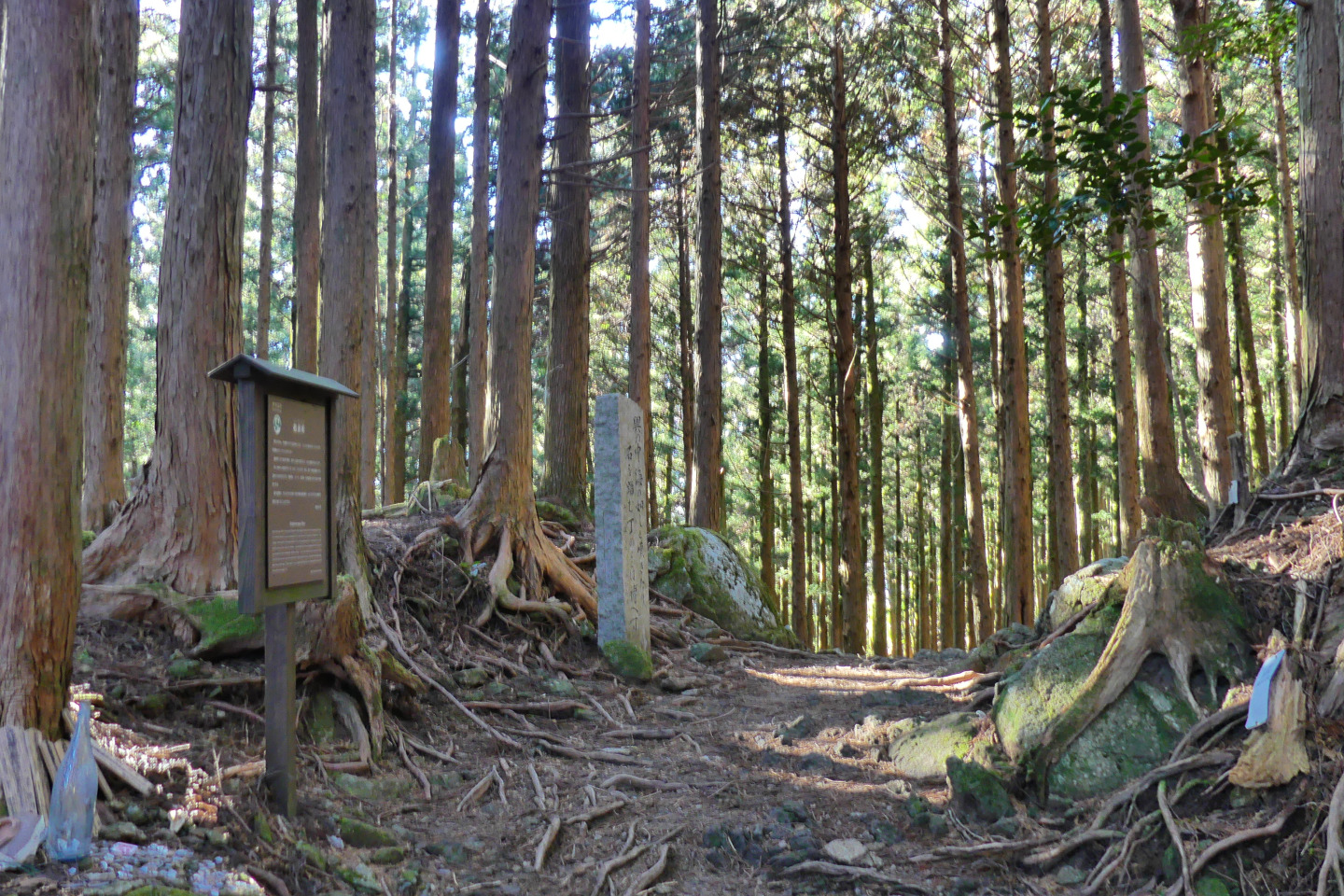
Echizen-toge Pass stands at an elevation of 850 meters. From here to the Kusu-no-Kubo Lodging Remains, the trail becomes the most challenging section of the Ogumotori-goe and Kogumotori-goe routes, with steep slopes and sections of stone paving.
The elevation at the finish point in Koguchi is approximately 65 meters. This means that over the roughly 5 km to Koguchi, you will descend nearly 800 meters.
Kusu-no-Kubo Lodging remains
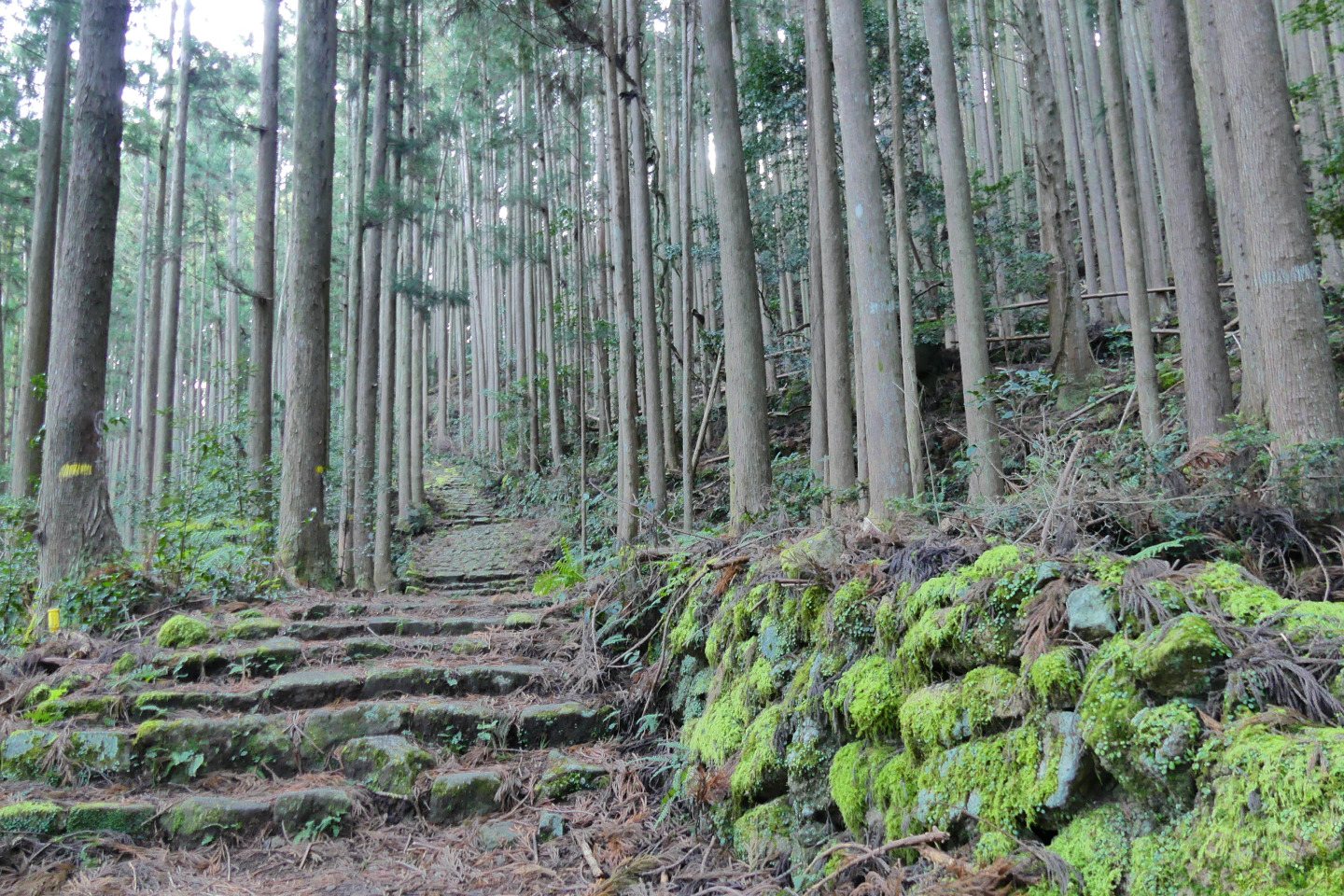
In the past, the approximately 1.5-kilometer stretch was home to the remains of several residences. From 1603 to 1868, during Japan’s Edo period, dozens of traditional Japanese inns operated here, making the area a lively place.
It is also said that innkeepers would point toward the teahouse on the Kogumotori-goe Route to the north and call out to travelers, “There are no more lodgings ahead, so you should stay here tonight.”
These inns are said to have continued operating until around 1926.
Waroda-ishi Rock
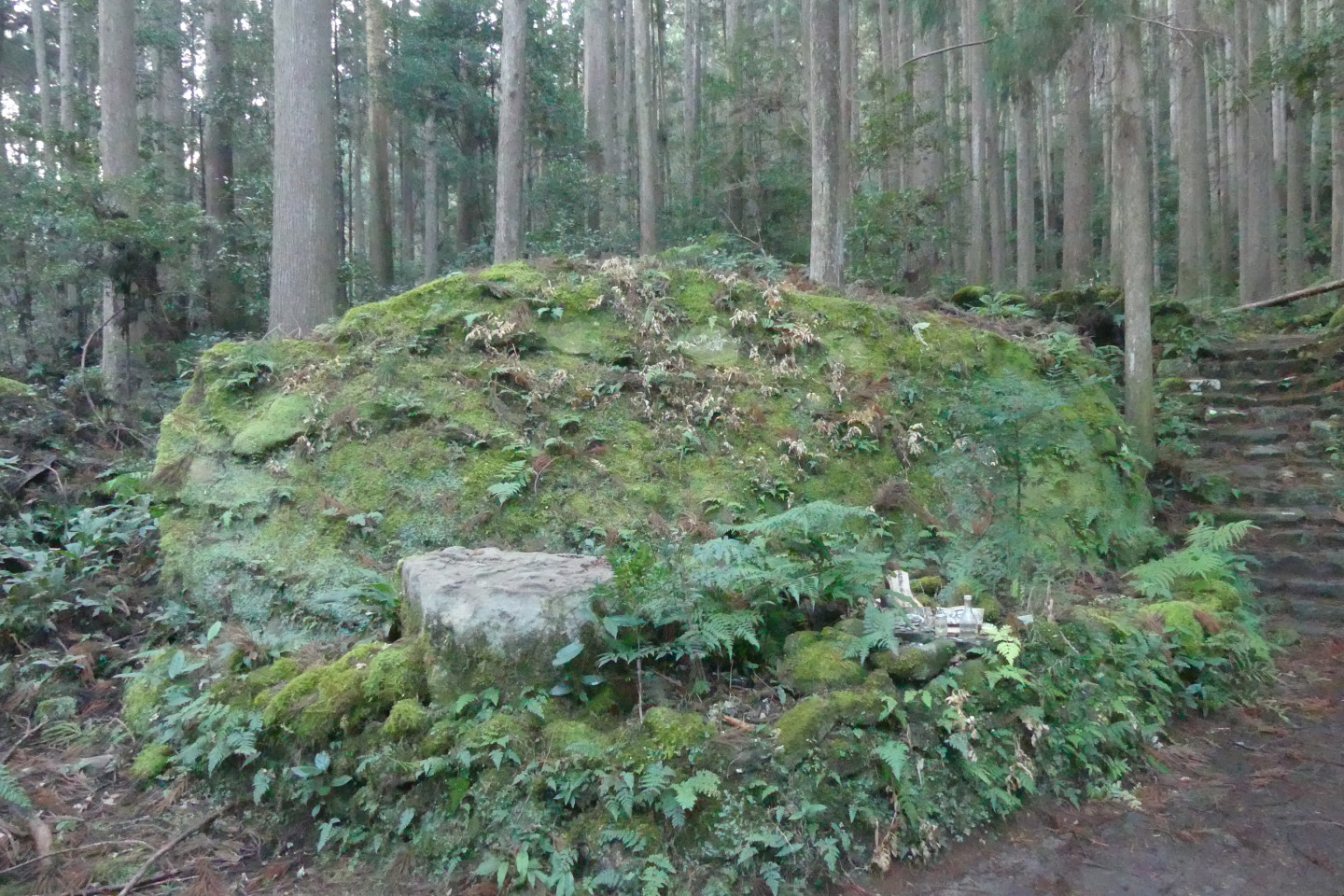
Waroda-ishi Rock is said to be the place where the deities of the Three Grand Shrines of Kumano once sat in a circle, drinking sake and enjoying friendly conversation.
The name “Waroda-ishi” comes from waroda, a round mat traditionally woven from straw or rushes. The rock is said to have been given this name because its shape resembles one of these mats.
Three inscriptions representing Buddhist figures are carved into the surface of the rock. They are believed to depict the deities of the Three Grand Shrines of Kumano sitting in a circle and chatting together.
From right to left, the inscriptions represent Amida Nyorai at Kumano Hongu, Yakushi Nyorai at Kumano Hayatama, and Kannon Bosatsu at Kumano Nachi.
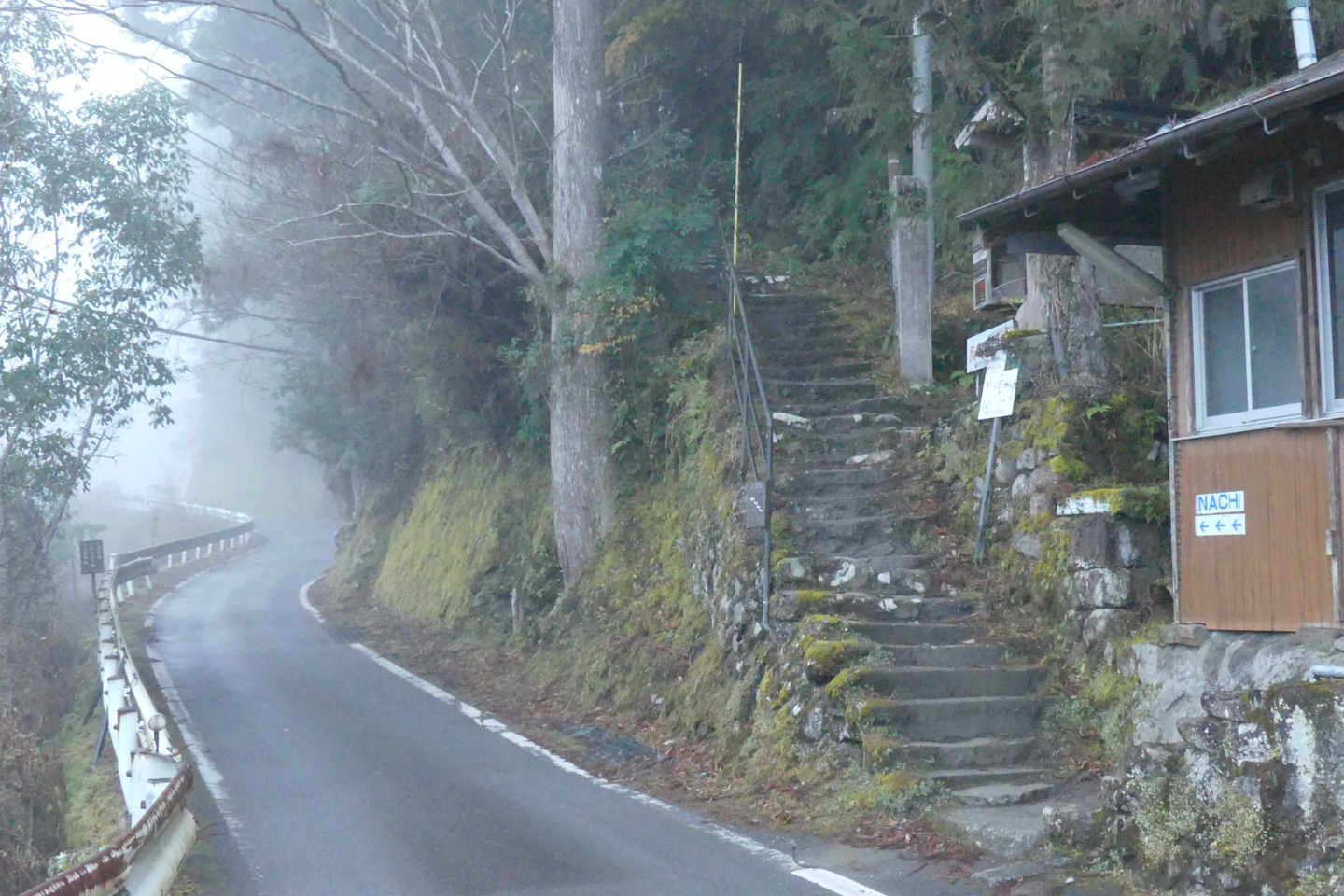
Ogumotori-goe section trailhead
Column
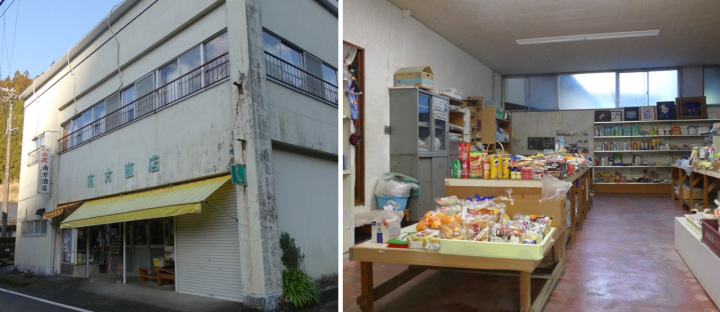
Minakata Store
Minakata Store is located right next to the trailhead for Ogumotori-goe.
It is open from 7:00 a.m. to 6:00 p.m. and is generally open year-round, although it may occasionally be closed. The store sells food, drinks, clothing, and other supplies, making it a valuable place to stock up before tackling the Ogumotori-goe and Kogumotori-goe routes.
Tonight’s Accommodation
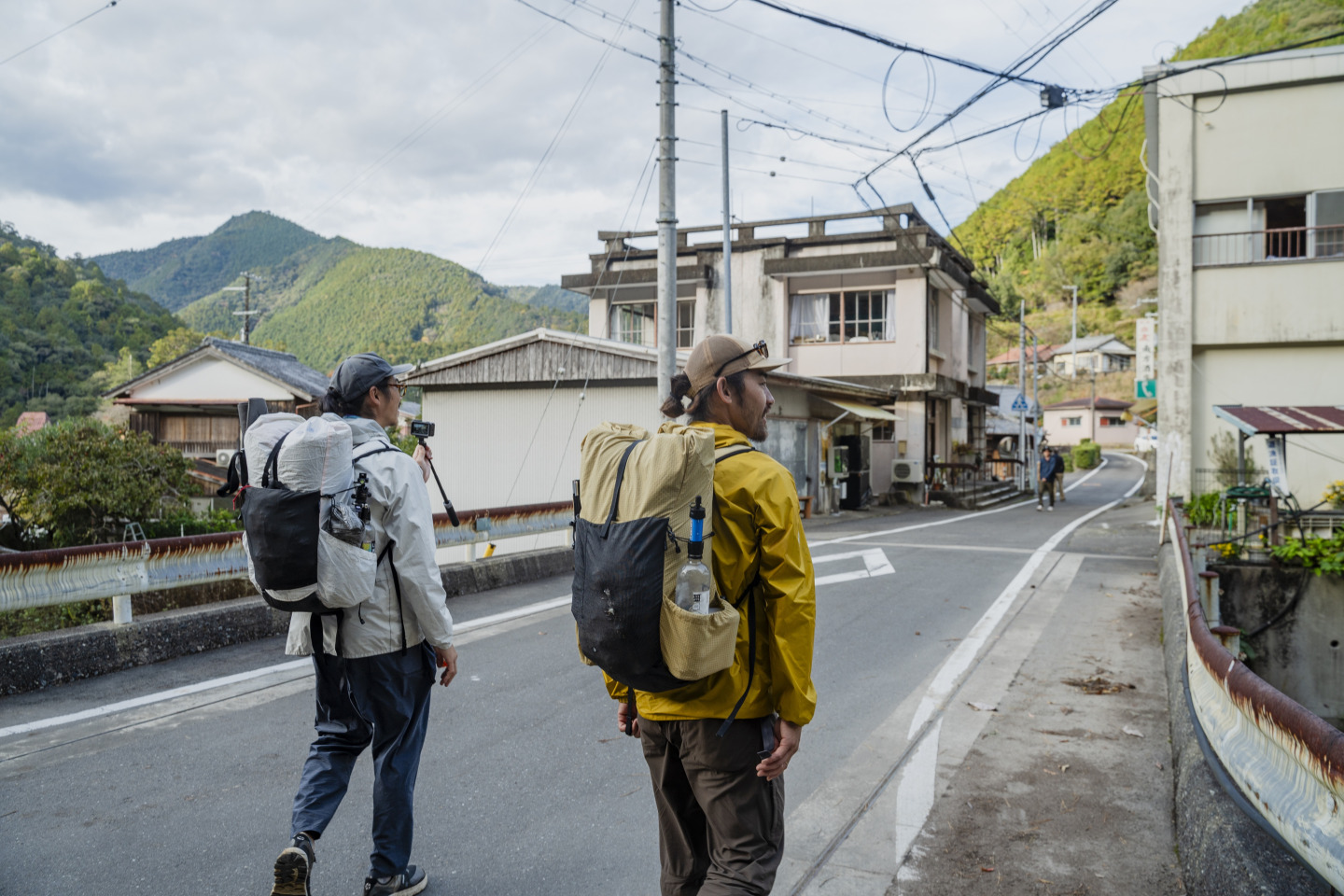
For information about accommodations around Koguchi, please check the link below.
Be sure to check the route for the following day as well!
- View the route for the following day
- View more