Day 7: Koguchi to Kumano Hongu Taisha (Total walking distance: approx. 16 km)
- Spring
- Summer
- Autumn
- Winter
- Time
- 1 day
- Transportation
- walk
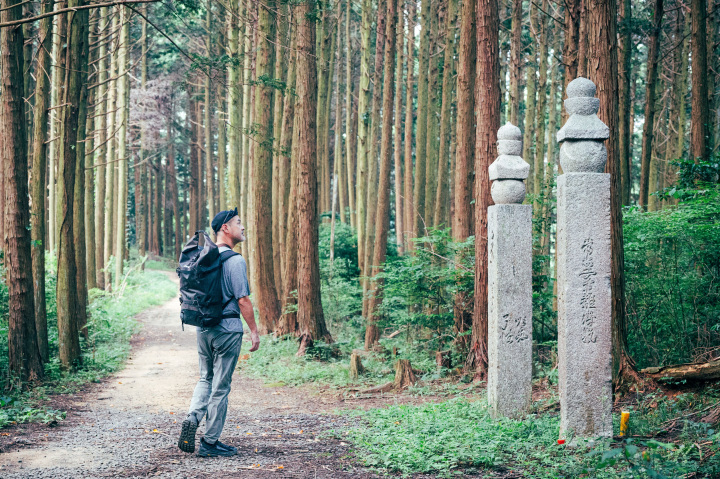
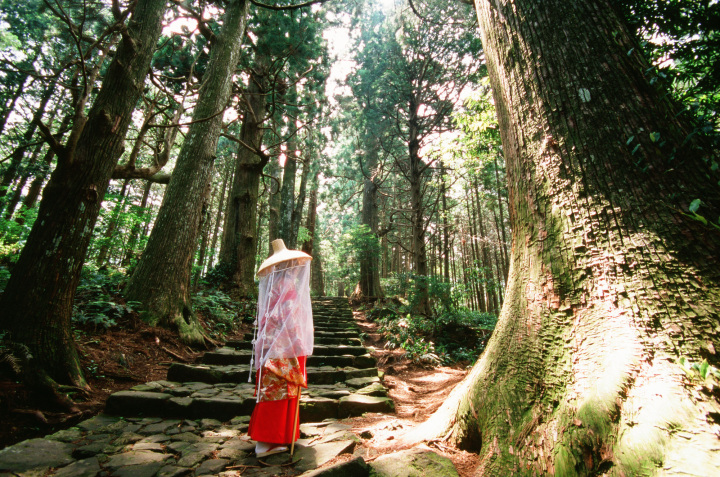
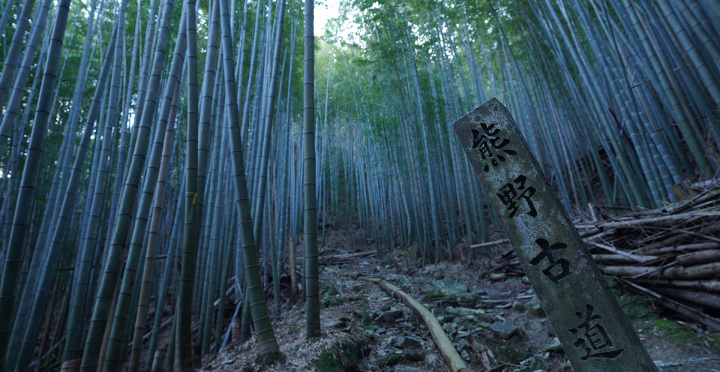
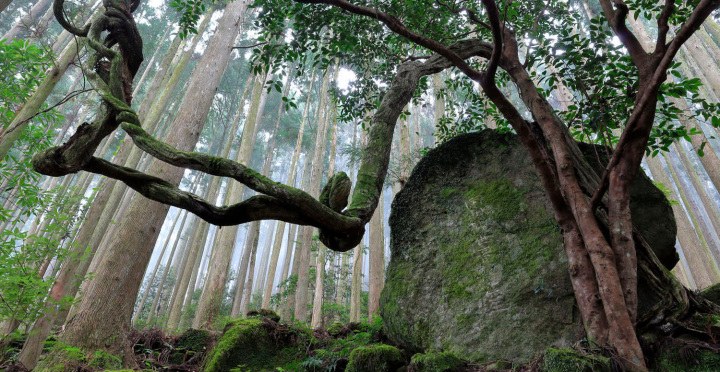
After spending your final night in Koguchi and waking to a peaceful morning, it is time to set out on the Kogumotori-goe, the trail that leads back to Kumano Hongu Taisha. Compared with the Ogumotori-goe, the Kogumotori-goe has fewer steep climbs and descents, making for a pleasant hike through the forest.
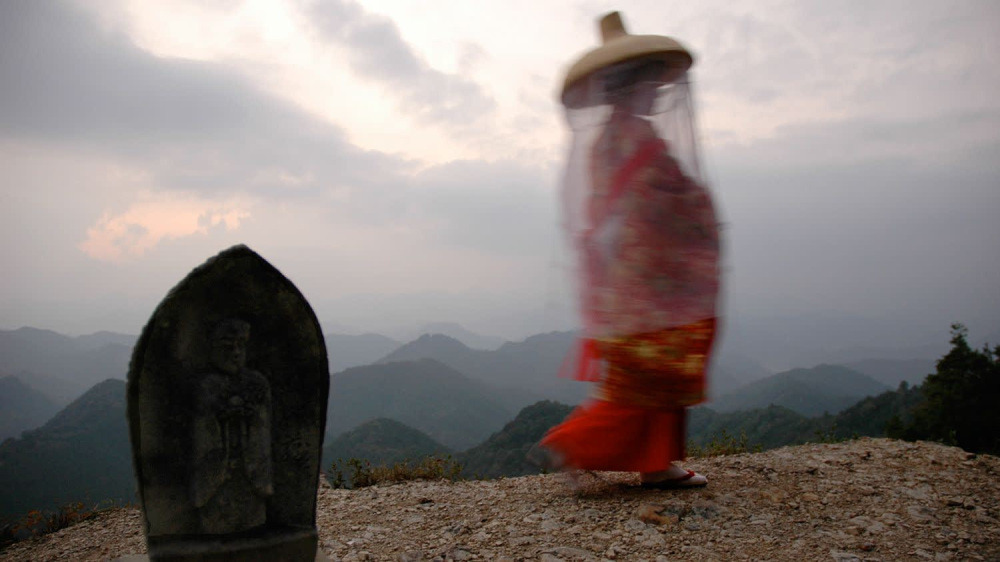
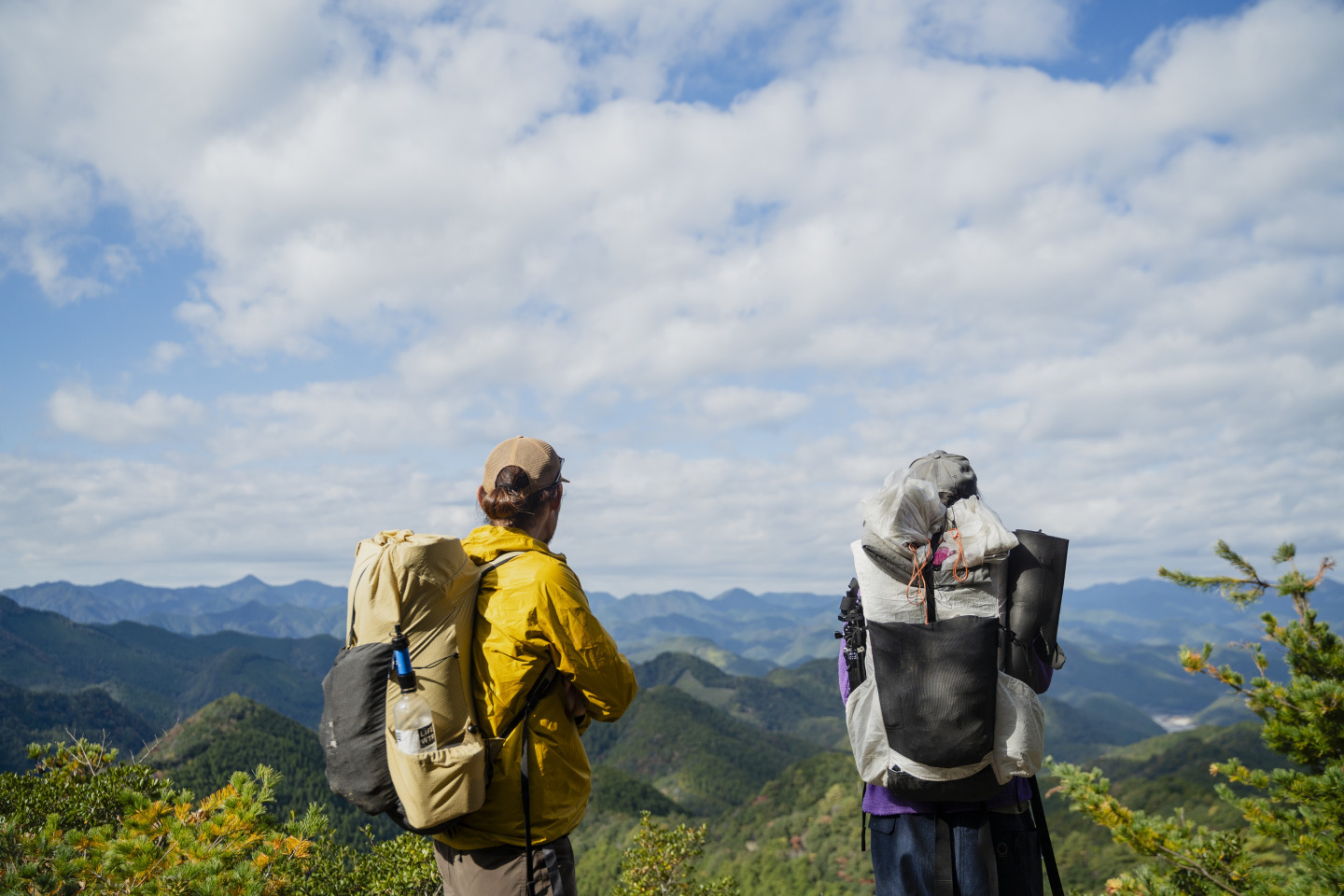
The highlight of this route is the spectacular panorama from Hyakken-gura, where you can take in sweeping views of the distant Hatenashi Mountain Range. Why not take a moment to pause, admire the breathtaking scenery before you, and quietly reflect on the journey you have made so far?
From there, descend the mountain and continue through Ukegawa along the Kumano River, eventually arriving once again at Kumano Hongu Taisha. The moment of the grand finale has finally arrived.
If you have the opportunity to speak with local people near the finish, be sure to share a little about your journey. Tell them, “I’ve walked the entire Nakahechi route.” The moment you say these words, you may be greeted with warm smiles, surprise, and heartfelt words of congratulations. For pilgrims who have completed the entire route, these are perhaps the greatest rewards of all—the moment when the fatigue of the journey turns into a sense of joy and accomplishment.
Hongu, Hayatama, and Nachi. After crossing the mountains, following the rivers, visiting these three sacred places, and finally returning here, what will you feel? Carrying with you the irreplaceable experiences gained during your long seven-day journey, you are sure to take your next step from here into a new chapter of everyday life.
Kowaze Ferry remains
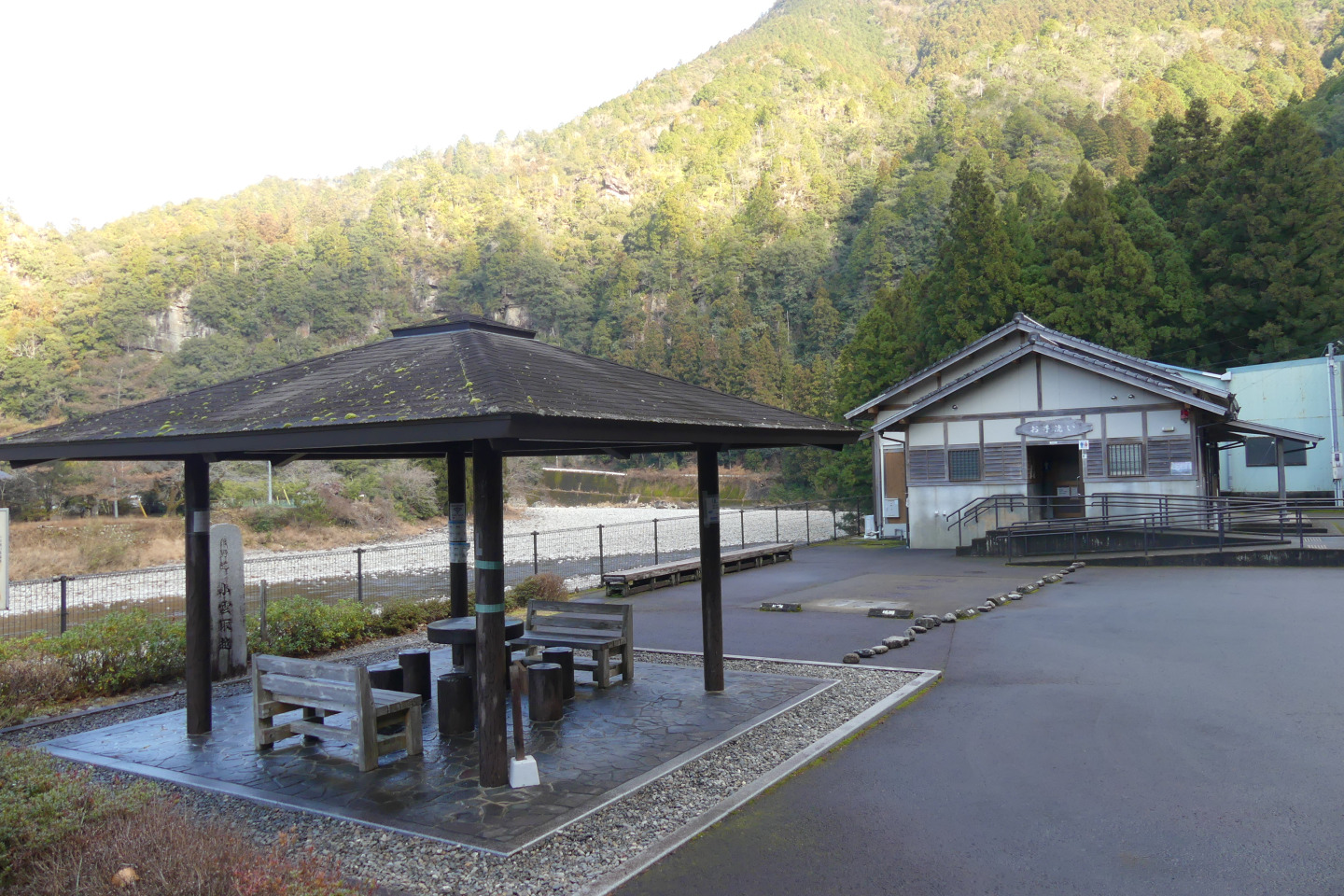
At Kowaze, the entrance to the Kogumotori-goe Route, there was once a ferry here that carried pilgrims across the river, often transporting them in groups. In 1954, a suspension bridge was built, and it has since been replaced by the sturdy concrete bridge that stands there today.
From here to the Sakura jaya Teahouse remains, approximately 2.4 km away, the trail climbs about 350 meters in elevation. The route includes a series of steep uphill sections, so please take care as you make your way up.
Sakura-jaya Teahouse remains
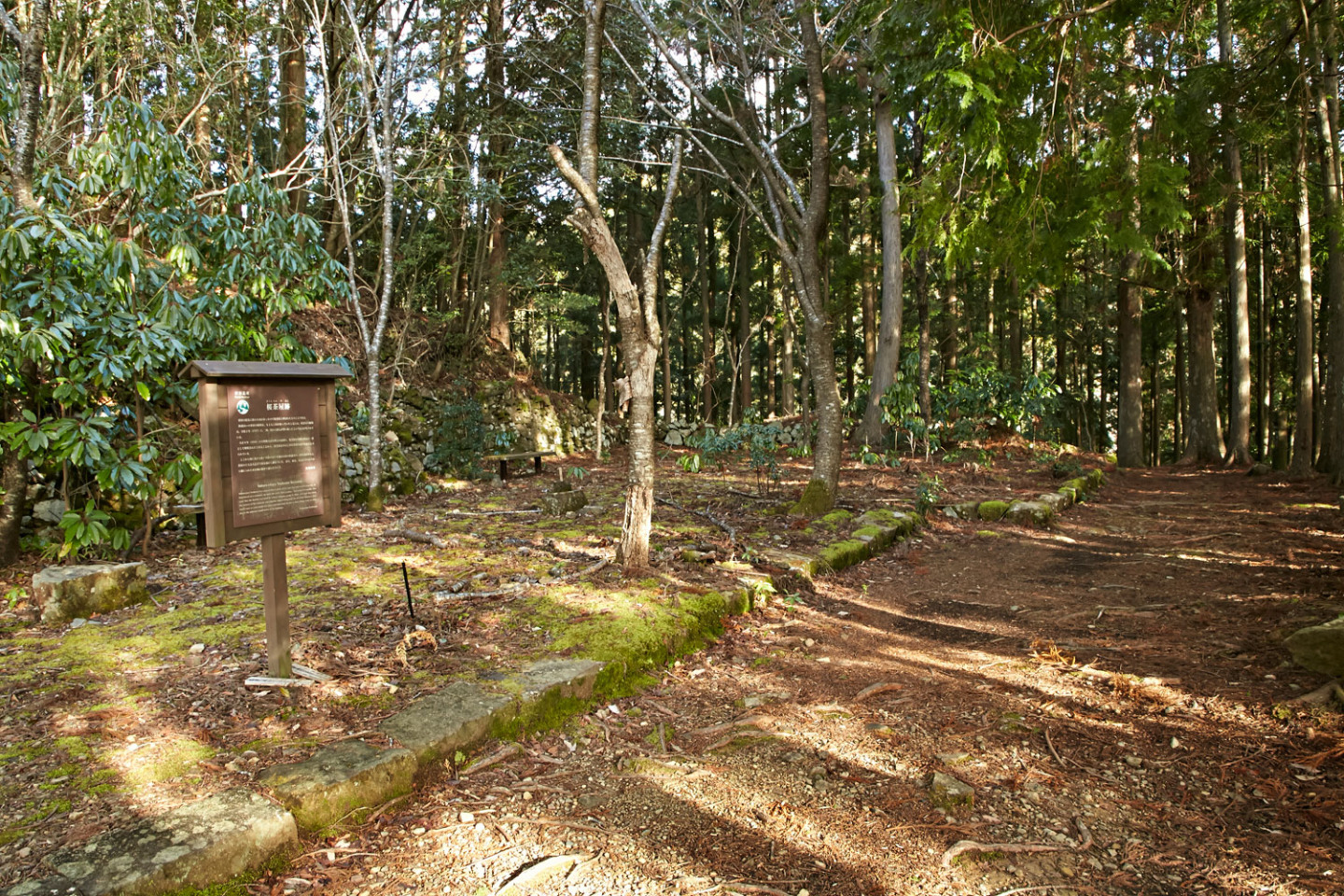
These are the remains of a teahouse located just before Sakura-toge Pass. The teahouse is said to have been named after the large cherry tree that once stood in its garden, and it remained until around 1912.
Long ago, when the owner spotted pilgrims dressed in white approaching from this teahouse, which offered excellent views, he would prepare rice cakes and boil tea to welcome and refresh them.
Ishido-jaya Teahouse remains
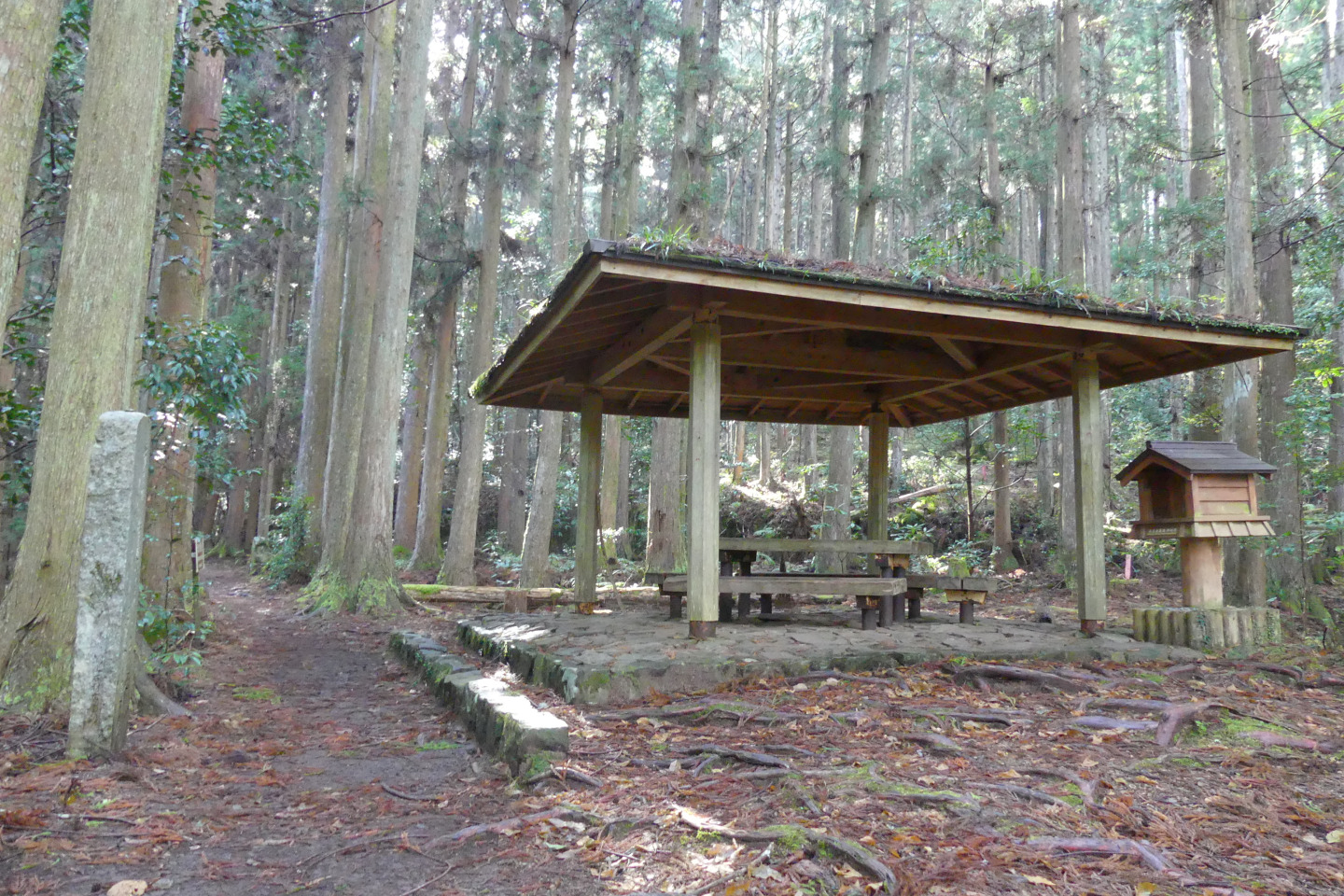
At the site of the former Ishido-jaya, there is now a gazebo-style shelter with a roof and benches, where hikers can take a break. From 1603 to 1868, two teahouses operated here. At the site of the former Ishido-jaya, there is now a gazebo-style shelter with a roof and benches, where hikers can take a break. From 1603 to 1868, two teahouses operated here.
Hyakken-gura
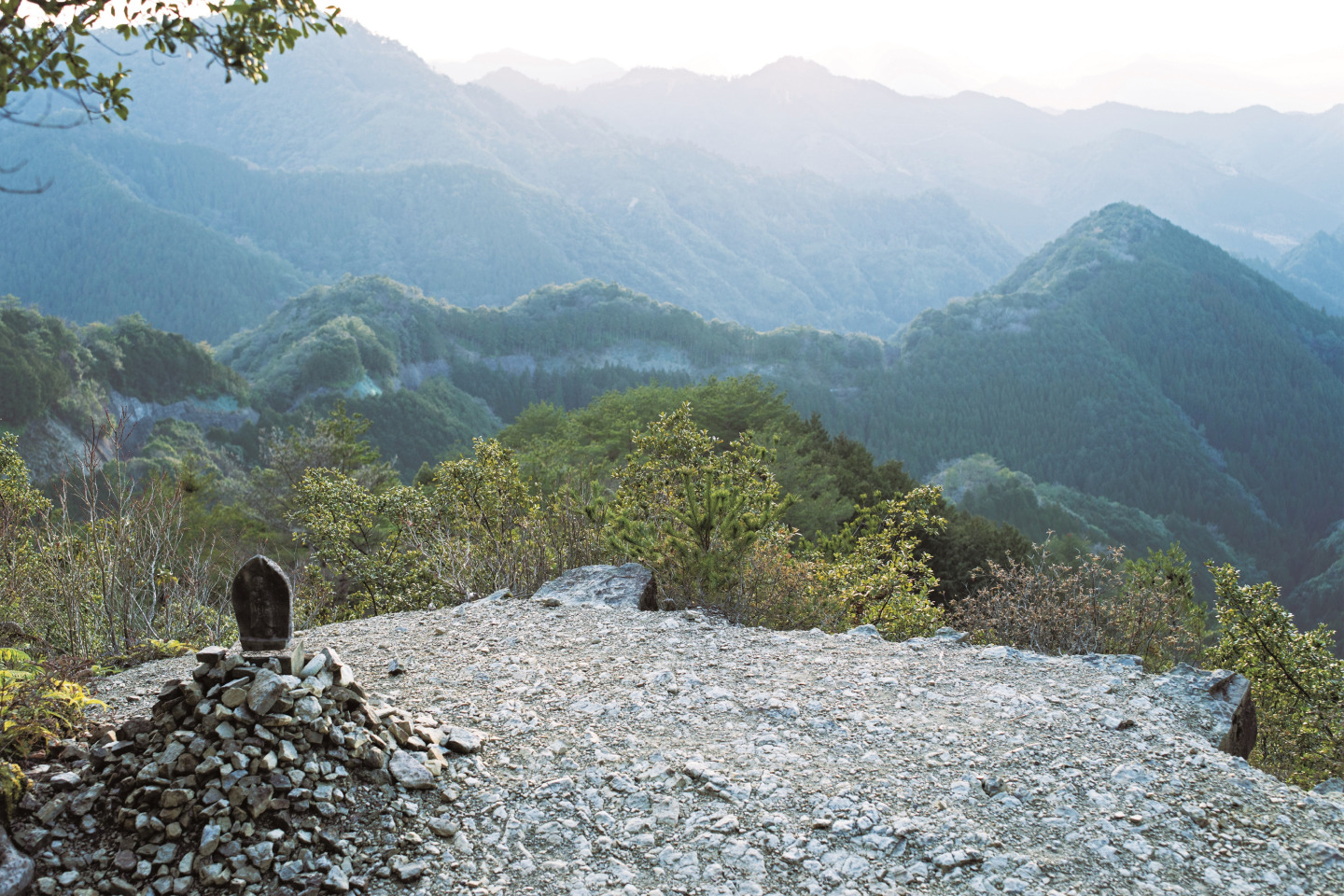
This is the finest viewpoint along the Kogumotori-goe Route, where the dense forest suddenly opens up to reveal a spectacular panorama. A small statue of Jizo, a Buddhist guardian figure, stands beside the cliff and serves as a landmark.
From here, you can enjoy unobstructed views of the mountains of Kumano in every direction, making it an ideal spot for taking photographs. In evening, the sun sinks toward the northwest, creating a beautiful and magnificent panorama.
Banze-toge pass junction
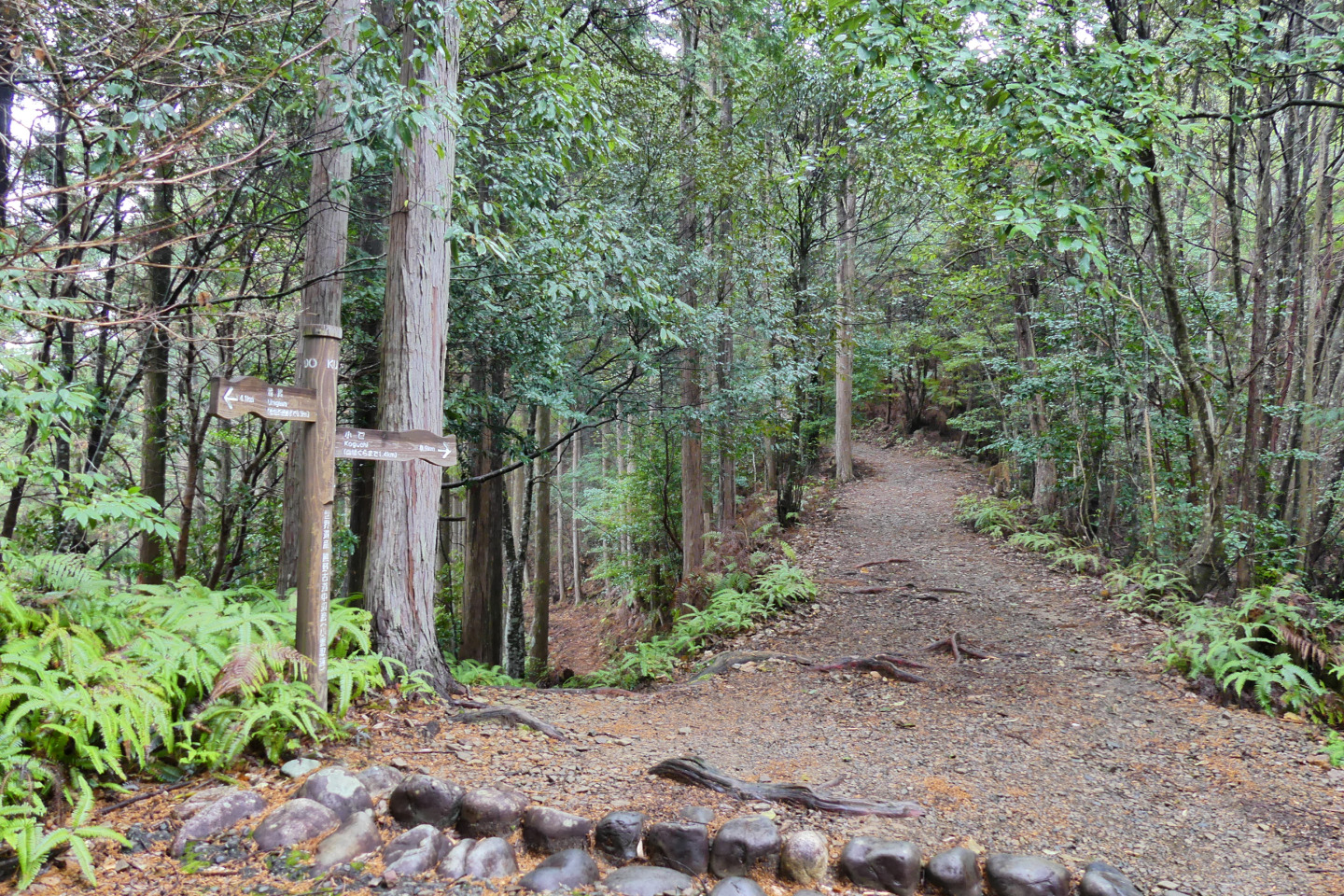
Banze-toge Pass is a junction with the Iseji Route of the Kumano Kodo. For pilgrims traveling from Mie Prefecture along the Iseji Route toward Kumano Hongu, this was the final mountain pass on their journey.
Matsuhaya-jaya Teahouse remains
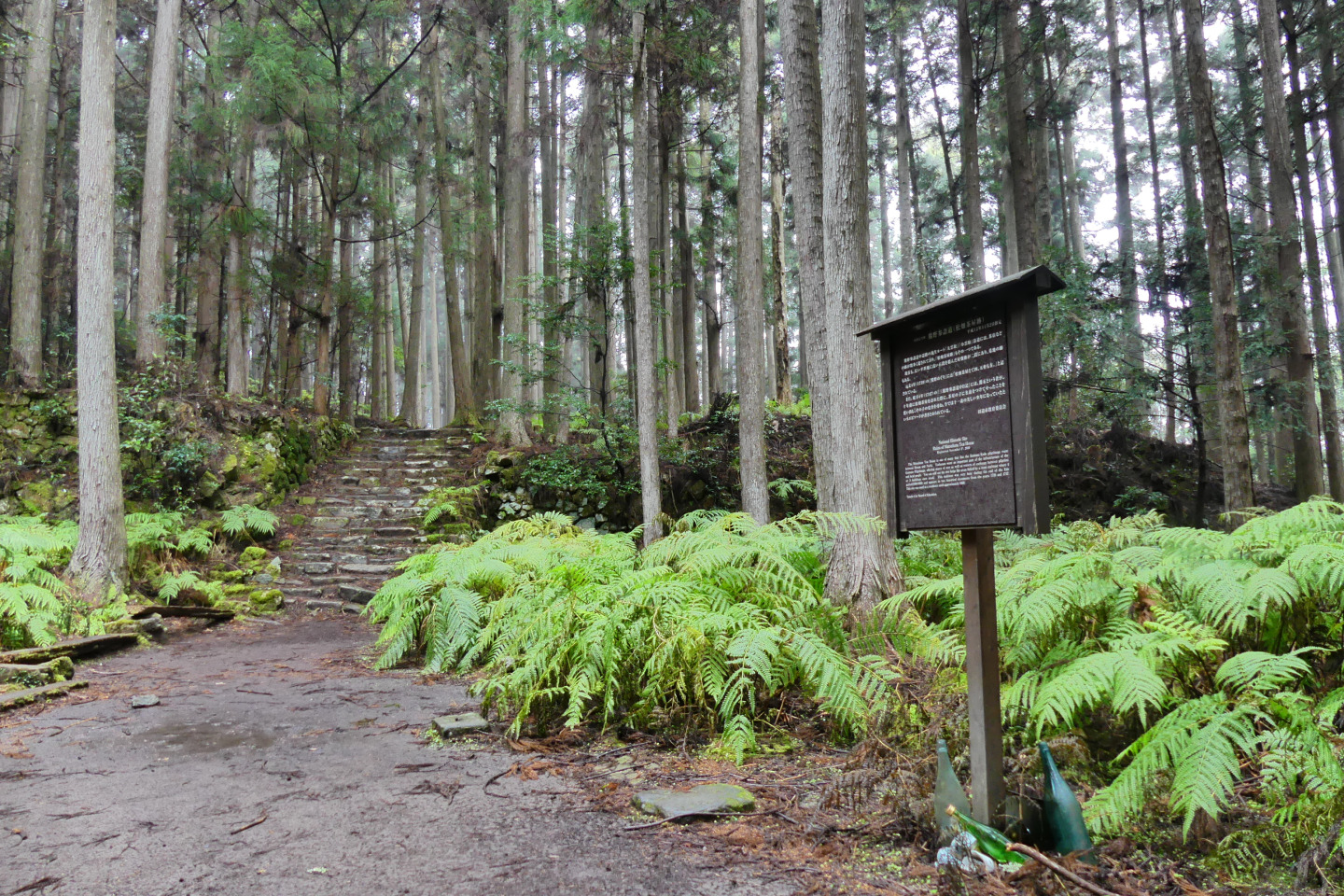
These are the remains of a teahouse that was so well known that it was used even by travelers coming from the Iseji Route. A record from 1739 mentions that there were “four or five teahouses known as Matsuhata-jaya.”
The teahouse continued operating until around the 1950s. Today, the remains of two residences, marked by tall stone walls, can still be clearly seen.
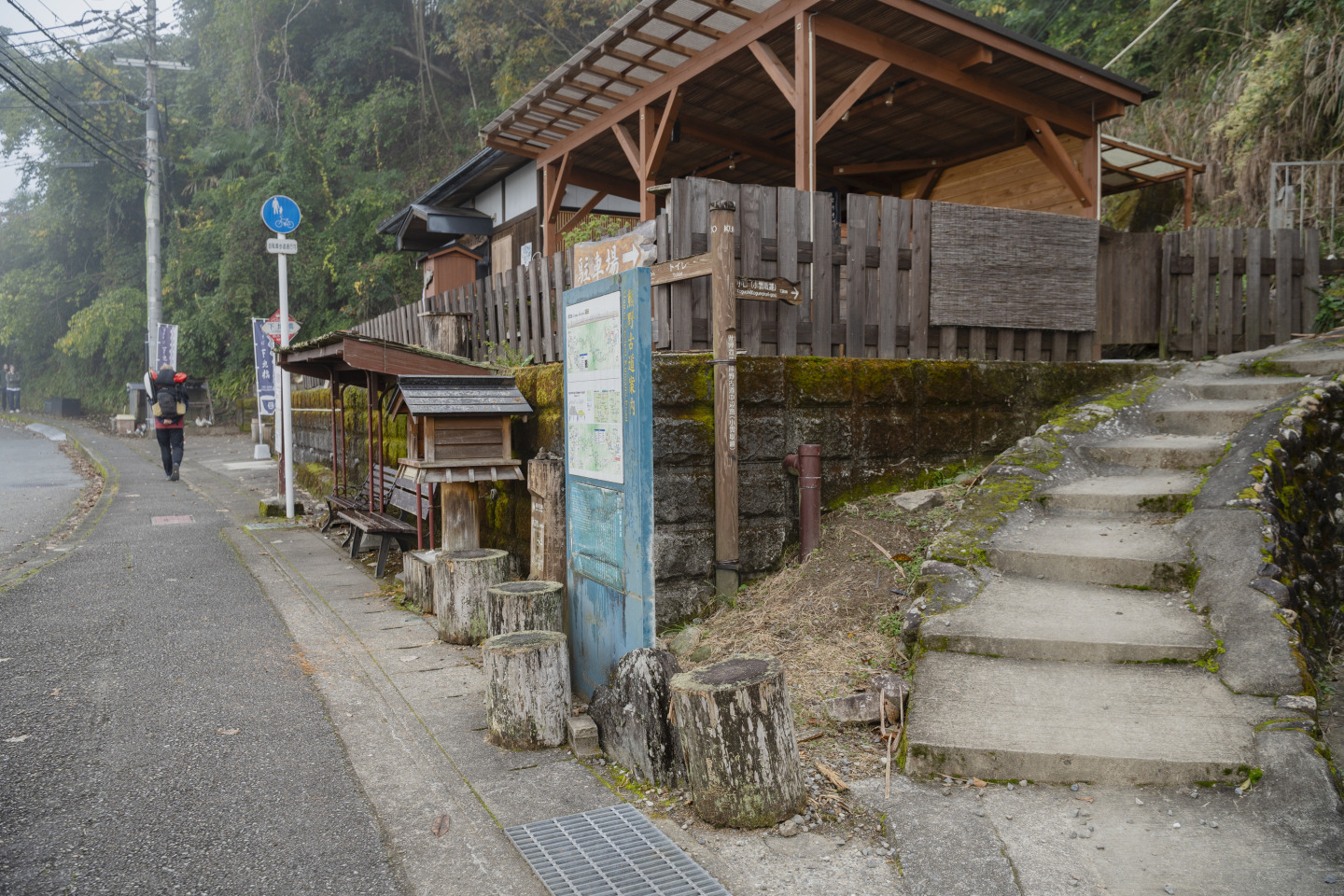
Kogumotori-goe section trailhead
Kumano Hongu Taisha/Oyunohara
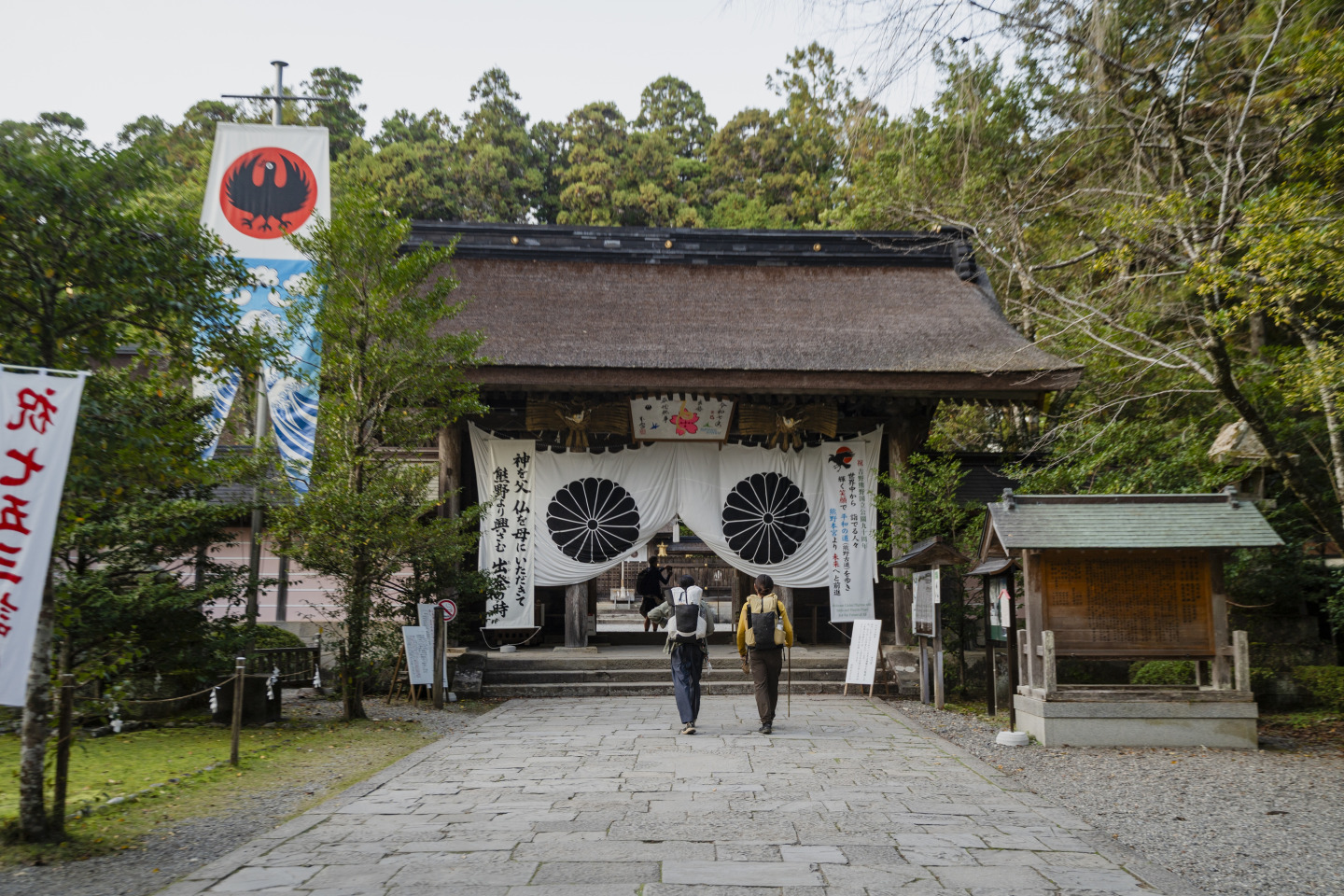
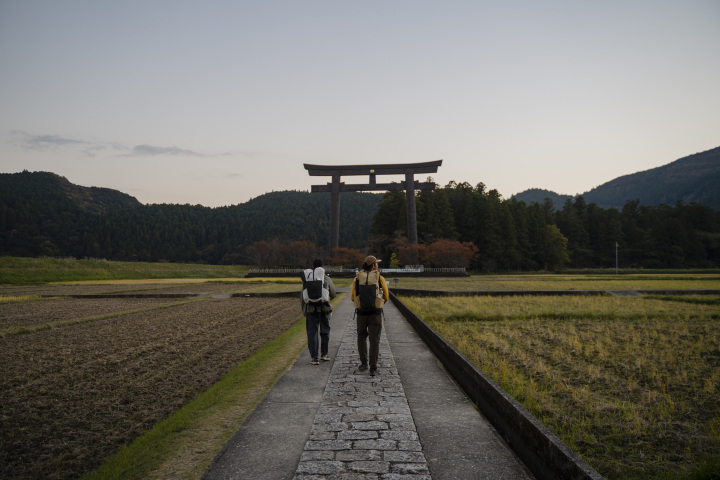
To conclude your journey, visit Kumano Hongu Taisha and Oyunohara, the former site of the shrine, once again.
After seven long days of travel, congratulations on completing your pilgrimage!
If You Have a Pilgrimage Passport
Pick up your certificate at the World Heritage Kumano Hongu-kan or the Tourist Information Center in front of Tanabe Station.
Column
If You Have a Pilgrimage Passport…
Pick up your certificate at the World Heritage Kumano Hongu-kan, located in front of Kumano Hongu Taisha, or at the Tourist Information Center in front of Tanabe Station.