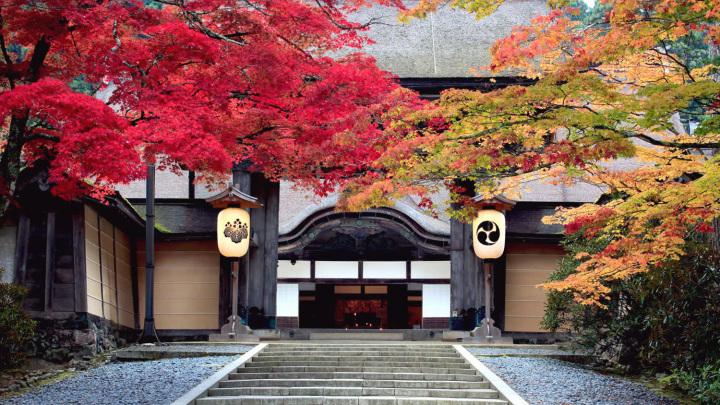
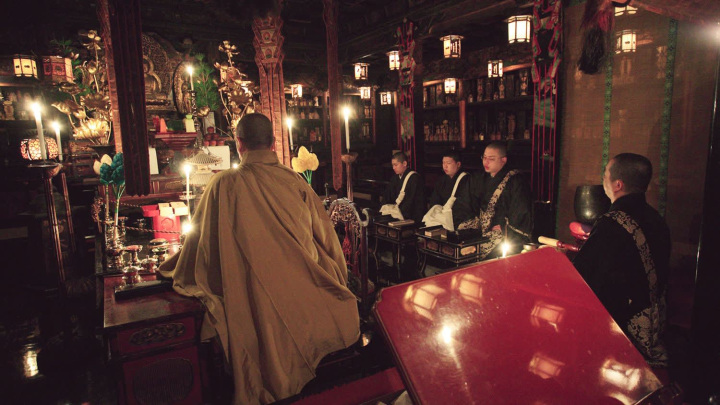
Day 5: Kumano Hayatama Taisha to Kumano Nachi Taisha, Seigantoji Temple & Nachi Waterfall (Approx. 22 km)
- Spring
- Summer
- Autumn
- Winter
- Time
- 1 day
- Transportation
- walk
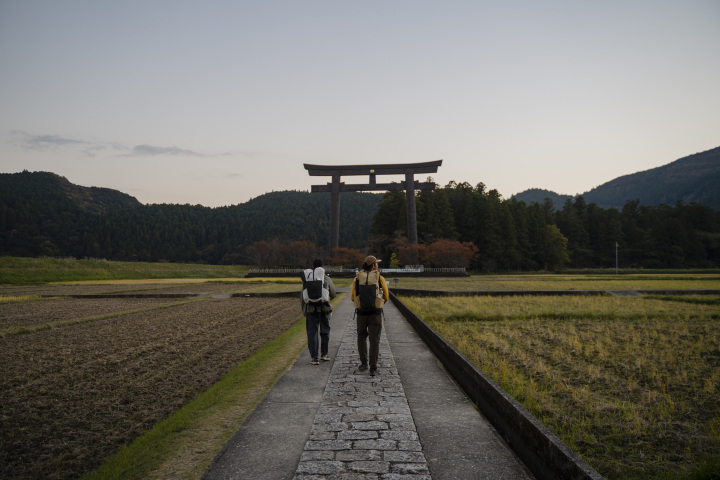
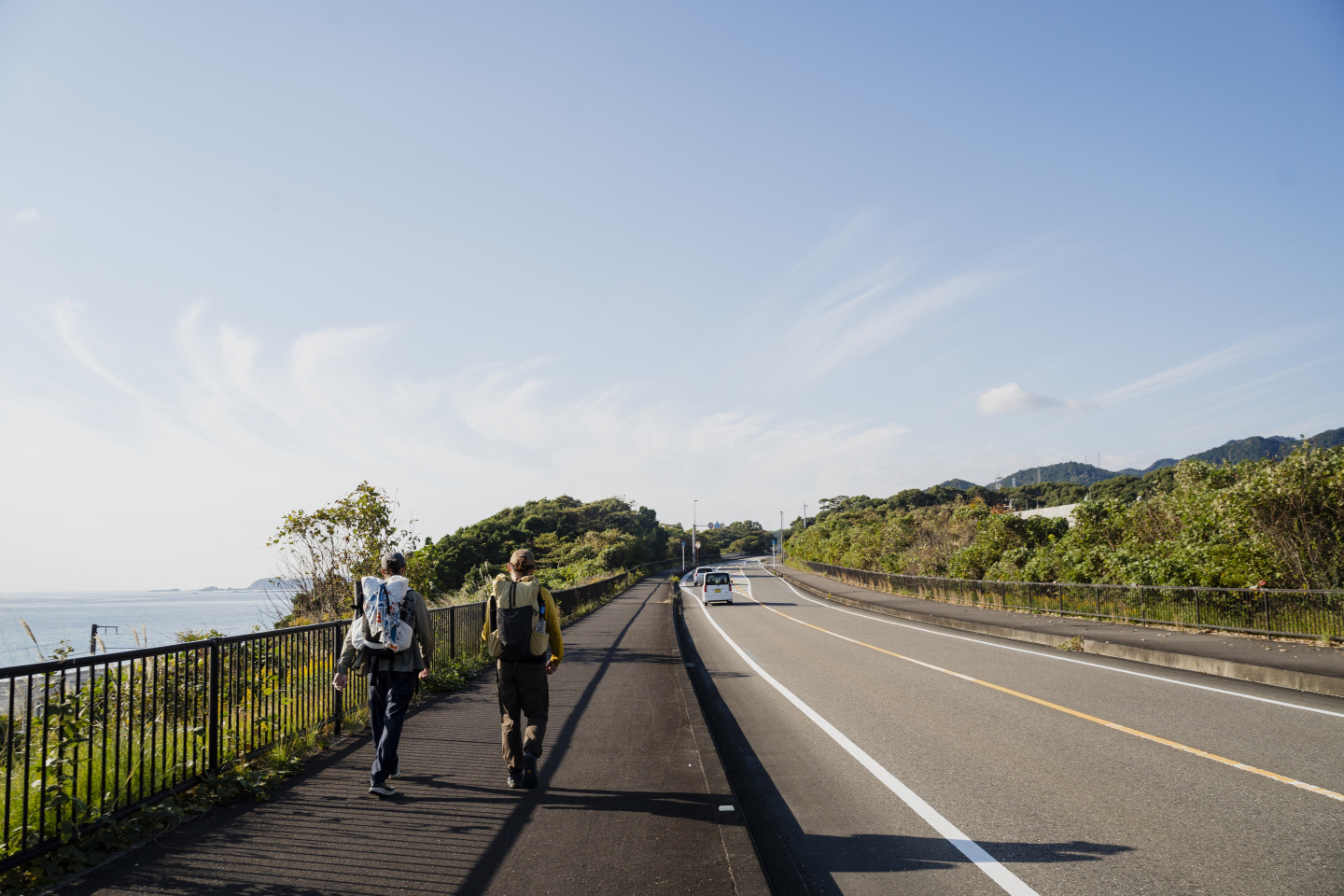
As you leave Shingu, the scenery changes dramatically. The mountains and rivers give way to landscapes centered around the sea. For approximately 15 km to Nachi Station, you will walk while enjoying the refreshing sea breeze from the Pacific Ocean.
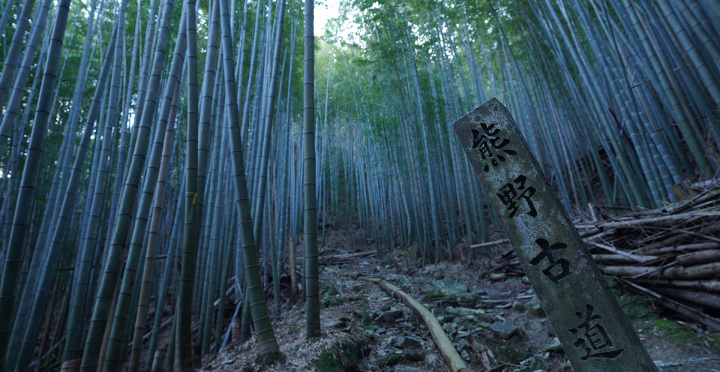
Although much of the route follows paved roads, Koya-zaka retains the atmosphere of the old pilgrimage route, allowing you to enjoy the striking contrast between the ancient trail and the open sea.
Once you arrive at Nachi Station, if you still have enough time and energy, we highly recommend making your way to the area around Katsuura Fishing Port. In 2024, it was Japan’s number-one fishing port for fresh tuna landings. The fresh tuna served at the restaurants around the market is exceptional, with a wonderfully rich flavor and a satisfyingly chewy texture.
After your meal, return to the Kumano Kodo and make your way to Nachisan, the final destination of your pilgrimage to the Three Grand Shrines of Kumano.
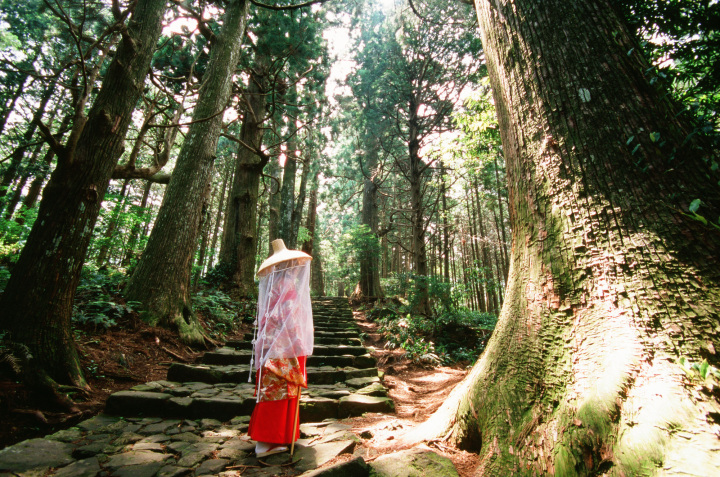
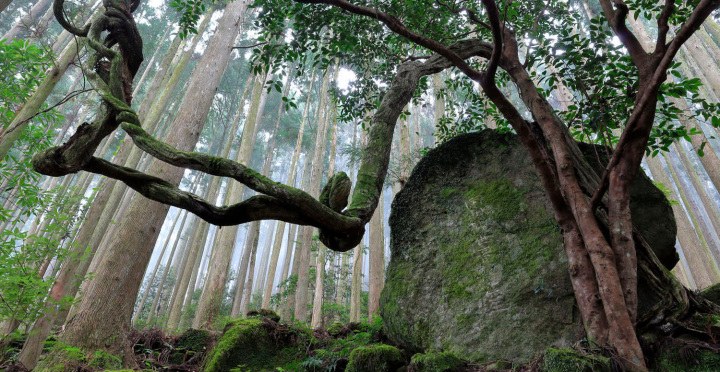
As you climb the moss-covered stone steps of Daimon-zaka, which seem to separate the secular world from the sacred realm, and make your way through the cedar forest, you will be welcomed by Kumano Nachi Taisha, Nachisan Seiganto-ji Temple, and Nachi Falls, which boasts the greatest vertical drop of any waterfall in Japan.
The ultimate destination of the Kumano pilgrimage, Kumano Nachi Taisha is a sacred place associated representing the present. It is believed that praying here helps form and strengthen connections in this life.
At Kumano Hongu Taisha, pilgrims pray for the future; at Kumano Hayatama Taisha, for the past; and finally, here at Kumano Nachi Taisha, they receive the vitality to live fully in the present. In this way, the pilgrimage to the Three Grand Shrines of Kumano is brought to completion.
Finally, let the thunderous roar of the waterfall resonate through your entire body and stir your soul. Prepare your spirit for the new journey that begins tomorrow—the return to Kumano Hongu—and bring this day to a close.
※Click here for the top page of the Nakahechi Long Trail.
Asuka-jinja Shrine
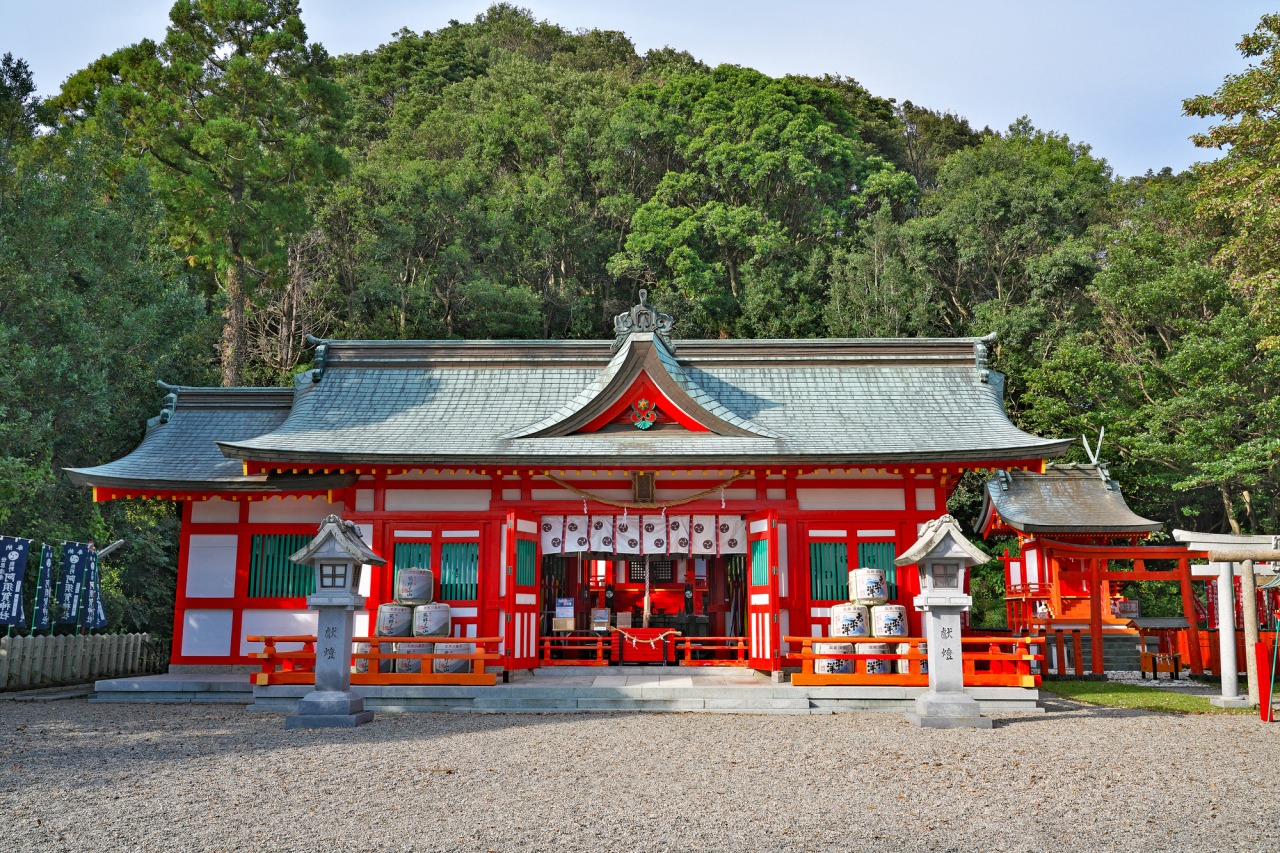
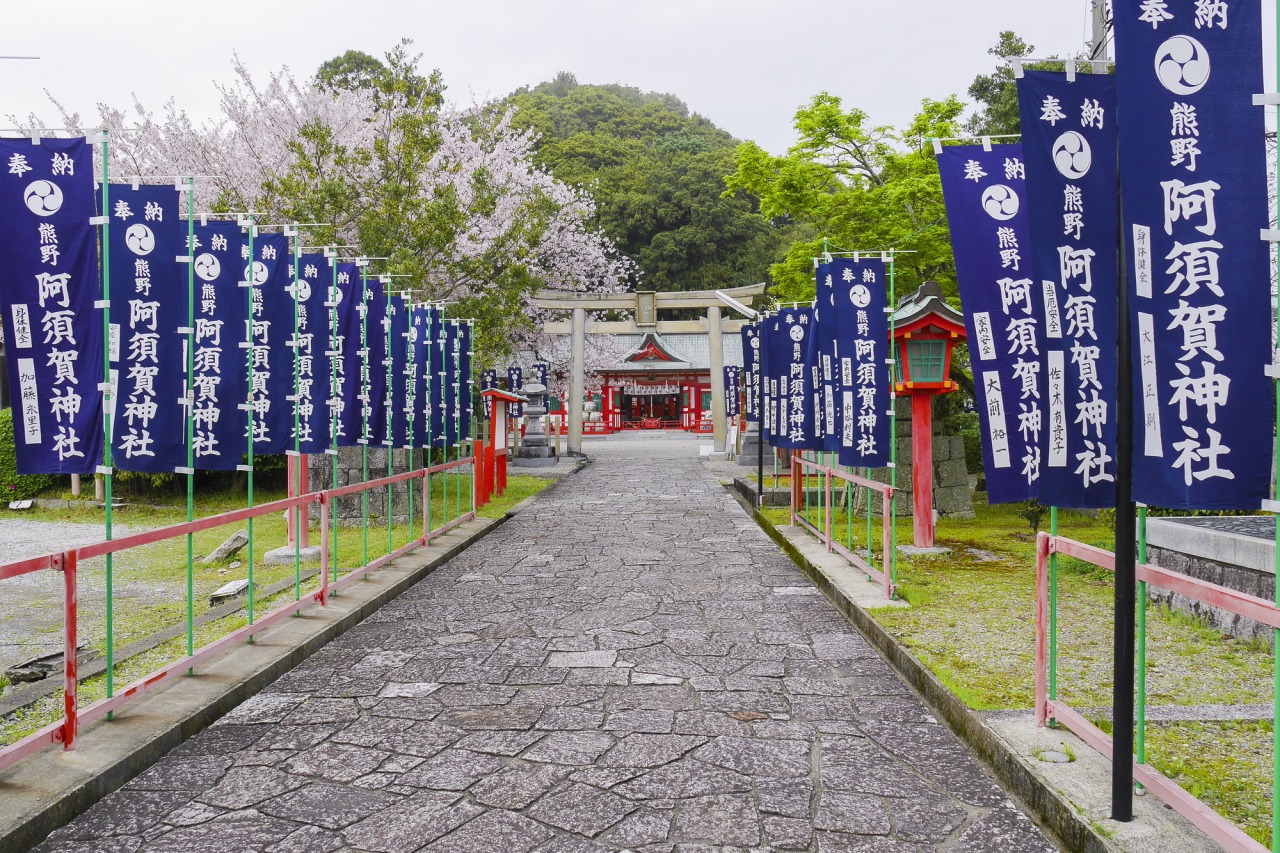
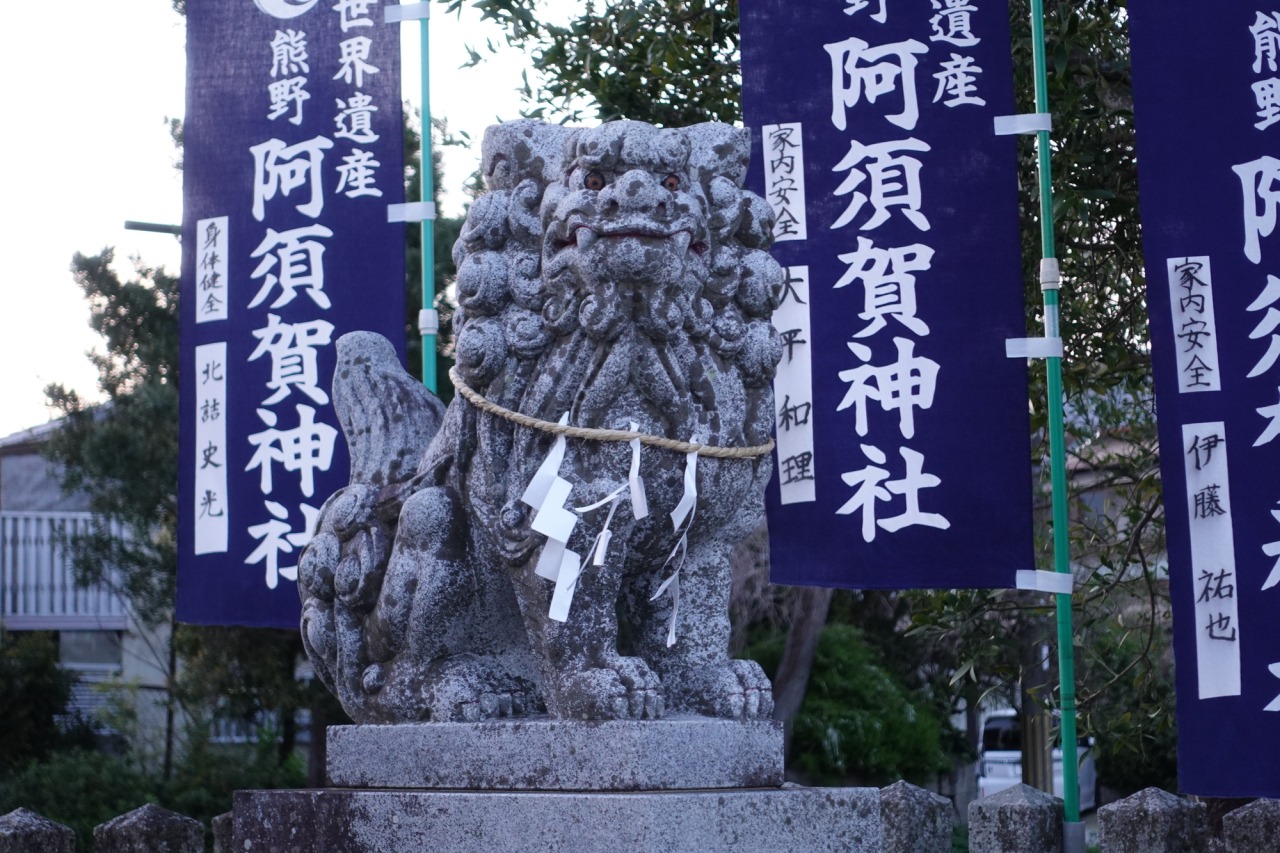
Located on the bank of the Shingu River, Asuka-jinja is a small shrine with close ties to the famous Kumano Hayatama Taisha Grand Shrine. In 2016, the shrine became part of the World Heritage 'Sacred Sites and Pilgrimage Routes in the Kii Mountain Range'.
- Address
- 新宮市阿須賀1-2-25
- Telephone Number
- +81-(0)73-522-3986
Hama Oji (Oji Shrine)
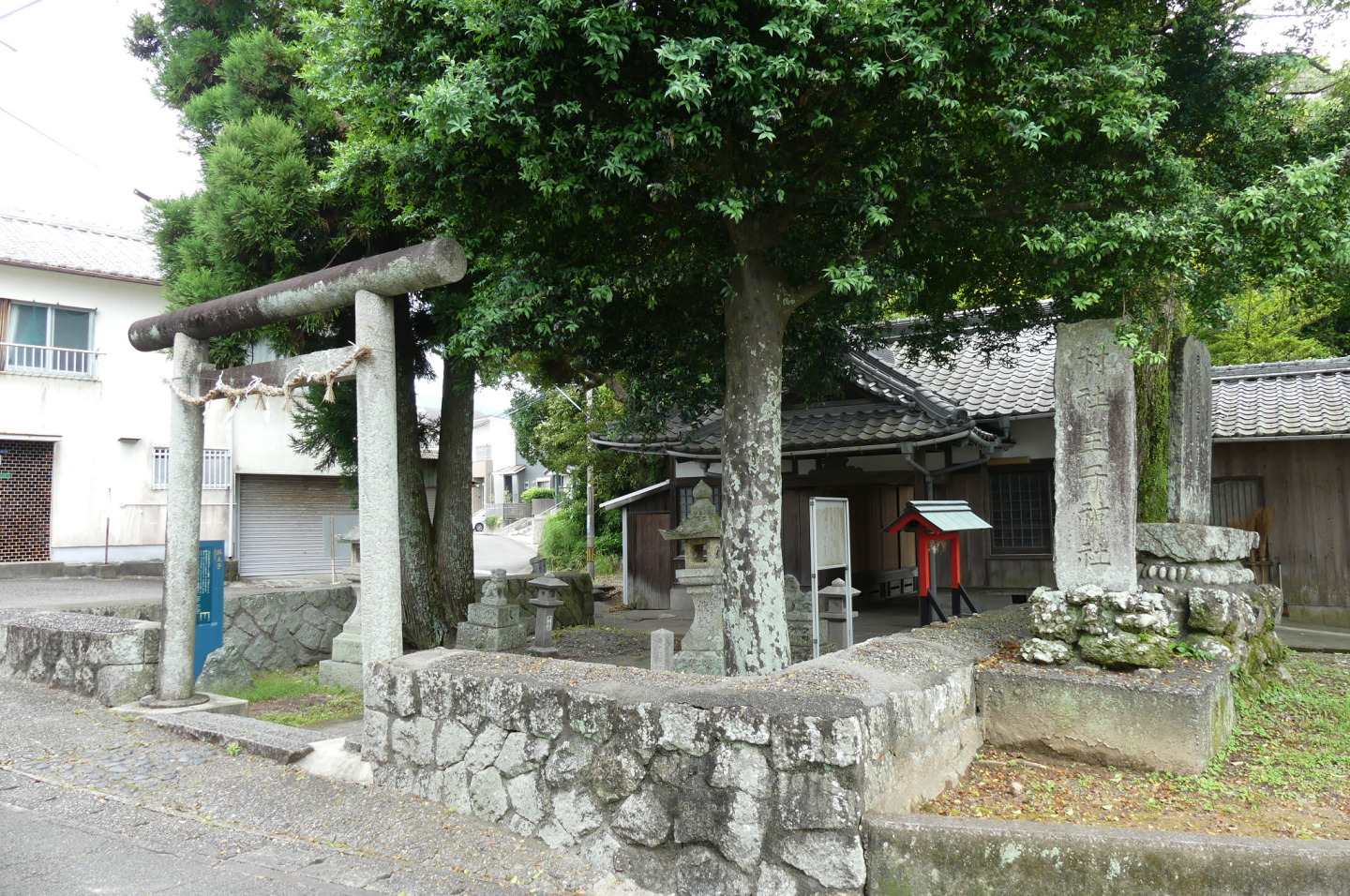
It is said that five Oji shrines once stood along the pilgrimage route between Kumano Hayatama Taisha Grand Shrine and Kumano Nachi Taisha Grand Shrine. Two of them still remain in Shingu City.
One of these is Hama Oji. It is believed to have already existed by 1201.
Koya-zaka trailhead (Hirotsuno)
Column
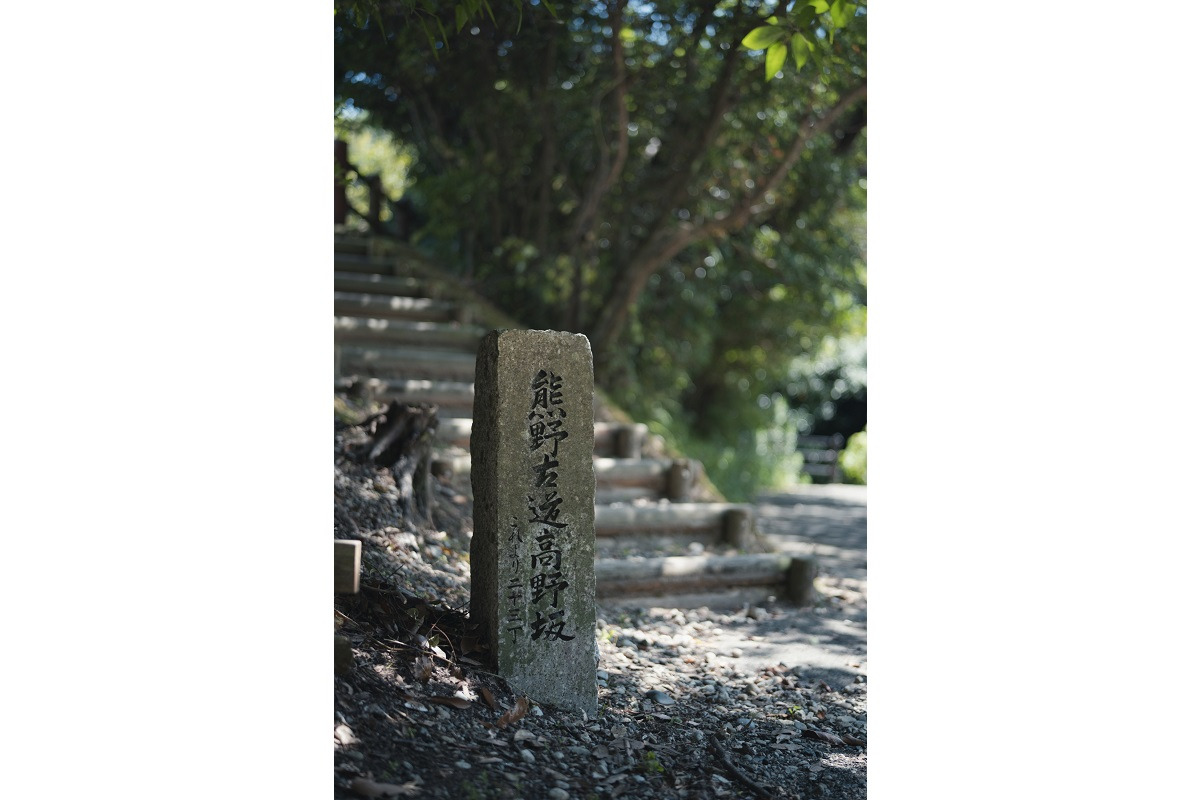
Koya-zaka
This is part of the Nakahechi Route, once used by pilgrims traveling from Kumano Hayatama Taisha Grand Shrine to Kumano Nachi Taisha Grand Shrine.
After visiting Hama Oji, follow the beach at Oji-ga-hama while enjoying views of the sea. You will soon arrive at the trailhead for Koya-zaka.
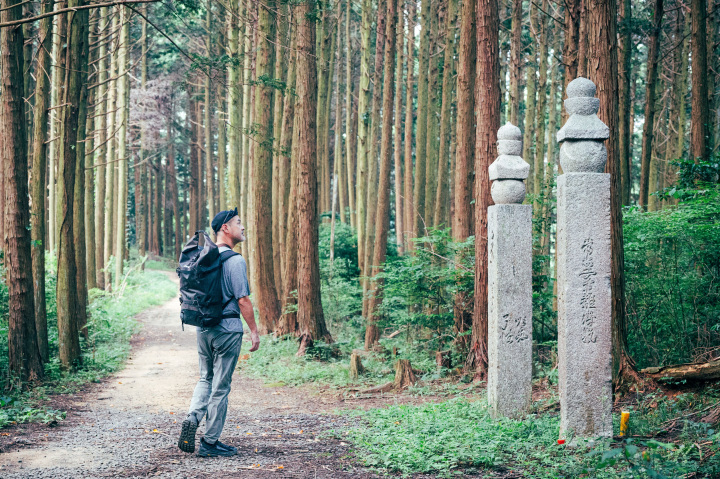
Although the route is a short walk of approximately 1.5 km, it is packed with highlights, including moss-covered stone paths and sweeping views of the ocean through the trees.
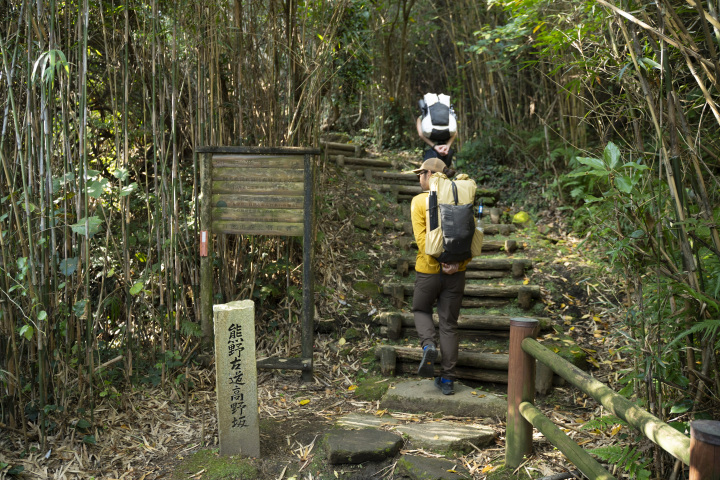
Koya-zaka trail exit
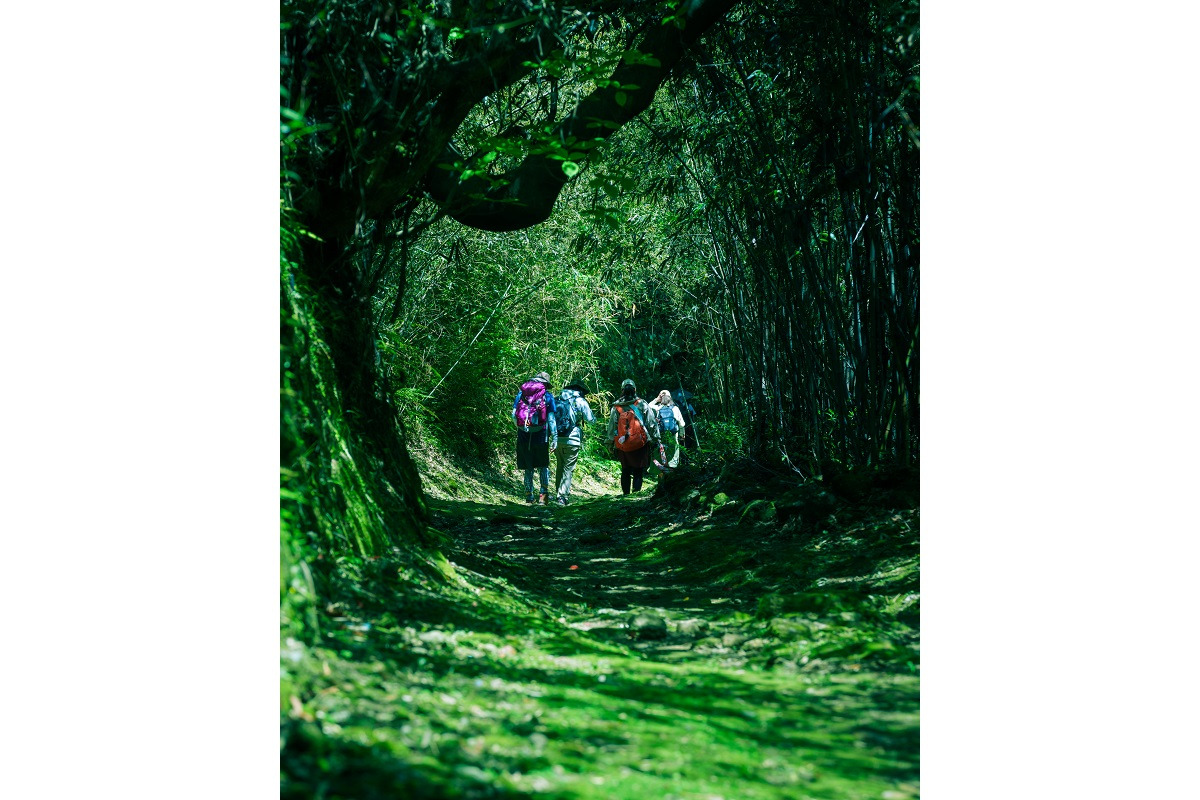
After descending the moss-covered stone-paved path, a short walk will bring you to the Koya-zaka trail exit.
Sano-oji
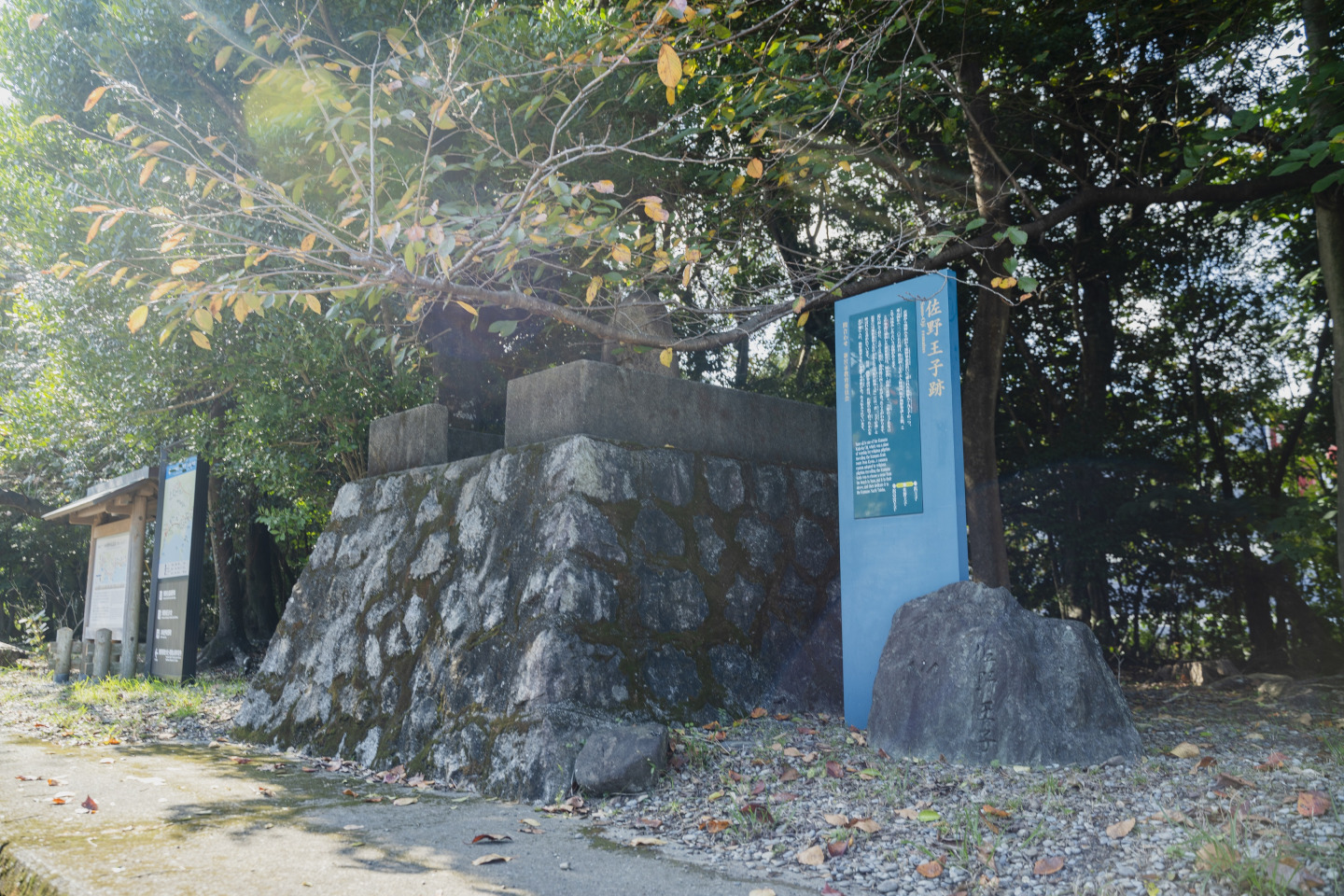
It is believed that an Oji shrine already existed here around 1201. The river flowing beneath the bridge is also known as Harai-gawa, or the “Purification River.” In the past, pilgrims visiting Kumano would purify themselves at a site near the river before continuing on to Nachisan.
Kokuji-toge Pass
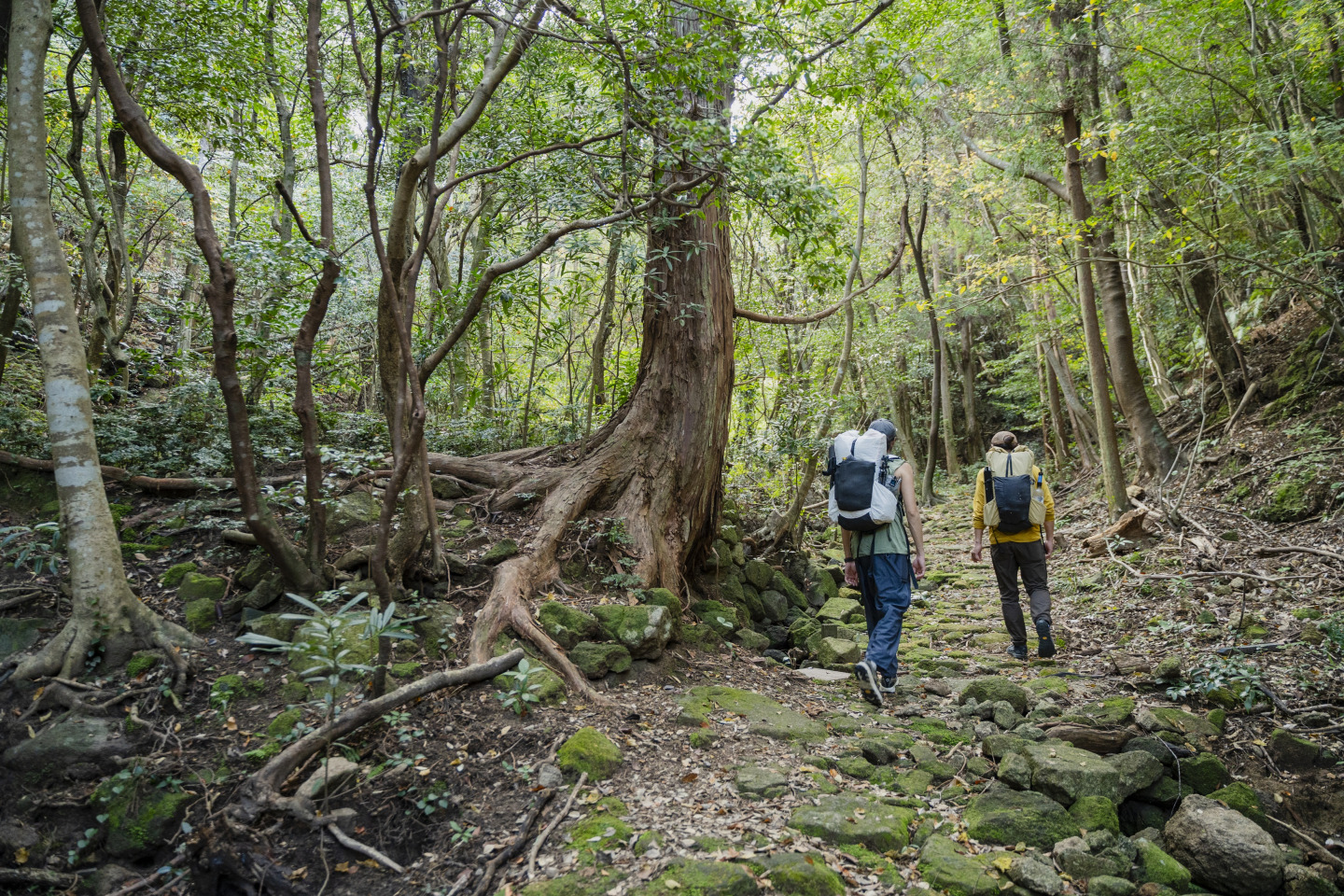
Along the coastal route from Kumano Hayatama Taisha Grand Shrine to Kumano Nachi Taisha Shrine, this mountain pass lies in a cut-through between the surrounding mountains. Parts of its original stone-paved path from the early modern period still remain.
Okuji-toge Pass
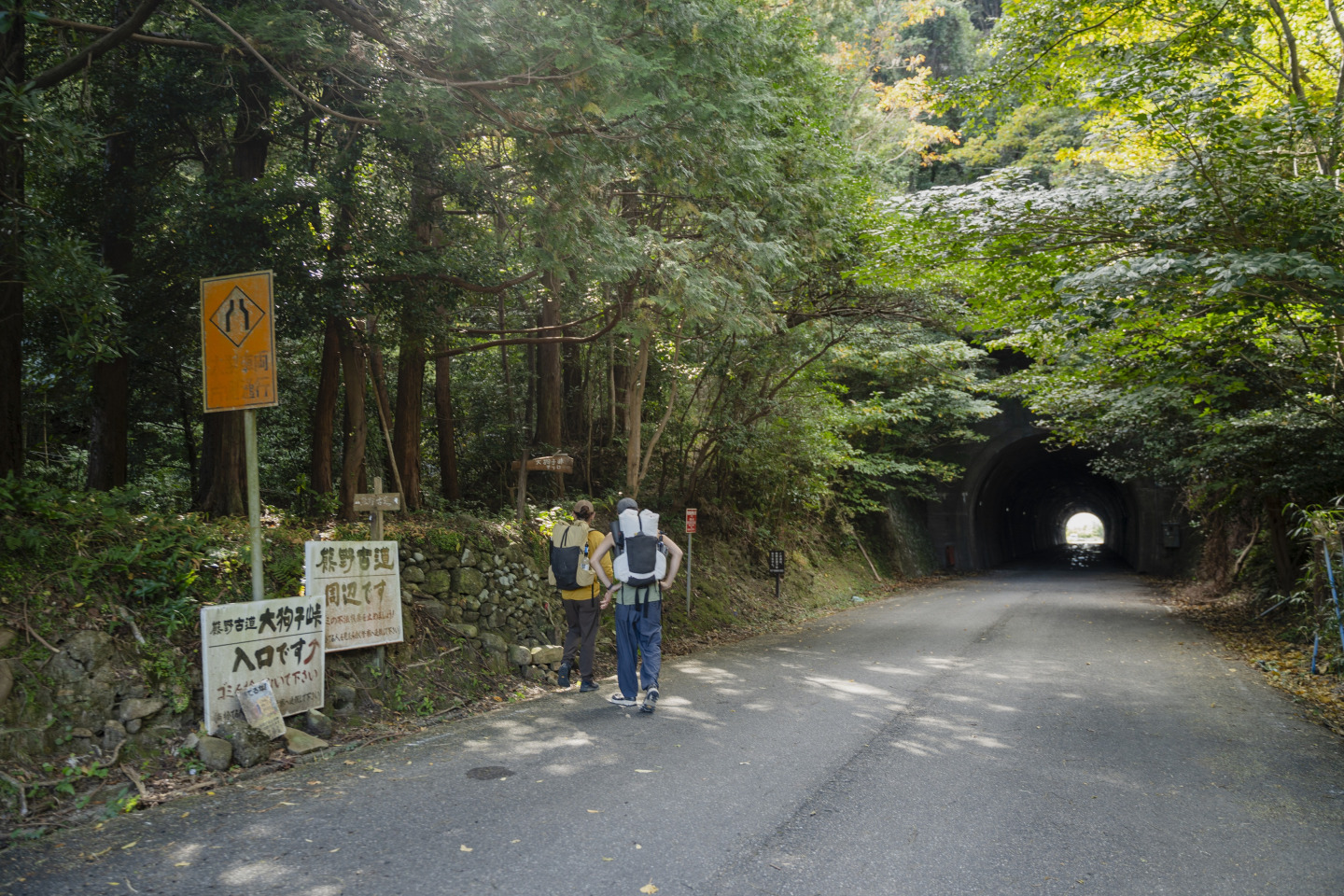
“Kushi” means “whale.” The name is believed to be a reminder that there was once a lookout post for whale hunting on this mountain pass.
Hamanomiya-oji (Kumano Sansho Omiwasha)
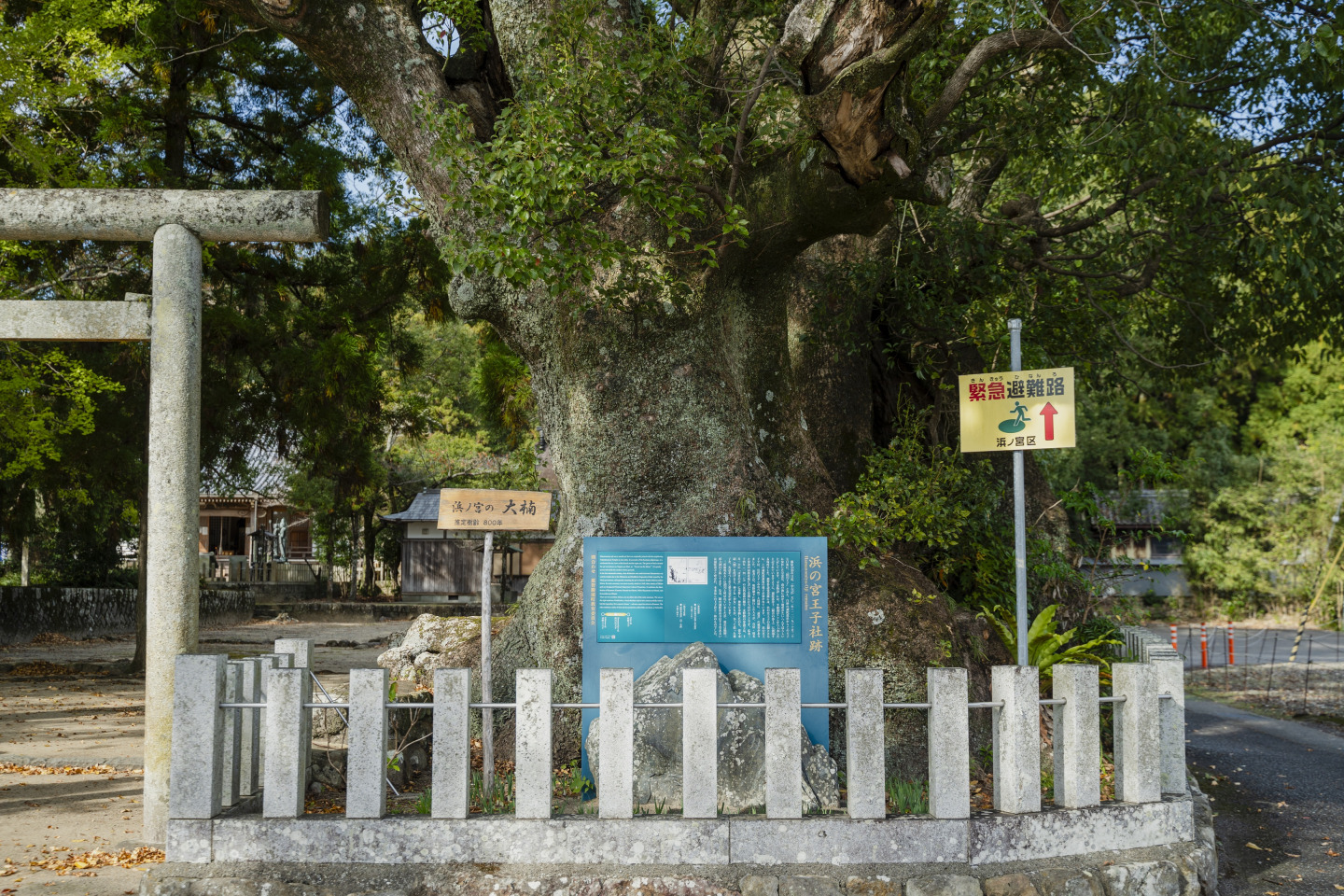
Hama-no-miya Oji is also known as Kumano Sansho Omiwasha. Located next to Fudarakusan-ji Temple, it offers a glimpse into the history of Shinto-Buddhist syncretism.
Because Nachi Beach once stretched out directly in front of the shrine, it was also called Nagisa-no-miya, or the “Shrine by the Shore.” Pilgrims visiting the Three Grand Shrines of Kumano are said to have purified themselves here in the sea before continuing on to Nachisan.
Column
If you have time, enjoy some fresh tuna around Katsuura Fishing Port.
Katsuura Fishing Port was Japan’s leading fishing port for fresh tuna landings in 2024. It is located just under 3 km from Hama-no-miya Oji.
There are many restaurants around the port that serve fresh, never-frozen tuna. Be sure to enjoy the exceptional tuna found only here.
The area is also one of Wakayama Prefecture’s most famous hot spring destinations, so we recommend staying overnight and taking your time to explore the area.

Fudarakusan-ji Temple
A World Heritage temple that served as the starting point for a grueling ascetic journey
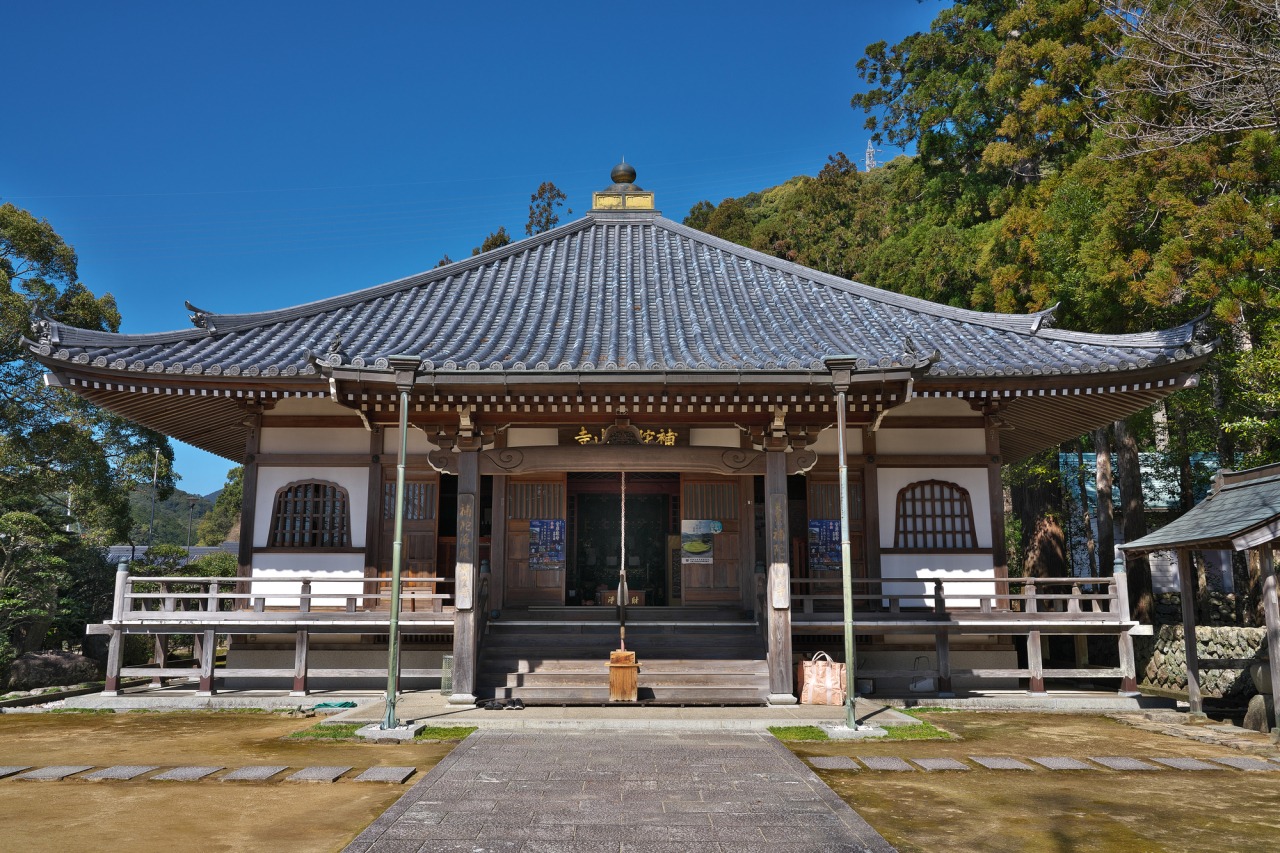
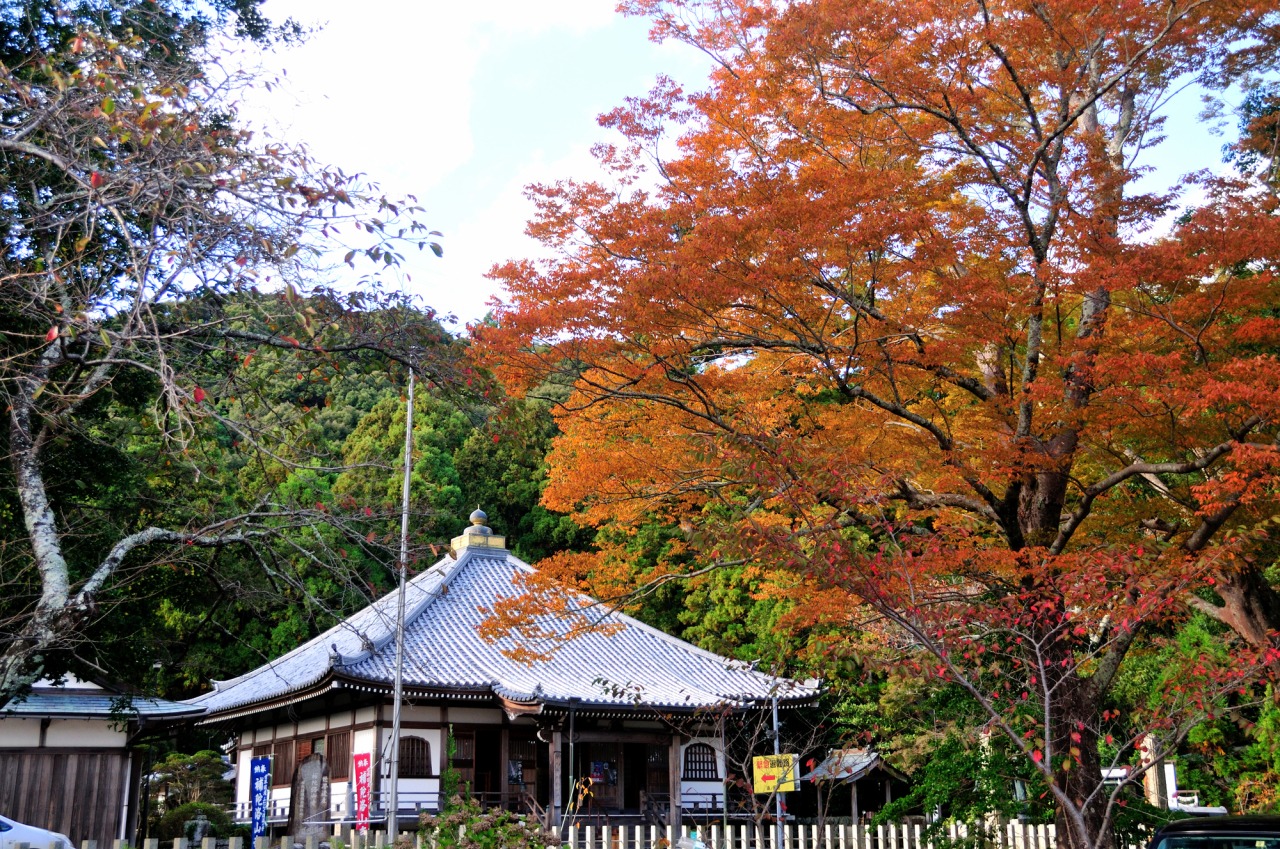
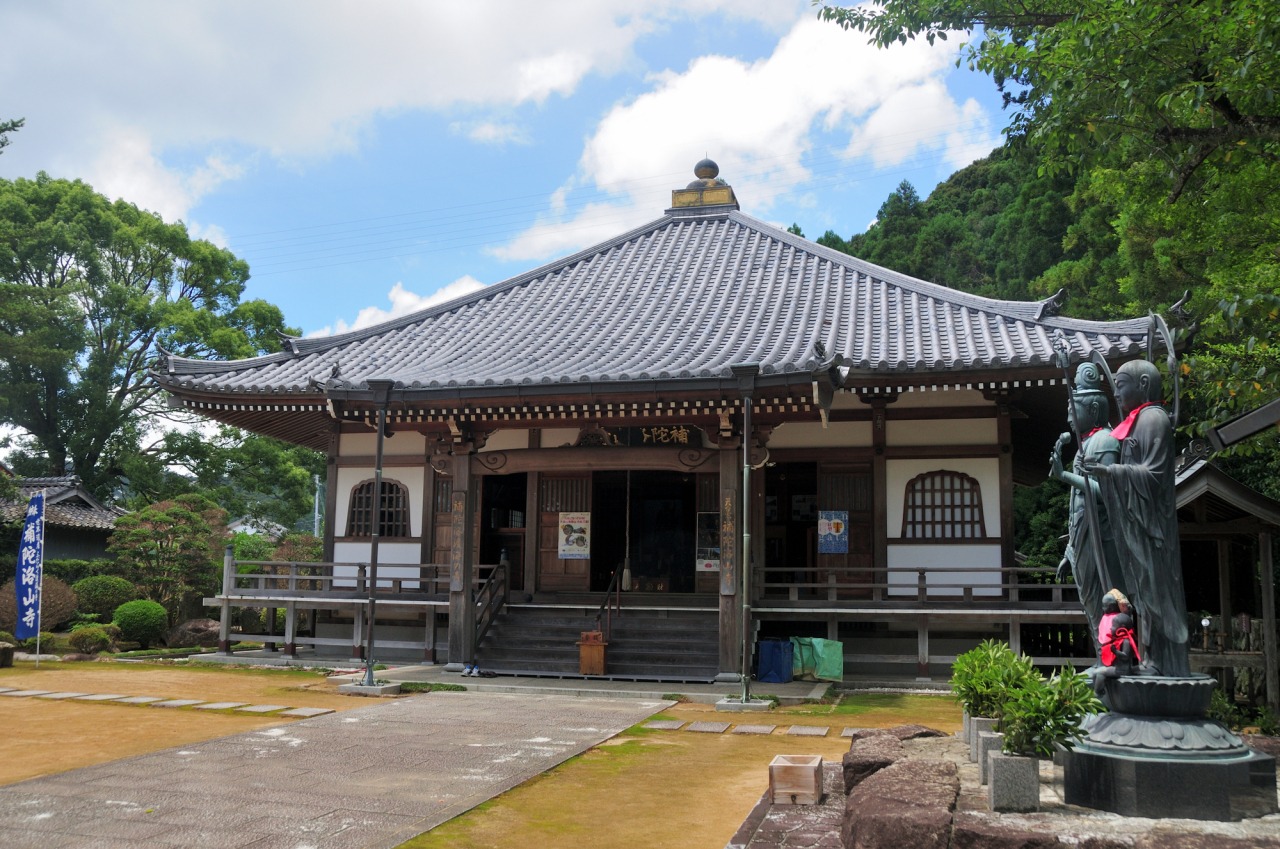
Located next to Kumano Sansho Grand Shrine, also known as Hama-no-miya Oji, Fudarakusan-ji Temple is a branch temple of Nachisan Seiganto-ji Temple. It offers a glimpse into the history of Shinto-Buddhist syncretism. The temple is part of the UNESCO World Heritage Site “Sacred Sites and Pilgrimage Routes in the Kii Mountain Range,” and its principal image, a Thousand-Armed Kannon, is designated as an Important Cultural Property of Japan.
In the past, the beach extended right up to the front of the temple. For approximately 1,000 years, beginning in 868, monks departed from this spot on a perilous ascetic journey known as Fudaraku Tokai. They set sail in search of Mount Fudaraku, believed to lie across the Southern Sea and to be the Pure Land of Kannon.
The monks are said to have boarded boats carrying only a small supply of provisions, after the doors had been nailed shut from the outside. Once at sea, they embarked on a voyage from which there was no return.
Within the temple grounds, a replica of one of these boats is on display. There is also a stone monument engraved with the names of the monks who are said to have set sail from Nachi Beach. Why not take a moment to reflect on this extraordinary history of faith and self-sacrifice?
- Address
- 東牟婁郡那智勝浦町浜ノ宮348
- Telephone Number
- 0735-52-2523
- Open
- 8:30~16:00
Ichinono-oji
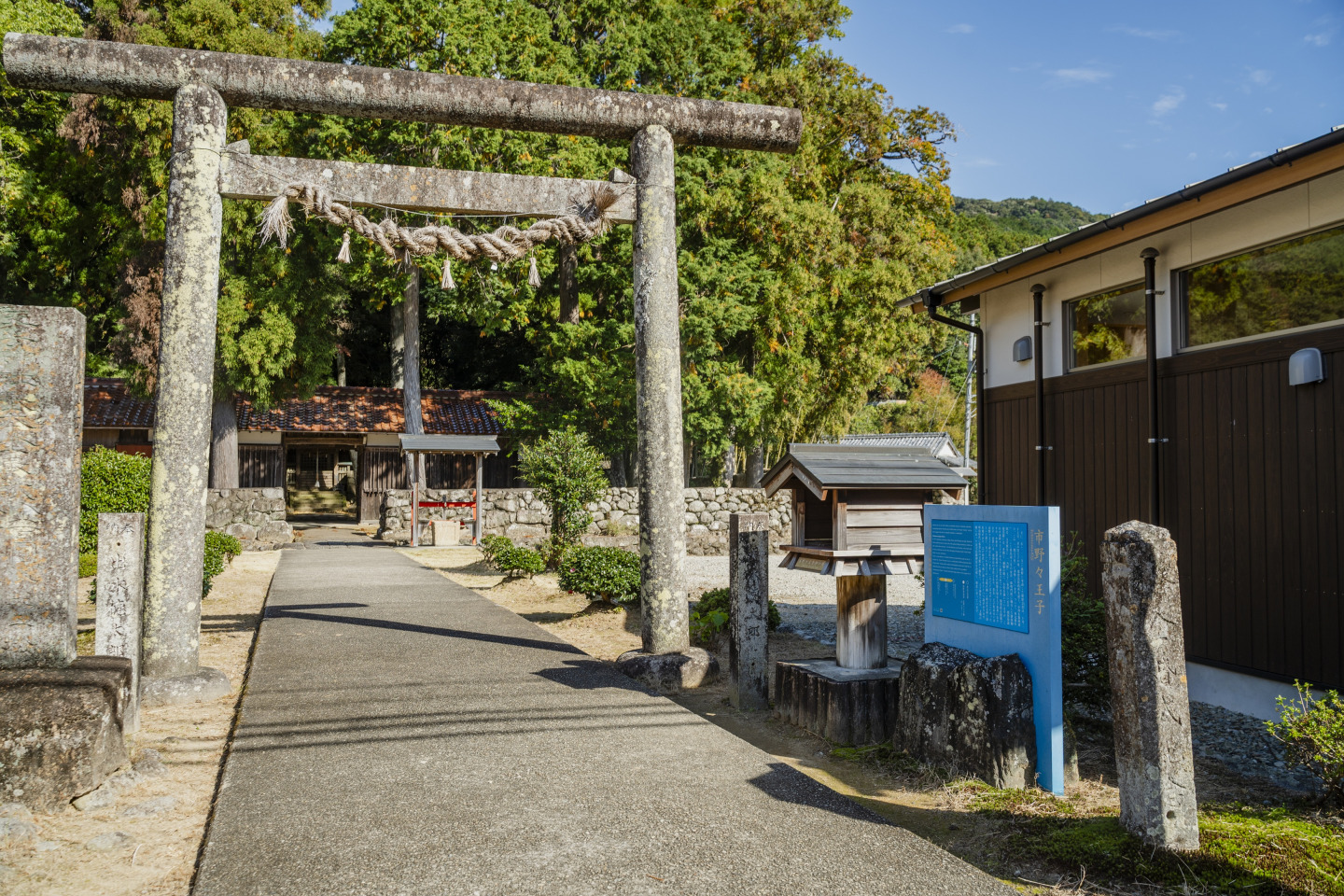
Today, the site of Ichinono Oji is known as Ichinono Oji Shrine, whose buildings stand surrounded by a grove of cedar trees. The name “Ichinono” is believed to have originated from the market that was once held here for pilgrims visiting Nachi.
Daimon-zaka entrance
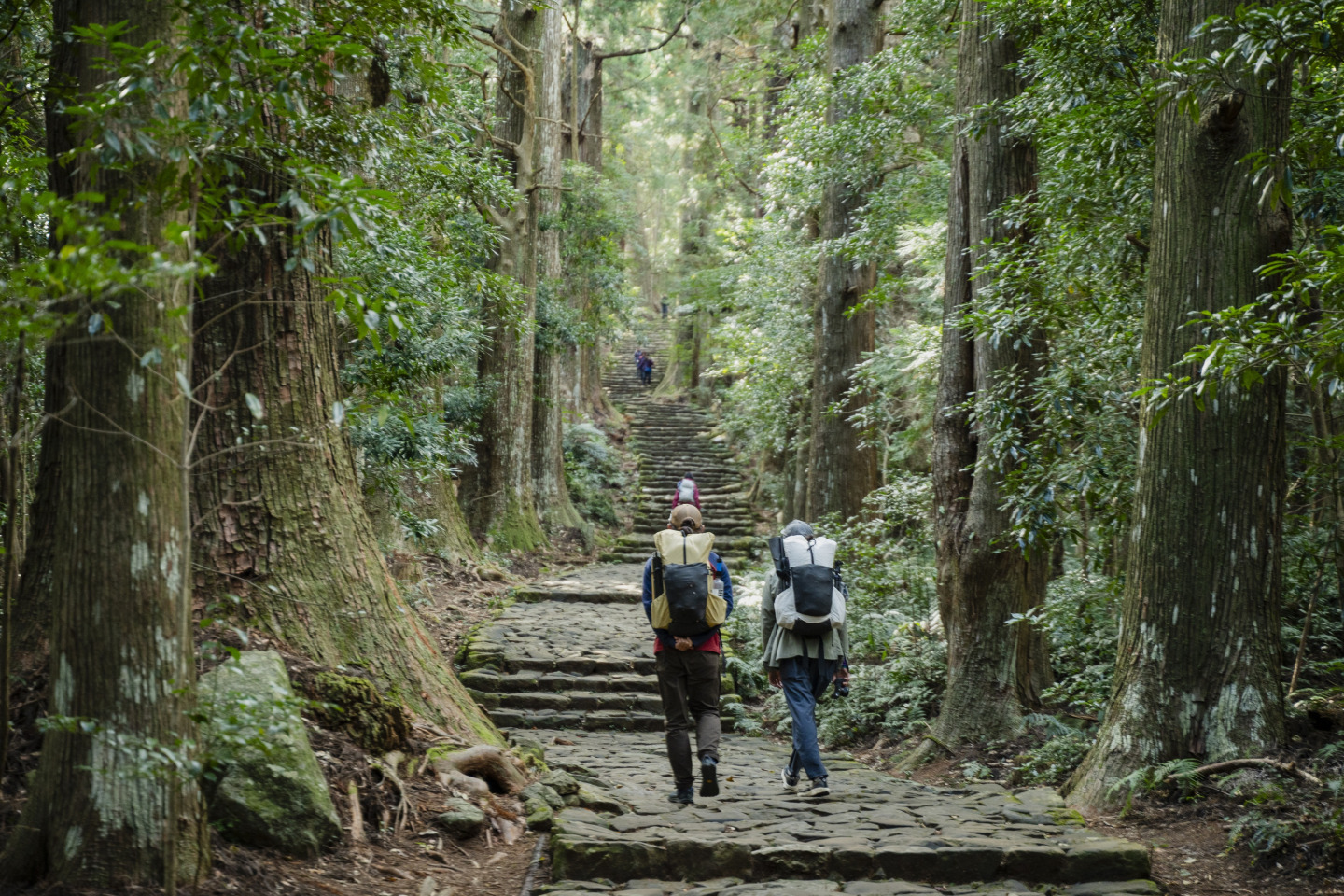
For centuries, many pilgrims have walked along the Kumano Kodo. Daimon-zaka is one of the places where the route’s history and atmosphere have been best preserved.
The approximately 500-meter-long path rises about 100 meters and is lined with moss-covered stone paving and towering cedar trees more than 800 years old. Along the way, you will encounter historic highlights such as the Meoto-sugi, two great cedar trees standing side by side like a married couple.
Tafuke-oji
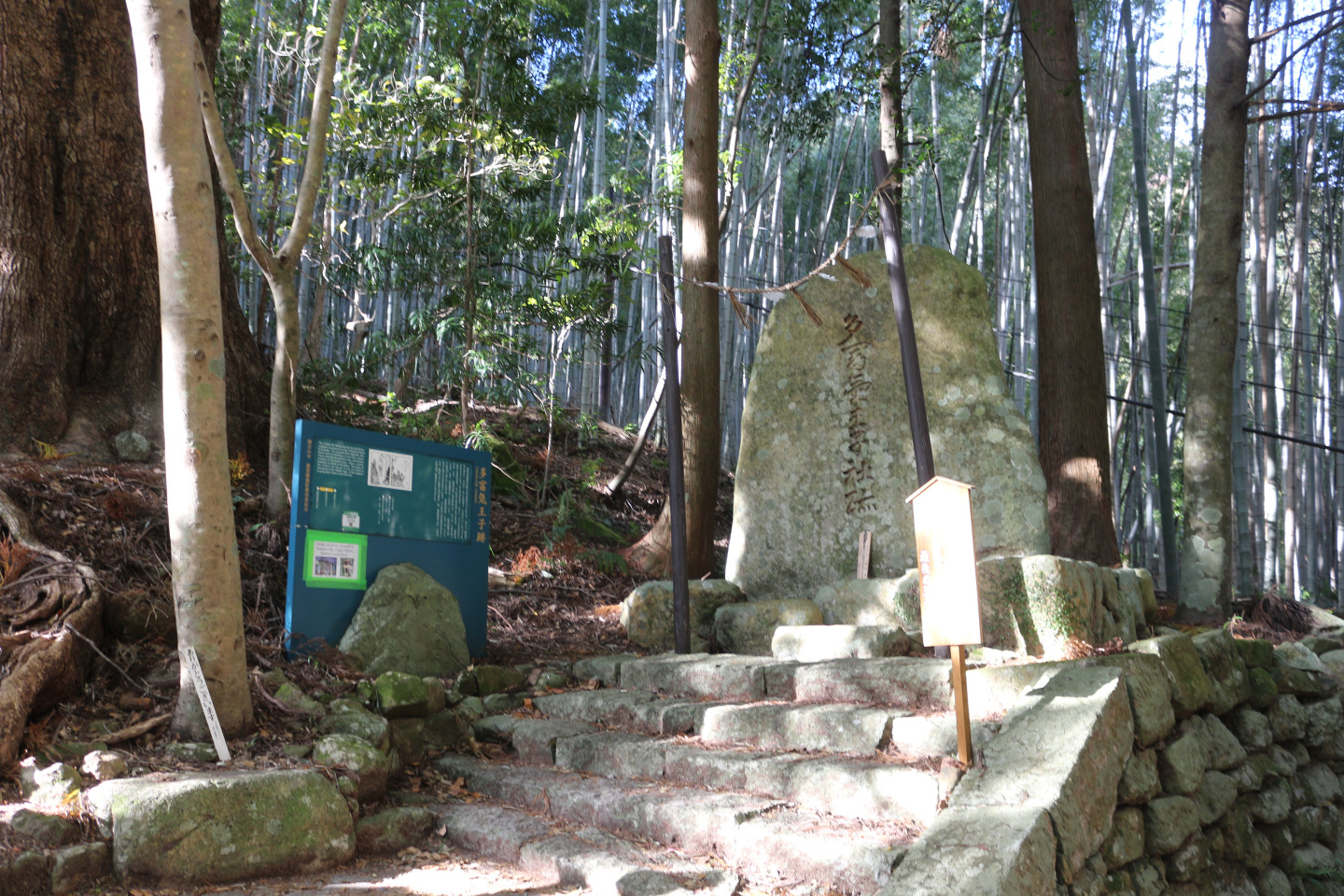
A short walk beyond the Meoto-sugi cedar trees at Daimon-zaka, you will find the last Oji shrine along the Nakahechi Route of the Kumano Kodo.
Shopping Street
After climbing all 267 steps of Daimon-zaka, you will soon reach a paved road. Along the road, you will find plenty of places to relax and recover from the climb, including restaurants and souvenir shops.
Kumano Nachi Taisha Grand Shrine
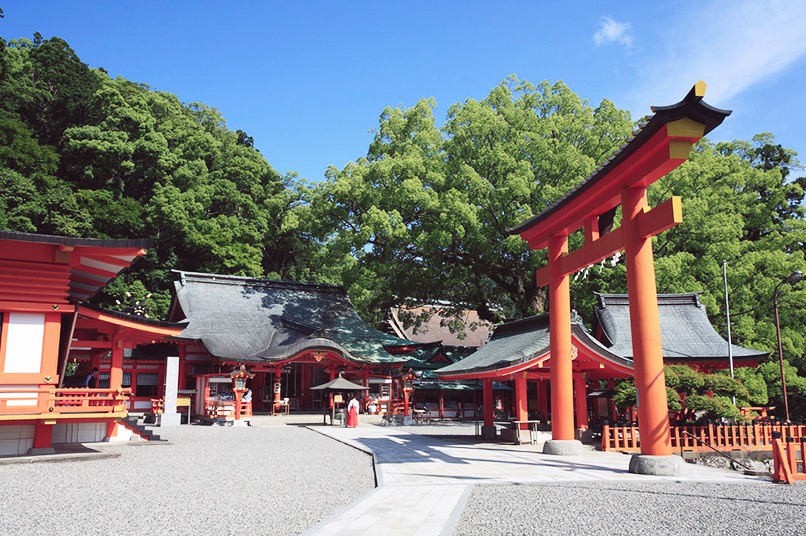
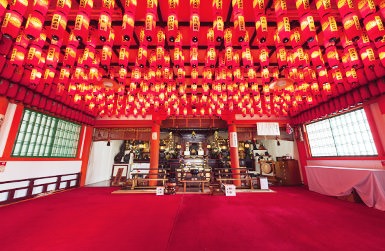
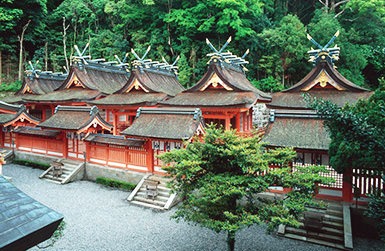
One of the great shrines of the Kumano Sanzan, Kumano Nachi Taisha Grand Shrine is the origin of the ancient faith that worships Nachi Waterfall. The shrine is located halfway up Mt. Nachi, and vermilion-lacquered Shinto shrines can be seen lined up on the high ground that looks down at the ocean. The large camphor tree in the precincts is said to be 800 years old, and has a tunnel that visitors can pass through.
- Address
- 東牟婁郡那智勝浦町那智山1
Nachisan Seiganto-ji Temple
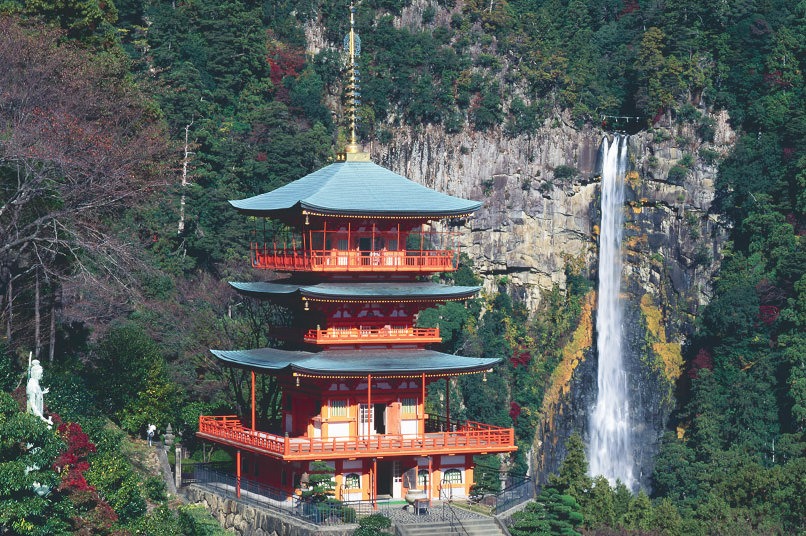
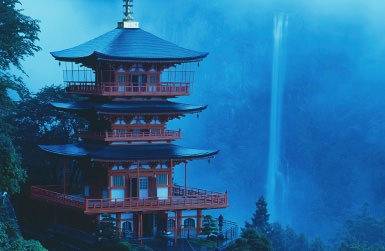
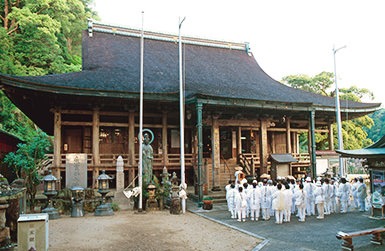
Prospering as a sacred ground along with Kumano Nachi Taisha Grand Shrine, this temple is the oldest structure in Kumano. Many precious important cultural properties can be found here. The precincts are renowned for their magnificent views of Nachi Falls, Nachi Primeval Forest, and the Pacific Ocean.
- Address
- 東牟婁郡那智勝浦町那智山8
- Telephone Number
- +81-(0)735-55-0001
- Open
- 08:00 - 16:00
Nachi Waterfall
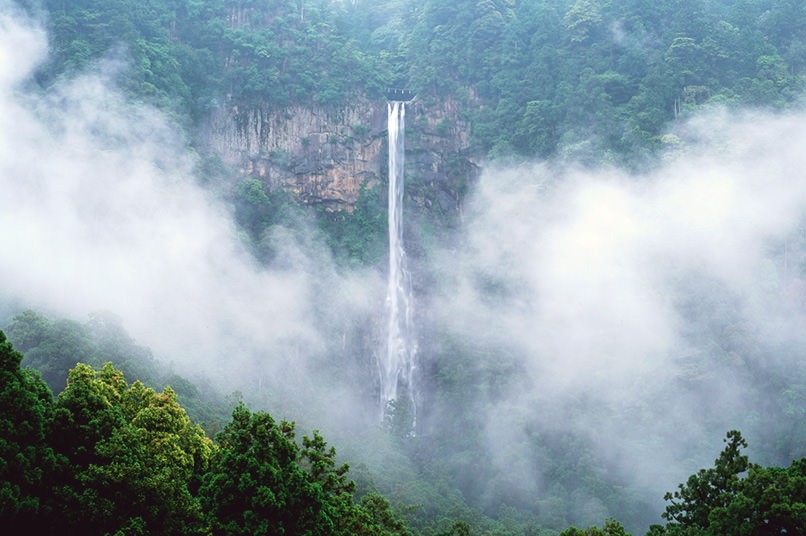
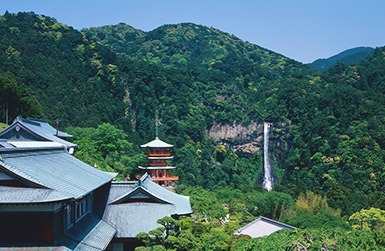
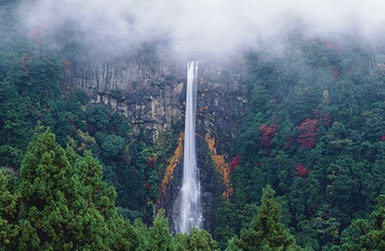
This 133-meter-tall waterfall boasts the highest vertical drop in Japan, with one ton of water dropping down the cliff every second. It enshrines the deity of Hiro Shrine, the auxiliary shrine of Kumano Nachi Taisha Grand Shrine. This awe-inspiring and dynamic view is truly unforgettable.
- Address
- 東牟婁郡那智勝浦町那智山
Tonight’s Accommodation
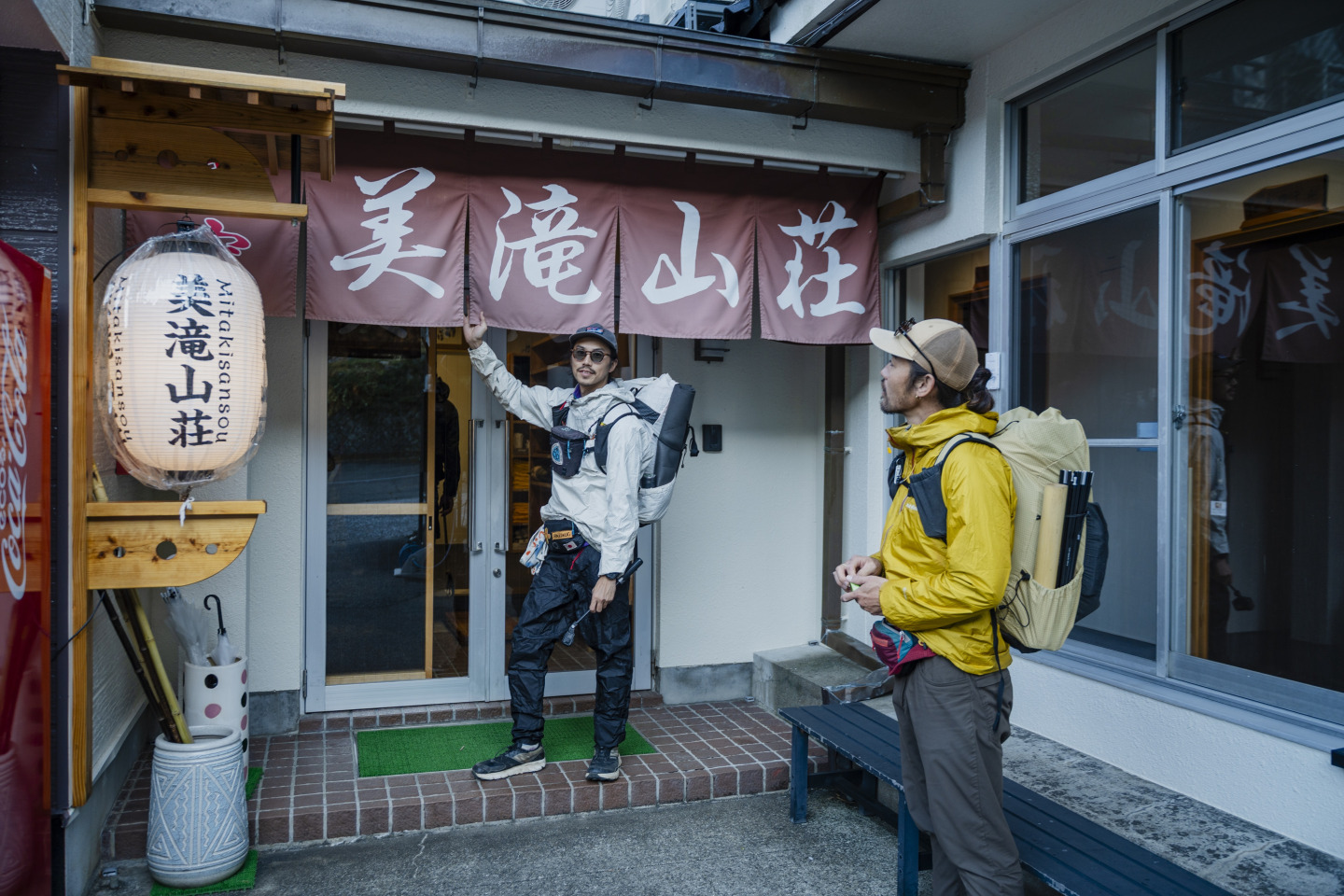
As of 2026, Mitaki Sanso is the only accommodation offering overnight stays in the Nachisan area. Please be sure to make your reservation in advance.
For hotels in Nachikatsuura Town, please check the link below.
Be sure to check the route for the following day as well!
- View the route for the following day
- View more